Culinary Advisor
A cooking platform built around craft, culture, and the stories behind what we eat.
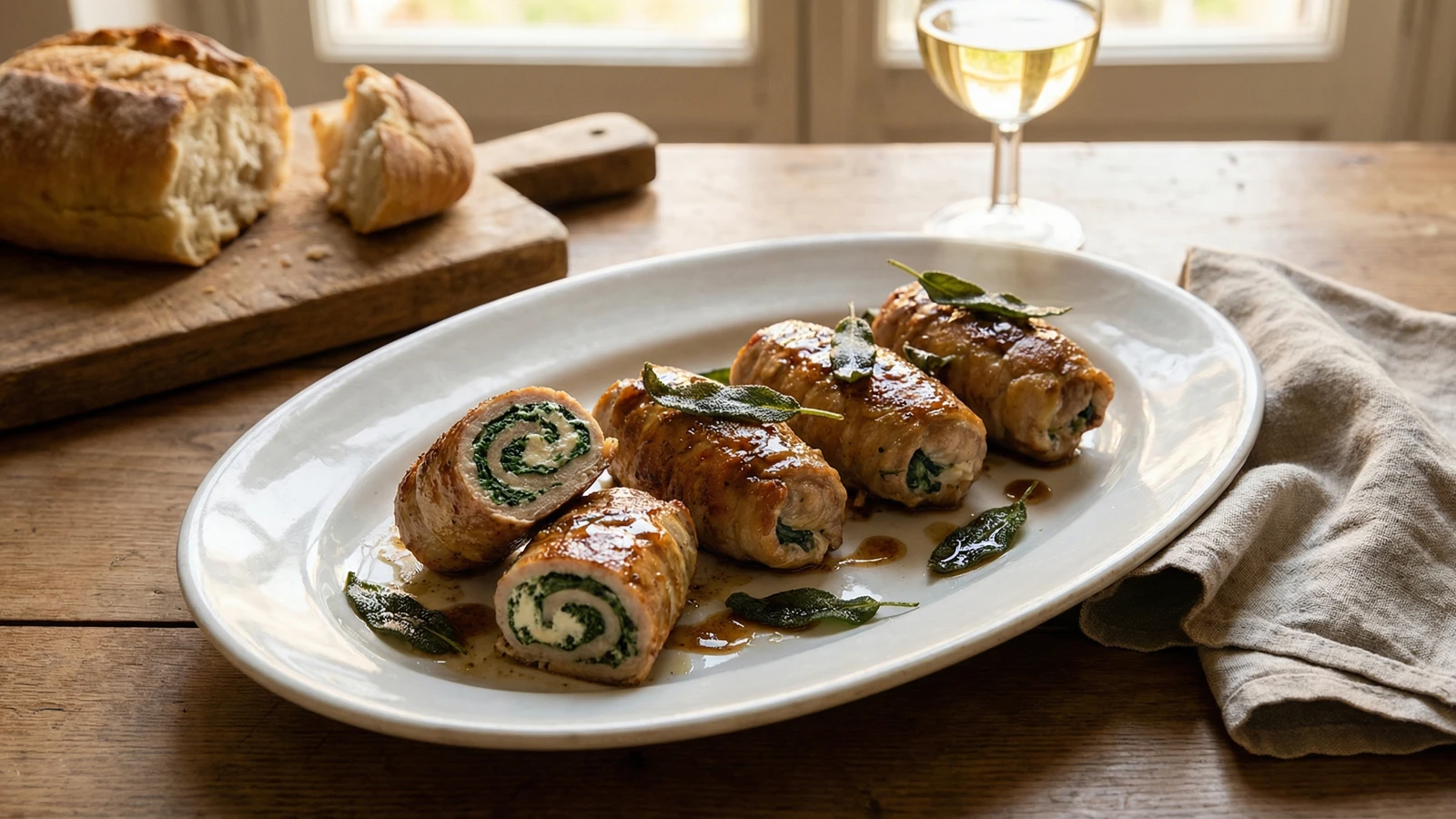
Involtini di Maiale alla Toscana
Created by Chef Graziella
Thin pork slices rolled around spinach and ricotta, wrapped in pancetta, braised in white wine with sage until tender. The Tuscan approach to pork: herbs, restraint, and technique that rewards patience.
Involtini means 'little bundles,' and Tuscans have been rolling pork around various fillings for as long as anyone can remember. The technique is simple, the effect elegant. You pound pork thin, spread it with something good, roll it up, and braise it gently until everything becomes tender and the flavors meld.
The filling here is spinach and ricotta, the combination that Tuscans put inside ravioli, cannelloni, and countless other preparations. It works because the mild sweetness of ricotta and the mineral bite of spinach complement pork without competing with it. The pancetta wrapper serves two purposes: it bastes the lean pork as it cooks, and it provides a crisp exterior that contrasts with the tender interior.
What you keep out matters. No tomato. No heavy spices. The sage and white wine create a sauce that tastes clean and bright, not muddy. This is food for a Sunday table, the kind of dish that looks impressive when you bring it out but does not require you to spend your entire weekend in the kitchen. The rolling takes practice. The braising takes patience. Neither takes genius.
Involtini appear throughout the Italian peninsula under different names and with different fillings, but the Tuscan versions distinguish themselves through their reliance on local ingredients: pork from the Cinta Senese breed, ricotta from sheep's milk, wild sage gathered from the hillsides. The dish likely evolved from the thrifty practice of extending expensive meat with vegetables and cheese, though it has long since shed any association with economy.
The technique, the tradition, and the story behind every dish.
Discover Culinary AdvisorIngredients
pork loin
Quantity
2 pounds
cut into 12 slices (about 3 ounces each)
fresh spinach
Quantity
1 pound
stems removed
fresh whole-milk ricotta
Quantity
1 cup
drained
Parmigiano-Reggiano
Quantity
1/2 cup, plus more for serving
freshly grated
nutmeg
Quantity
1/8 teaspoon
freshly grated
pancetta
Quantity
12 thin slices (about 6 ounces)
extra virgin olive oil
Quantity
3 tablespoons
garlic cloves
Quantity
2
lightly crushed
fresh sage leaves
Quantity
8
dry white wine
Quantity
1 cup
chicken stock
Quantity
1 cup
unsalted butter
Quantity
2 tablespoons
cold
kosher salt
Quantity
to taste
black pepper
Quantity
to taste
freshly ground
| Ingredient | Quantity |
|---|---|
| pork loincut into 12 slices (about 3 ounces each) | 2 pounds |
| fresh spinachstems removed | 1 pound |
| fresh whole-milk ricottadrained | 1 cup |
| Parmigiano-Reggianofreshly grated | 1/2 cup, plus more for serving |
| nutmegfreshly grated | 1/8 teaspoon |
| pancetta | 12 thin slices (about 6 ounces) |
| extra virgin olive oil | 3 tablespoons |
| garlic cloveslightly crushed | 2 |
| fresh sage leaves | 8 |
| dry white wine | 1 cup |
| chicken stock | 1 cup |
| unsalted buttercold | 2 tablespoons |
| kosher salt | to taste |
| black pepperfreshly ground | to taste |
Equipment Needed
- •Meat mallet or heavy-bottomed pan for pounding
- •Large heavy skillet or braiser with lid (12-inch)
- •Wooden toothpicks
- •Instant-read thermometer
Instructions
- 1
Prepare the spinach
Bring a large pot of salted water to a boil. Add the spinach and cook just until wilted, about 30 seconds. Drain immediately and plunge into ice water to stop the cooking and set the color. Squeeze the spinach dry in a clean kitchen towel, wringing it until no more water drips. Chop finely. You must remove all excess moisture. Wet spinach ruins the filling.
- 2
Make the filling
In a bowl, combine the chopped spinach, ricotta, Parmigiano-Reggiano, and nutmeg. Season with salt and pepper. Mix thoroughly until uniform. The filling should be thick enough to hold its shape on a spoon. If your ricotta was watery, the filling will be loose. Drain it better next time.
Fresh ricotta from an Italian market has far superior flavor and texture to supermarket containers. It drains more readily and tastes of milk, not preservatives. - 3
Pound the pork
Place each pork slice between two sheets of plastic wrap. Using a meat mallet or the bottom of a heavy pan, pound the pork to an even thickness of about one-quarter inch. Work from the center outward. The slices should be roughly rectangular, about 4 by 6 inches. Season both sides lightly with salt and pepper.
- 4
Fill and roll
Place a pounded pork slice on your work surface with the short end facing you. Spread about 2 tablespoons of filling across the lower third of the meat, leaving a half-inch border on three sides. Roll the pork away from you, tucking the filling inside as you go. The roll should be snug but not so tight that filling squeezes out the ends.
- 5
Wrap in pancetta
Lay one slice of pancetta flat on your work surface. Place the pork roll at one end, seam side down, and roll the pancetta around it in a spiral. The pancetta should cover most of the pork, leaving the ends exposed. Secure with one or two wooden toothpicks inserted at an angle. Repeat with remaining rolls.
Have your butcher slice the pancetta thin but not paper-thin. It should be pliable enough to wrap without tearing, sturdy enough to crisp during browning. - 6
Brown the involtini
In a heavy skillet or braiser large enough to hold all the rolls in a single layer, heat the olive oil over medium-high heat. Add the crushed garlic cloves and let them sizzle until fragrant and barely golden, about one minute. Remove and discard the garlic. Add the involtini, seam side down, and cook without disturbing until the pancetta is golden and crisp, 2 to 3 minutes. Turn and brown all sides. Work in batches if necessary. Transfer to a plate.
- 7
Build the braising liquid
Pour off all but one tablespoon of fat from the pan. Add the sage leaves and let them sizzle for 30 seconds. Pour in the white wine and scrape up any browned bits from the bottom of the pan. These are flavor. Let the wine reduce by half, about 3 minutes. Add the chicken stock and bring to a simmer.
- 8
Braise the rolls
Return the involtini to the pan, seam side down, nestling them into the liquid. The liquid should come about one-third of the way up the rolls. Reduce heat to low, cover partially, and simmer gently until the pork is cooked through and tender, 25 to 30 minutes. Turn the rolls once halfway through. The internal temperature should reach 145 degrees Fahrenheit.
Do not let the braise boil vigorously. Aggressive heat toughens pork. The surface should show only occasional lazy bubbles. Adjust your heat accordingly. - 9
Finish the sauce
Transfer the involtini to a warm serving platter and remove the toothpicks. If the braising liquid seems thin, increase heat and reduce it by half until slightly syrupy. Remove from heat and swirl in the cold butter, tilting the pan until the butter melts and the sauce becomes glossy. Taste for salt. Spoon the sauce over the involtini.
- 10
Serve properly
Arrange the involtini on the platter with the sage leaves from the sauce scattered over them. Serve immediately while warm, passing additional Parmigiano-Reggiano at the table for those who want it. These are meant to be eaten with knife and fork, revealing the spiral of spinach and ricotta within.
Chef Tips
- •Ask your butcher to slice the pork loin for you. Request slices cut against the grain, about one-third inch thick before pounding. Cutting them yourself often results in uneven pieces.
- •Drain the ricotta overnight in a fine-mesh strainer set over a bowl in the refrigerator. Fresh ricotta contains considerable moisture that will make your filling runny and your rolls soggy.
- •The toothpicks are essential during cooking but must be removed before serving. Count them as you insert them, then count again as you remove them. Finding one with your teeth at the dinner table is not the Tuscan experience you want.
- •Leftover involtini reheat gently in their sauce over low heat. They make an excellent next-day lunch, sliced and served at room temperature over arugula.
Advance Preparation
- •The filling can be made one day ahead and refrigerated. Bring to room temperature before using.
- •The involtini can be assembled through the rolling and wrapping stage up to 6 hours ahead. Refrigerate on a parchment-lined sheet, covered with plastic wrap. Let them sit at room temperature for 20 minutes before browning.
- •The fully braised involtini can be made several hours ahead and reheated gently in their sauce. Add a splash of stock if the sauce has thickened too much.
Frequently Asked Questions
Nutrition Information
1 serving (about 200g)
Where cooking meets culture.
Culinary mentorship, cultural storytelling, and the editorial depth that makes cooking meaningful.
Explore Culinary Advisor