Culinary Advisor
A cooking platform built around craft, culture, and the stories behind what we eat.
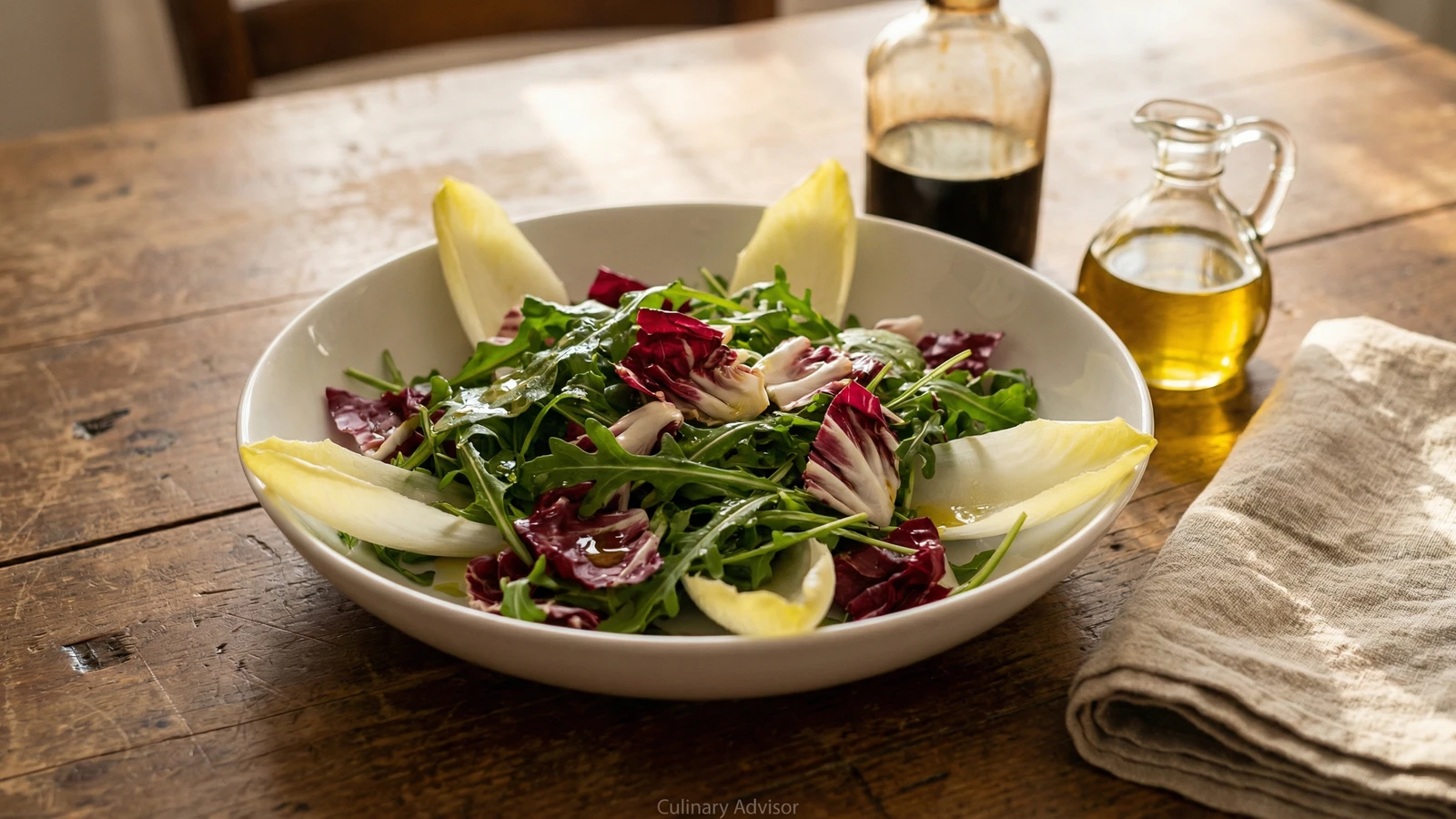
Insalata Tricolore
Created by Chef Graziella
Three bitter leaves arranged in the colors of the Italian flag: the peppery bite of arugula, the wine-dark depth of radicchio, the crisp pallor of endive. Dressed with restraint.
This salad exists to celebrate bitterness. Americans run from bitter flavors. Italians embrace them. The three leaves here, each bitter in its own way, combine to create something greater than any single green could provide. The arugula brings heat, a mustard sharpness that clears the palate. The radicchio offers wine-dark depth and a mineral edge. The endive contributes clean, watery crunch with a faint astringency at the finish.
What you keep out is as significant as what you put in. There is no cheese here. No croutons. No dried cranberries or candied walnuts or whatever else Americans scatter on their salads to avoid tasting the greens. The leaves are the point. The dressing is merely a catalyst.
The colors are not accidental. Green, white, and red form the tricolore, the Italian flag. But this is not patriotic decoration. The three leaves happen to complement each other in flavor as perfectly as they do in appearance. Some dishes earn their place through centuries of refinement. This one arrived fully formed.
The tricolore combination emerged in the trattorias of northern Italy during the 1970s and 1980s, when radicchio di Treviso began appearing on menus beyond the Veneto. Belgian endive, introduced to Italian cooking earlier in the century, provided the pale contrast. The salad became fashionable precisely because it asked diners to appreciate bitterness, a taste that separates the initiated from those still learning.
The technique, the tradition, and the story behind every dish.
Discover Culinary AdvisorIngredients
wild arugula (rucola selvatica)
Quantity
4 ounces
radicchio di Treviso or Chioggia
Quantity
1 small head (about 6 ounces)
Belgian endive
Quantity
2 heads (about 8 ounces)
extra virgin olive oil
Quantity
3 tablespoons
aged balsamic vinegar
Quantity
1 tablespoon
flaky sea salt
Quantity
to taste
black pepper
Quantity
to taste
freshly ground
| Ingredient | Quantity |
|---|---|
| wild arugula (rucola selvatica) | 4 ounces |
| radicchio di Treviso or Chioggia | 1 small head (about 6 ounces) |
| Belgian endive | 2 heads (about 8 ounces) |
| extra virgin olive oil | 3 tablespoons |
| aged balsamic vinegar | 1 tablespoon |
| flaky sea salt | to taste |
| black pepperfreshly ground | to taste |
Equipment Needed
- •Salad spinner
- •Wide shallow serving bowl
- •Small whisk
Instructions
- 1
Prepare the greens
Wash the arugula gently and spin it completely dry. Wet leaves reject dressing and dilute its impact. Separate the radicchio leaves and tear any large ones into bite-sized pieces. The color should be deep burgundy with white ribs. Trim the base of each endive and separate the leaves, keeping smaller inner leaves whole.
Wild arugula, rucola selvatica, has smaller leaves and sharper pepper than the cultivated variety. Seek it out. The difference is not subtle. - 2
Combine with intention
Place the arugula in a wide, shallow bowl. Scatter the radicchio pieces throughout, then arrange the endive spears pointing outward like the petals of a flower. The three colors should remain distinct, not muddled together. This is a salad meant to be seen before it is eaten.
- 3
Dress at the last moment
In a small bowl, whisk together the olive oil, balsamic vinegar, a pinch of salt, and several grinds of black pepper. The ratio is three parts oil to one part vinegar, and even this may be too much acid for some tastes. Drizzle the dressing over the salad just before serving. Use less than you think you need.
An overdressed salad is a ruined salad. You can always add more at the table. You cannot take it away. - 4
Toss gently and serve
Using your hands or two large spoons, turn the leaves gently to coat them with dressing. Each leaf should glisten but not drip. Serve immediately on chilled plates if you have them. The greens wilt quickly once dressed.
Chef Tips
- •Radicchio di Treviso has elongated leaves and a more delicate bitterness than round Chioggia. Either works, but Treviso is preferred if you can find it. The tardivo variety, forced and blanched in winter, is the finest of all.
- •Belgian endive must be fresh and tightly closed. Any browning at the edges indicates age and increased bitterness of the unpleasant kind. Store it wrapped in paper in the refrigerator, away from light.
- •The balsamic vinegar here must be the real thing, aged in wood for years, not the caramel-colored syrup sold in supermarkets. If your balsamic costs less than good olive oil, it is not balsamic. Use red wine vinegar instead.
- •Serve this after a rich main course to cleanse and refresh. In Italy, salad follows the secondo, never precedes it. The bitter greens prepare the palate for cheese or fruit.
Advance Preparation
- •The greens can be washed, dried, and stored in a towel-lined container for up to 6 hours. Do not dress them until the moment of serving.
- •The dressing can be whisked together an hour ahead and left at room temperature. Whisk again before using.
Frequently Asked Questions
Nutrition Information
1 serving (about 140g)
Where cooking meets culture.
Culinary mentorship, cultural storytelling, and the editorial depth that makes cooking meaningful.
Explore Culinary Advisor