Culinary Advisor
A cooking platform built around craft, culture, and the stories behind what we eat.
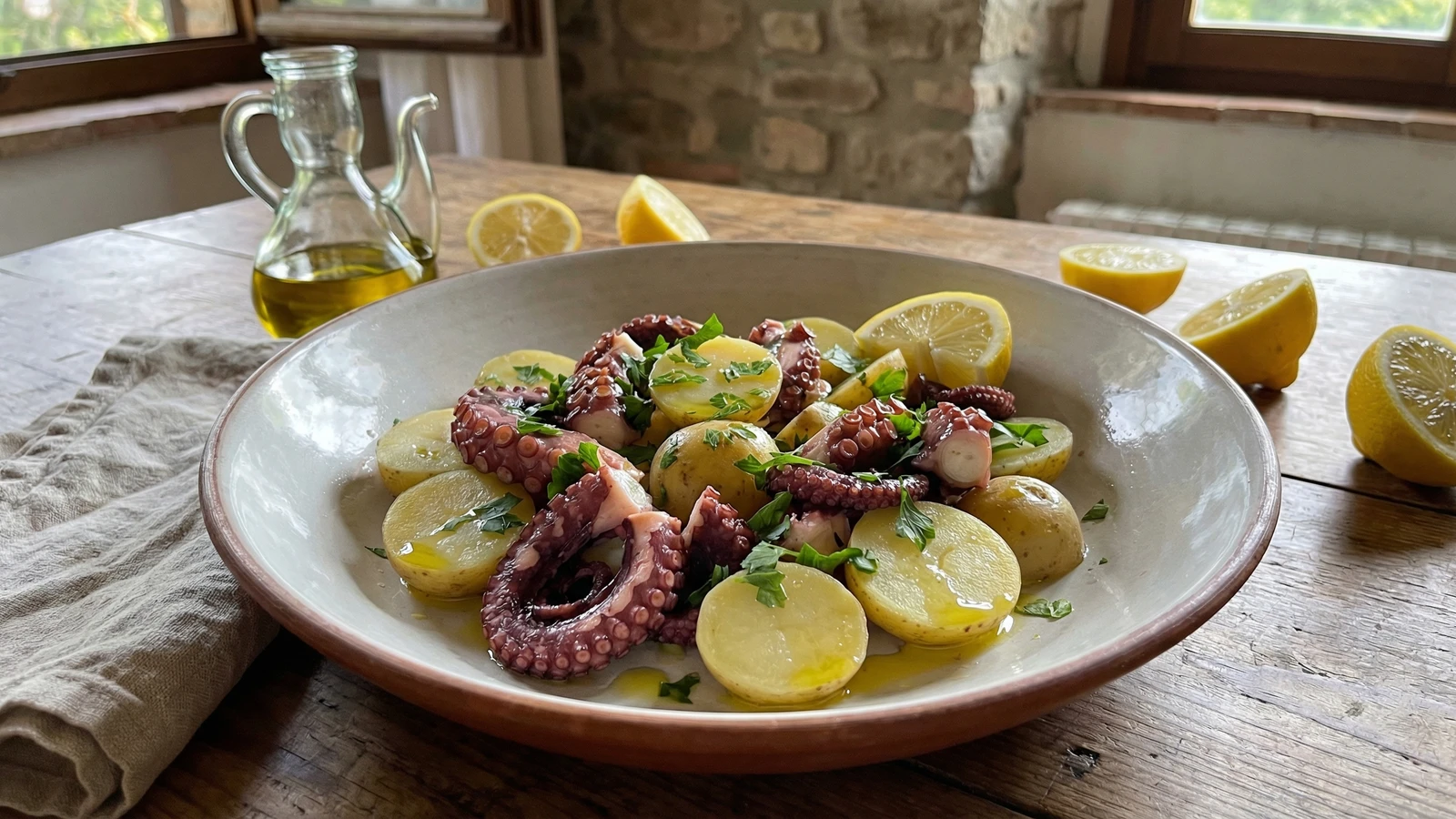
Insalata di Polpo e Patate
Created by Chef Graziella
The classic octopus salad of the Neapolitan coast, where the day's catch meets waxy potatoes and the simplest of dressings. Dressed warm so the octopus and potatoes drink in every drop of lemon and oil.
In Naples, this salad appears on Christmas Eve as part of the Feast of the Seven Fishes, but fishermen's families eat it year round, whenever the morning catch is good. There is nothing complicated about it. You cook octopus until tender. You cook potatoes until soft. You dress them while warm. That is all.
The difficulty lies in the octopus itself. Cook it too briefly and you get rubber. Cook it too long and you get mush. The window for perfection is not wide, and you must test, not guess. A knife should slide into the thickest tentacle with the same slight resistance you feel when testing a potato. When you feel that, you stop.
Neapolitans add a wine cork to the cooking water. Ask them why and they will tell you it tenderizes the flesh. Ask a scientist and they will tell you this is nonsense. I add the cork. What we inherit from our grandmothers deserves respect, even when we cannot explain it.
Insalata di polpo traces its origins to the fishing villages along the Bay of Naples, where octopus was plentiful and potatoes, introduced from the New World, became the natural partner. The dish became central to the Christmas Eve vigil dinner, when Catholic tradition forbade meat. Today it remains the anchor of that meal in Neapolitan homes, though it appears on coastal tables throughout the year.
The technique, the tradition, and the story behind every dish.
Discover Culinary AdvisorIngredients
whole octopus
Quantity
1 (about 3 pounds)
cleaned
waxy potatoes
Quantity
2 pounds
wine cork (optional)
Quantity
1
bay leaf
Quantity
1
extra virgin olive oil
Quantity
1/2 cup, plus more for drizzling
lemon juice
Quantity
juice of 2 lemons (about 1/4 cup)
garlic
Quantity
2 cloves
crushed and minced fine
flat-leaf Italian parsley
Quantity
1/2 cup
chopped
kosher salt
Quantity
to taste
black pepper
Quantity
to taste
freshly ground
celery stalk with leaves
Quantity
1
for the cooking water
| Ingredient | Quantity |
|---|---|
| whole octopuscleaned | 1 (about 3 pounds) |
| waxy potatoes | 2 pounds |
| wine cork (optional) | 1 |
| bay leaf | 1 |
| extra virgin olive oil | 1/2 cup, plus more for drizzling |
| lemon juice | juice of 2 lemons (about 1/4 cup) |
| garliccrushed and minced fine | 2 cloves |
| flat-leaf Italian parsleychopped | 1/2 cup |
| kosher salt | to taste |
| black pepperfreshly ground | to taste |
| celery stalk with leavesfor the cooking water | 1 |
Equipment Needed
- •Large pot for octopus (at least 8 quarts)
- •Medium pot for potatoes
- •Sharp knife
- •Large serving bowl
Instructions
- 1
Prepare the octopus
If your fishmonger has not done so, clean the octopus by removing the beak (the hard center where the tentacles meet), the eyes, and the ink sac. Rinse thoroughly under cold water. The octopus should feel slippery but smell only of the sea. If it smells of ammonia, it is not fresh. Do not use it.
- 2
Cook the octopus
Fill a pot large enough to hold the octopus with water. Add the celery stalk, bay leaf, and if you are traditional, the wine cork. Do not add salt. Bring the water to a gentle simmer. Holding the octopus by the head, dip the tentacles into the simmering water three times, allowing the legs to curl before submerging the entire octopus. This helps the tentacles hold their shape. Once fully submerged, reduce heat to maintain the gentlest simmer. The water should barely move.
The cork is an old Neapolitan tradition. Some believe it tenderizes the flesh. Scientists have found no evidence, but fishermen have done it for generations, and I am not one to argue with fishermen about fish. - 3
Test for doneness
Cook the octopus for 45 minutes to 1 hour, depending on size. Begin testing at 45 minutes by inserting a thin knife or skewer into the thickest part of a tentacle. It should slide in with slight resistance, like a fork into a well-cooked potato. Rubbery octopus means you stopped too soon. Mushy octopus means you went too far. When done, turn off the heat and let the octopus rest in its cooking water for 15 minutes.
- 4
Cook the potatoes
While the octopus cooks, place the potatoes in a separate pot, cover with cold water, and add a generous amount of salt. Bring to a boil, then reduce to a simmer. Cook until a knife slides easily through the center, 20 to 30 minutes depending on size. Drain immediately. When cool enough to handle but still warm, peel and cut into rounds or chunks about half an inch thick.
- 5
Cut the octopus
Remove the octopus from its cooking water. The skin should be intact, a beautiful purple-red. Cut the tentacles from the head. You may use the head if you wish, sliced thin, but many prefer only the tentacles. Cut the tentacles into pieces about one inch long, on a slight diagonal. Work while the octopus is still warm.
- 6
Make the dressing
In a small bowl, whisk together the olive oil, lemon juice, minced garlic, and a generous pinch of salt. The garlic here is used with restraint. You want its presence as a whisper, not a shout. Taste the dressing. It should be bright and balanced, neither too acidic nor too oily.
- 7
Dress while warm
In a large bowl, combine the warm octopus pieces and warm potato slices. Pour the dressing over and toss gently, taking care not to break the potatoes. The warmth of both ingredients allows them to absorb the dressing. Add most of the parsley, reserving some for garnish. Toss again. Season with salt and pepper. Taste and adjust. The dish should sing of lemon and sea.
Dressing the salad while the components are warm is essential. Warm octopus and potatoes drink in the olive oil and lemon. Cold ingredients simply sit there wearing a dressing they refuse to accept. - 8
Rest and serve
Let the salad rest at room temperature for at least 30 minutes to allow the flavors to marry. You may refrigerate it for up to a day, but bring it to room temperature before serving. Cold mutes the flavor. Arrange on a serving plate, scatter the reserved parsley over the top, and drizzle with a final thread of your best olive oil.
Chef Tips
- •Frozen octopus is often more tender than fresh. The freezing process breaks down the muscle fibers, doing some of the tenderizing work for you. Mediterranean fishmongers know this and freeze their catch before selling it.
- •Waxy potatoes hold their shape. Starchy potatoes like russets will crumble into the dressing and create a paste. Yukon Gold, fingerlings, or new potatoes are correct.
- •The salad improves after an hour at room temperature. It improves further overnight in the refrigerator, though you must bring it to room temperature before serving. Cold octopus tastes like nothing at all.
- •Some add a few drops of cooking water from the octopus to the dressing. This contributes a faint depth of sea flavor. Use no more than a tablespoon.
Advance Preparation
- •The entire salad can be made a day ahead and refrigerated. Remove from refrigerator at least one hour before serving to bring to room temperature.
- •The octopus can be cooked up to two days ahead and refrigerated in its cooking water. Cut and dress only when ready to assemble.
Frequently Asked Questions
Nutrition Information
1 serving (about 300g)
Where cooking meets culture.
Culinary mentorship, cultural storytelling, and the editorial depth that makes cooking meaningful.
Explore Culinary Advisor