Culinary Advisor
A cooking platform built around craft, culture, and the stories behind what we eat.
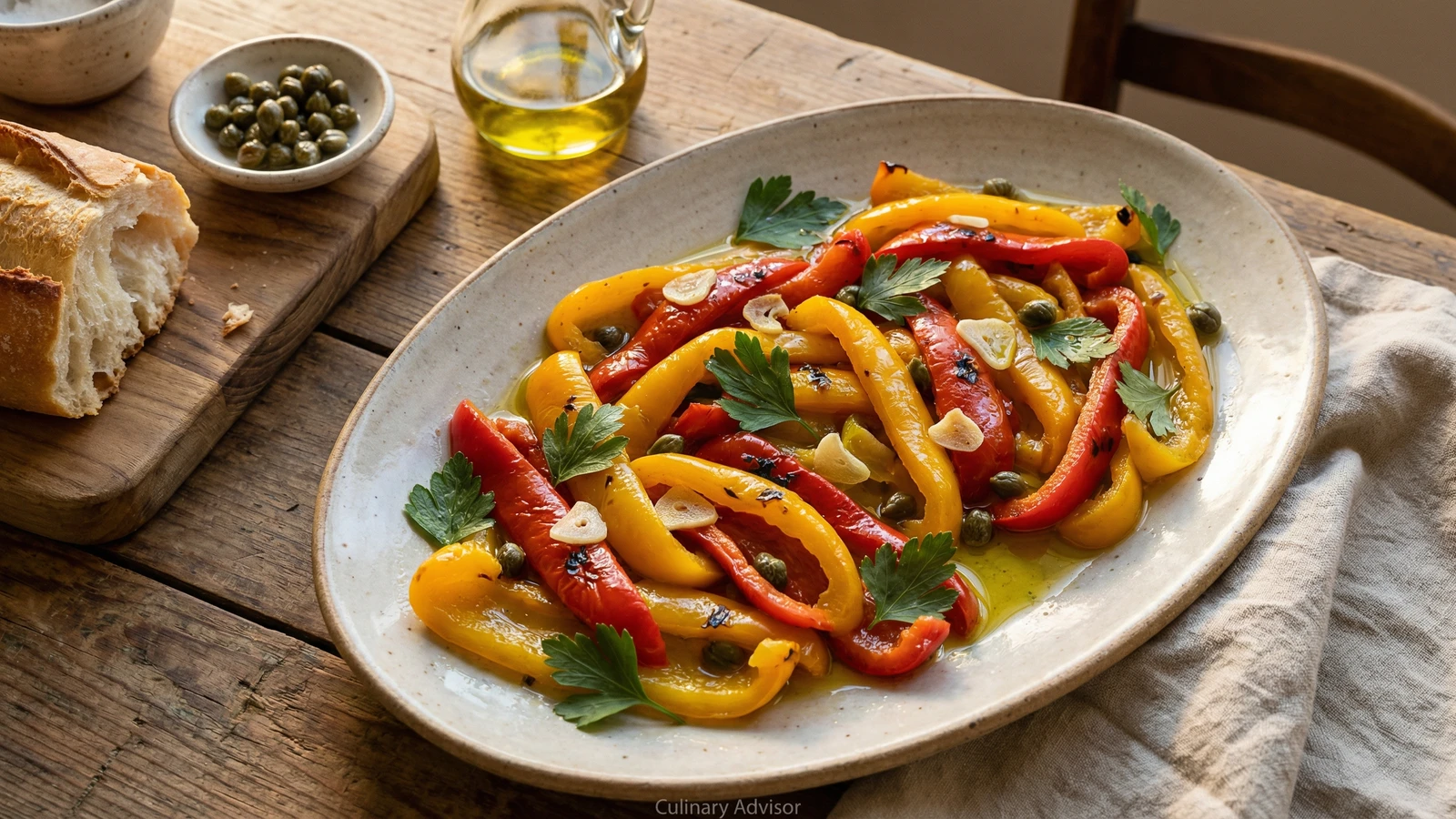
Insalata di Peperoni Arrostiti
Created by Chef Graziella
Piedmontese roasted peppers dressed with anchovies, capers, and the thinnest slices of garlic. A dish that rewards patience, improving for days in the refrigerator.
There are two ways to approach a roasted pepper salad. One involves stripping the pepper of everything that makes it interesting, rinsing it under water until it tastes like nothing in particular, then drowning it in balsamic vinegar. The other is the Piedmontese way.
In Piemonte, sweet peppers are charred until their skins blacken and blister, then peeled without water touching them. The smoky flavor remains. The natural sugars concentrate. The flesh becomes silky and yielding. You dress these peppers simply: good oil, a whisper of vinegar, anchovies that dissolve into the sauce, capers for salt and texture, garlic sliced thin enough to read through.
What you keep out matters here. No dried oregano. No balsamic reduction. No roasted garlic paste. The pepper must remain the point. Everything else supports it without competing for attention.
Piedmont's warm summers produce exceptionally sweet bell peppers, and the region's cooks have roasted them over wood fires for centuries. This preparation appears in farm kitchens throughout the Langhe and Monferrato hills, where it traditionally served as the opening act before a long Sunday pranzo. The combination with anchovies reflects Piedmont's surprising appetite for preserved fish, despite being Italy's only landlocked region.
The technique, the tradition, and the story behind every dish.
Discover Culinary AdvisorIngredients
bell peppers
Quantity
6 large (3 red, 3 yellow)
oil-packed anchovy fillets
Quantity
4
drained
capers
Quantity
2 tablespoons
preferably salt-packed, rinsed thoroughly
garlic cloves
Quantity
2
sliced paper-thin
extra virgin olive oil
Quantity
1/3 cup
red wine vinegar
Quantity
1 tablespoon
kosher salt
Quantity
to taste
fresh flat-leaf parsley
Quantity
2 tablespoons
leaves only
| Ingredient | Quantity |
|---|---|
| bell peppers | 6 large (3 red, 3 yellow) |
| oil-packed anchovy filletsdrained | 4 |
| caperspreferably salt-packed, rinsed thoroughly | 2 tablespoons |
| garlic clovessliced paper-thin | 2 |
| extra virgin olive oil | 1/3 cup |
| red wine vinegar | 1 tablespoon |
| kosher salt | to taste |
| fresh flat-leaf parsleyleaves only | 2 tablespoons |
Equipment Needed
- •Sheet pan
- •Tongs for turning peppers
- •Large bowl with tight-fitting lid or plastic wrap
- •Shallow serving dish
Instructions
- 1
Char the peppers
Set your oven rack four inches from the broiler element and turn the broiler to high. Place the whole peppers on a sheet pan and broil, turning with tongs every five minutes, until the skins are blackened and blistered on all sides. This takes 20 to 25 minutes. The peppers should collapse slightly and appear charred, not merely browned. Browning is not charring. You need the skins to blister away from the flesh.
If you have a gas stove, you may char peppers directly over the flame using tongs. Turn frequently. The method is faster but demands attention. Either approach works if you commit to it fully. - 2
Steam and peel
Transfer the charred peppers immediately to a bowl and cover tightly with plastic wrap. Let them steam for 15 minutes. The residual heat loosens the skins. When cool enough to handle, peel away the charred skin with your fingers. Work over the bowl to catch the juices. Do not rinse the peppers under water. Running water washes away flavor you spent 25 minutes creating. A few flecks of char are acceptable. Obsessive cleaning is not.
Strain the collected juices through a fine mesh sieve and add them to your dressing. This liquid is pure pepper essence. - 3
Clean and slice
Cut each pepper in half and remove the stems, seeds, and white membranes. Cut the flesh into strips roughly one inch wide. Some prefer wider strips; I find one inch manageable for eating. Place the strips in a shallow serving dish, alternating red and yellow for visual appeal.
- 4
Prepare the dressing
Chop the anchovy fillets coarsely. They will dissolve into the oil, which is their purpose. In a small bowl, combine the olive oil, vinegar, chopped anchovies, sliced garlic, and capers. Add a pinch of salt, remembering that anchovies and capers bring their own salinity. Whisk briefly. Taste and adjust. The dressing should be savory and bright, not aggressively salty.
- 5
Dress and rest
Pour the dressing over the pepper strips. Toss gently with your hands to coat every piece. Scatter the parsley leaves on top. Cover and let rest at room temperature for at least 30 minutes, or refrigerate for up to three days. The flavors marry and deepen with time. Bring to room temperature before serving.
This salad is better tomorrow than today. The peppers absorb the dressing, the anchovies melt further into the oil, the garlic softens. Patience creates flavor that haste cannot replicate. - 6
Serve properly
Serve at room temperature as part of an antipasto spread, or as a side dish alongside grilled meats or fish. Provide good bread for soaking up the oil that pools at the bottom of the dish. That oil is seasoned with everything you put into it. Wasting it would be a shame.
Chef Tips
- •Salt-packed capers are superior to those in brine. Rinse them thoroughly under cold water for two minutes, then soak in fresh water for ten minutes. The texture is firmer, the flavor cleaner.
- •Choose peppers that are heavy for their size with thick walls. Thin-walled peppers collapse entirely when roasted and leave you with very little flesh to work with.
- •The garlic must be sliced thin enough to become translucent. Thick slices remain raw and harsh. Paper-thin slices soften in the dressing and release their flavor gently.
- •If you cannot find good anchovies, use none rather than bad ones. A poor anchovy ruins everything it touches. Good ones come packed in olive oil or salt, never the tins of grey mush at the supermarket.
Advance Preparation
- •Roasted and peeled peppers can be refrigerated, covered in olive oil, for up to five days before dressing.
- •The dressed salad improves for three days in the refrigerator. It is genuinely better on day two than day one.
- •Bring to room temperature 30 minutes before serving. Cold mutes the flavors you worked to develop.
Frequently Asked Questions
Nutrition Information
1 serving (about 160g)
Where cooking meets culture.
Culinary mentorship, cultural storytelling, and the editorial depth that makes cooking meaningful.
Explore Culinary Advisor