Culinary Advisor
A cooking platform built around craft, culture, and the stories behind what we eat.
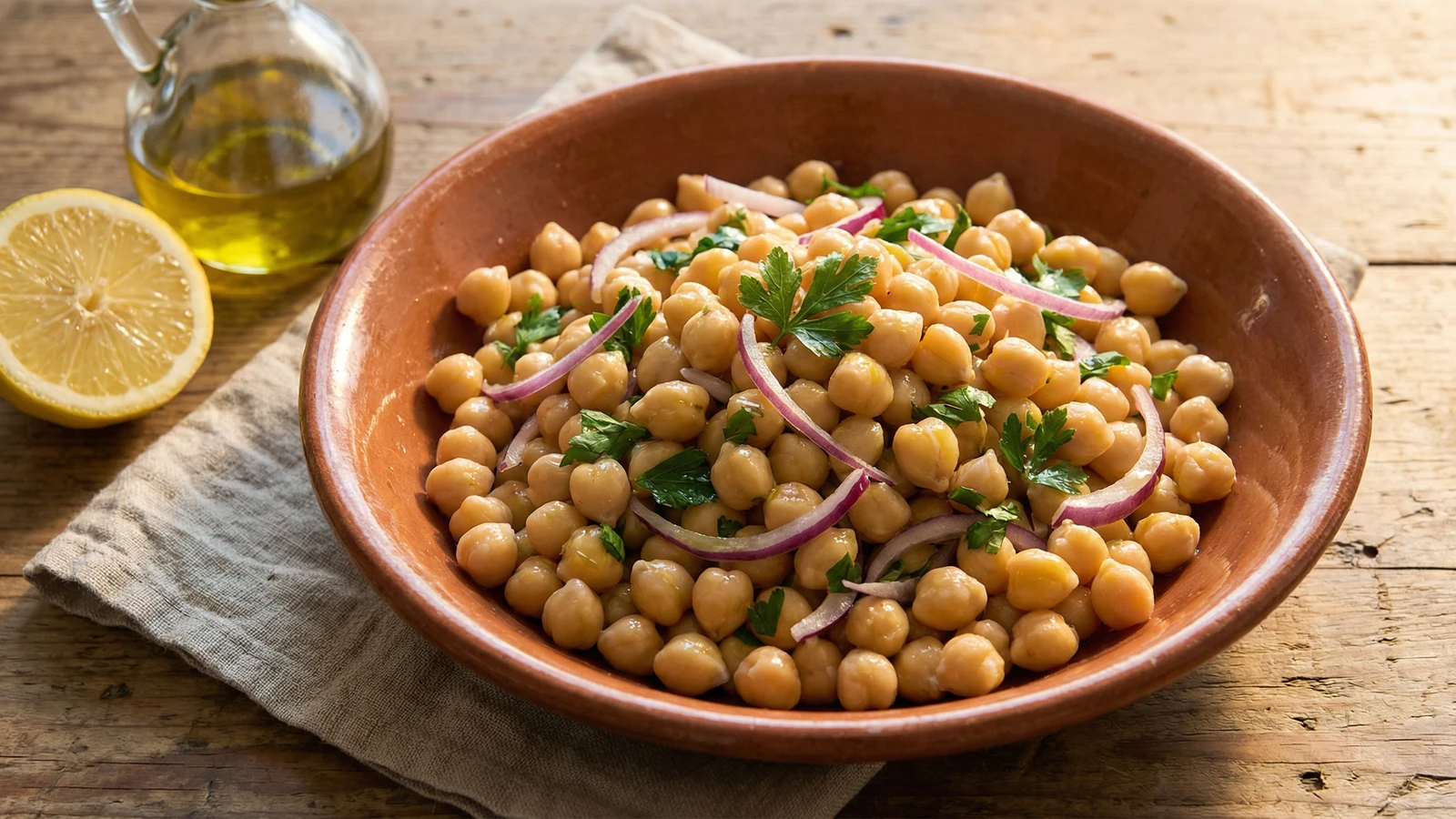
Insalata di Ceci
Created by Chef Graziella
Warm chickpeas drink in olive oil and lemon as cold ones never can. This is the salad of Italian home cooks: five ingredients, honest technique, and nothing to hide behind.
Chickpeas have fed Italians since the Etruscans. They grow in the dry, rocky soil where little else thrives. They are the food of people who work with their hands, who need sustenance that lasts through a long afternoon in the fields or the workshop.
The secret to this salad is temperature. Dress the chickpeas while they are still warm from the pot. They absorb the olive oil and lemon juice like sponges, pulling flavor into their very center. Cold chickpeas sit there stubbornly, the dressing sliding off their skins. This is not opinion. It is chemistry.
I do not add garlic. I do not add cumin, which belongs to other cuisines. I use red onion for its sharpness and color, parsley for freshness, good olive oil because it is the foundation of everything, and lemon because it wakes everything up. What you keep out is as significant as what you put in.
Chickpeas arrived in Italy during the Bronze Age and became essential to the cucina povera of central and southern regions. The Romans fed their legions on chickpea porridge; Tuscan and Ligurian cooks have made variations of this simple salad for centuries, sometimes adding nothing more than olive oil and salt.
The technique, the tradition, and the story behind every dish.
Discover Culinary AdvisorIngredients
dried chickpeas
Quantity
1 pound
soaked overnight
bay leaf
Quantity
1
yellow onion
Quantity
1 small
halved
extra virgin olive oil
Quantity
1/3 cup, plus more for drizzling
fresh lemon juice
Quantity
3 tablespoons (about 1 large lemon)
red onion
Quantity
1/2 medium
sliced very thin
flat-leaf Italian parsley
Quantity
1/2 cup leaves
roughly chopped
kosher salt
Quantity
to taste
black pepper
Quantity
to taste
freshly ground
| Ingredient | Quantity |
|---|---|
| dried chickpeassoaked overnight | 1 pound |
| bay leaf | 1 |
| yellow onionhalved | 1 small |
| extra virgin olive oil | 1/3 cup, plus more for drizzling |
| fresh lemon juice | 3 tablespoons (about 1 large lemon) |
| red onionsliced very thin | 1/2 medium |
| flat-leaf Italian parsleyroughly chopped | 1/2 cup leaves |
| kosher salt | to taste |
| black pepperfreshly ground | to taste |
Equipment Needed
- •Large pot for cooking chickpeas
- •Large mixing bowl
Instructions
- 1
Soak the chickpeas
Place the dried chickpeas in a large bowl and cover with cold water by at least three inches. Let them soak overnight, or for at least 12 hours. The chickpeas will nearly double in size. Drain and rinse before cooking.
- 2
Cook the chickpeas
Place the soaked chickpeas in a large pot with the bay leaf and halved yellow onion. Cover with fresh cold water by three inches. Bring to a gentle simmer over medium heat, then reduce to the lowest flame that maintains a lazy bubble. Cook until the chickpeas are completely tender but hold their shape, 1 to 1 1/2 hours depending on their age. They should yield easily when pressed between your fingers but not turn to mush.
Never salt the cooking water. Salt toughens the skins of chickpeas and prevents them from becoming properly tender. You will season the finished salad. - 3
Drain and dress while warm
Drain the chickpeas immediately and discard the bay leaf and onion. While the chickpeas are still quite warm, transfer them to a large bowl and add the olive oil, lemon juice, and a generous pinch of salt. Toss gently. The warm chickpeas will absorb the dressing in a way that cold ones never can. This is the essential step that separates a good chickpea salad from an ordinary one.
- 4
Add the aromatics
Add the thinly sliced red onion and the chopped parsley. Toss again. Taste and adjust the salt and lemon. The salad should be bright without being sour. The olive oil should coat every chickpea. Add pepper and toss once more.
- 5
Rest and serve
Let the salad rest at room temperature for at least 20 minutes before serving. This allows the flavors to marry. Taste again before serving. You may need more salt. Drizzle with additional olive oil at the table. Serve at room temperature, never cold.
Refrigeration mutes the olive oil and flattens the flavors. If you must store it overnight, bring it to room temperature and refresh with a splash of lemon and oil before serving.
Chef Tips
- •Dried chickpeas have superior texture and flavor. Canned chickpeas are acceptable when time forbids otherwise. Drain them, warm them gently in a dry pan, then dress immediately.
- •The age of dried chickpeas matters. Old chickpeas, sitting on a shelf for years, will never become properly tender. Buy from a store with good turnover.
- •Slice the red onion as thin as you possibly can. Thick slices are harsh and dominate the salad. If the onion is too strong, soak the slices in ice water for ten minutes, then drain and pat dry.
- •Chopped parsley means chopped flat-leaf Italian parsley leaves. Not curly parsley, which has no flavor. Not the stems, which are tough.
Advance Preparation
- •Chickpeas can be cooked a day ahead and refrigerated in their cooking liquid. Drain and warm gently in a dry skillet before dressing.
- •The dressed salad keeps for two days refrigerated. Bring to room temperature and refresh with olive oil and lemon before serving.
- •This salad improves after 30 minutes at room temperature but does not improve overnight. The onion becomes too soft, the parsley fades.
Frequently Asked Questions
Nutrition Information
1 serving (about 260g)
Where cooking meets culture.
Culinary mentorship, cultural storytelling, and the editorial depth that makes cooking meaningful.
Explore Culinary Advisor