Culinary Advisor
A cooking platform built around craft, culture, and the stories behind what we eat.
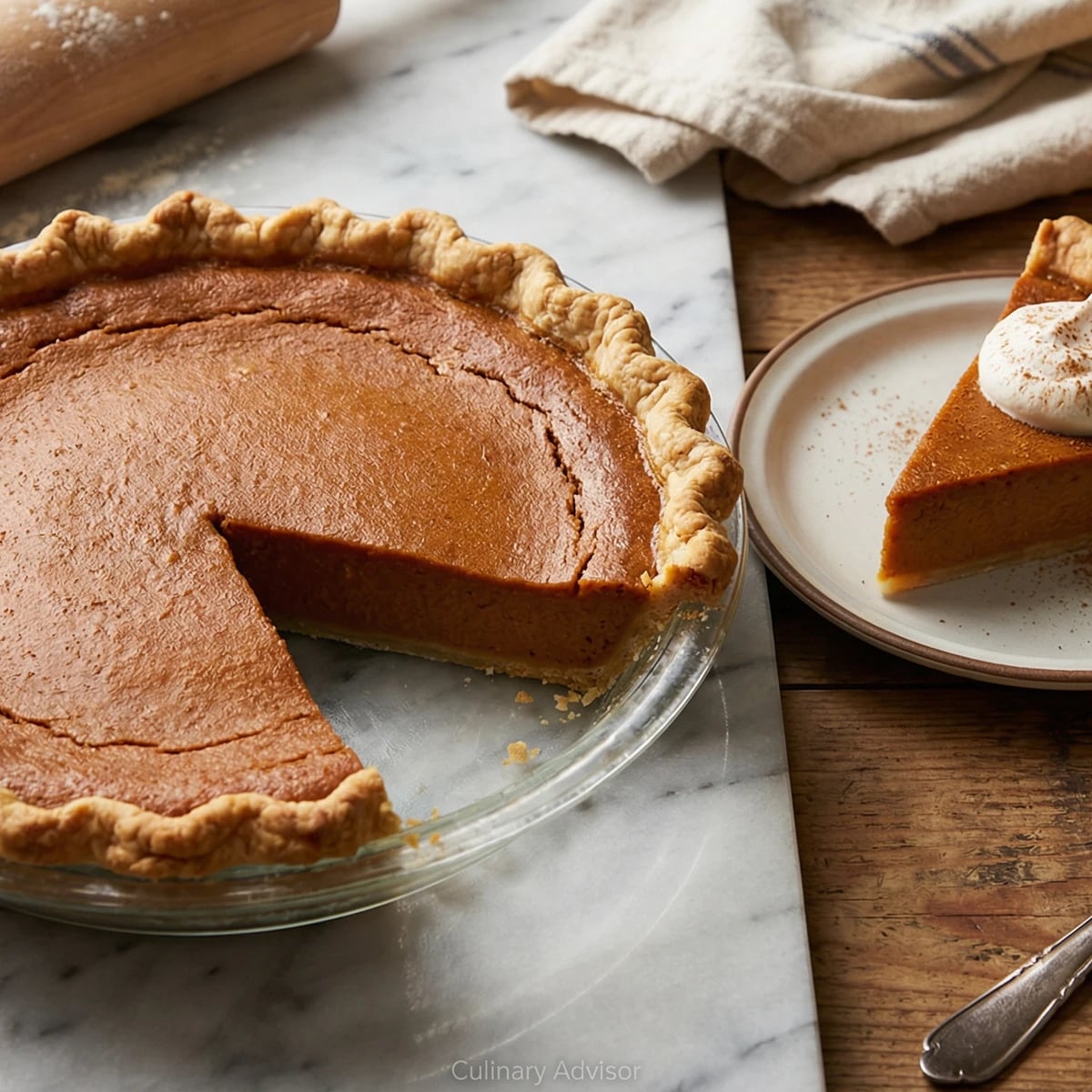
Illinois Pumpkin Pie
A silky spiced custard nestled in a flaky all-butter crust, honoring Illinois's reign as America's pumpkin capital. This is the pie that ends Thanksgiving properly, with a slice that trembles on the fork and tastes like autumn made edible.
Illinois grows more pumpkins than any other state in the nation. Drive through the fields around Morton in October and you'll see them stretching to the horizon, thousands of orange globes waiting to become the filling for America's most beloved holiday pie. This is where Libby's canned pumpkin comes from. This is where Thanksgiving begins.
The pumpkin pie we know today descends from early colonial experiments. English settlers arrived with a tradition of spiced squash puddings and found a continent rich with winter squashes the Native peoples had cultivated for centuries. By the eighteenth century, pumpkin pie had become synonymous with New England harvest celebrations, and when those families moved west to settle the Illinois prairie, they brought their recipes along.
What makes a great pumpkin pie is restraint. The spices should whisper, not shout. The custard should tremble, never rubbery. The crust should shatter when your fork cuts through, revealing that silky burnt-orange filling that tastes like cinnamon and clove and cold November mornings. This recipe honors the farmers who tend those Morton fields and the generations of home bakers who've made this pie the final word on every Thanksgiving table.
Ingredients
all-purpose flour
Quantity
1 1/4 cups (160g)
granulated sugar
Quantity
1 tablespoon
fine sea salt (for crust)
Quantity
1/2 teaspoon
| Ingredient | Quantity |
|---|---|
| all-purpose flour | 1 1/4 cups (160g) |
| granulated sugar | 1 tablespoon |
| fine sea salt (for crust) | 1/2 teaspoon |