Culinary Advisor
A cooking platform built around craft, culture, and the stories behind what we eat.
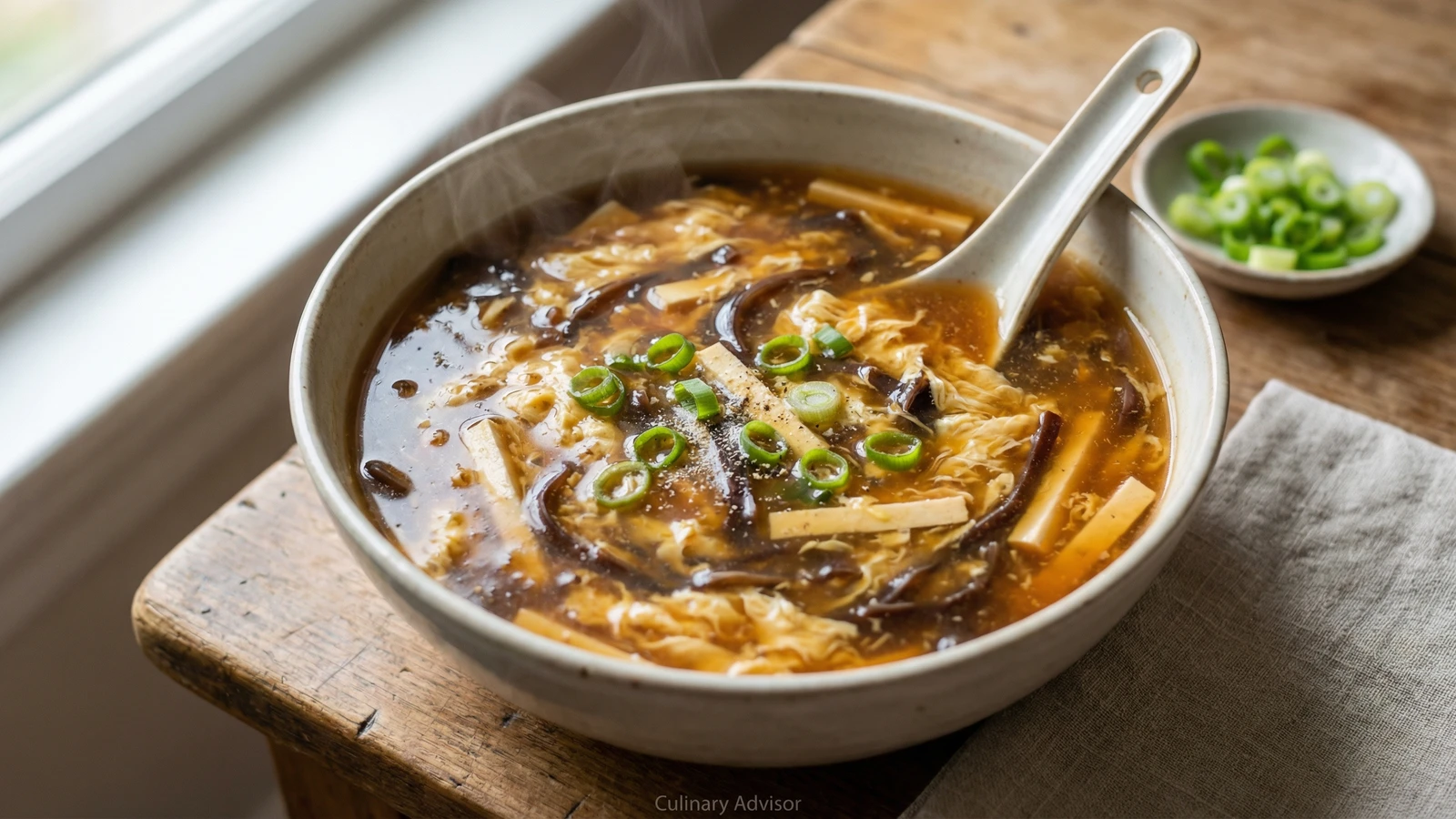
Hot and Sour Soup
Created by
A bowl of complex, soul-warming broth where rice vinegar tang meets the slow burn of white pepper, studded with silky egg ribbons, tender mushrooms, and tofu that absorbs every drop of flavor.
Every Chinese restaurant in America serves hot and sour soup. Most versions arrive lukewarm, gloppy with cornstarch, and tasting vaguely of the same industrial base. This is not that soup. This is the real thing, made in your kitchen with ingredients you control.
The name tells you everything. Hot means white pepper, not chili. That slow, building warmth that starts at the back of your throat and spreads outward. Sour means Chinese black vinegar or rice vinegar, that sharp brightness that cuts through the richness of the broth. Get this balance right and you'll understand why this soup has survived centuries.
I learned to make this from a cook in San Francisco's Chinatown who measured nothing and tasted constantly. She'd add vinegar, sip, add pepper, sip again. The proportions I give you are starting points. Your tongue is the final authority. Taste before you serve. Adjust. That's how good soup gets made.
The technique, the tradition, and the story behind every dish.
Discover Culinary AdvisorIngredients
rich chicken stock
Quantity
6 cups
preferably homemade
boneless pork loin
Quantity
4 ounces
cut into thin matchsticks
soy sauce (for pork marinade)
Quantity
1 tablespoon
cornstarch (for pork marinade)
Quantity
1 teaspoon
dried wood ear mushrooms
Quantity
1/2 cup
dried shiitake mushrooms
Quantity
4
firm tofu
Quantity
8 ounces
drained and cut into 1/4-inch strips
canned bamboo shoots
Quantity
1/2 cup
drained and julienned
Chinese black vinegar (Chinkiang)
Quantity
3 tablespoons
soy sauce
Quantity
2 tablespoons
toasted sesame oil
Quantity
1 tablespoon
ground white pepper
Quantity
1 1/2 teaspoons, plus more to taste
sugar
Quantity
1 teaspoon
cornstarch (for slurry)
Quantity
3 tablespoons
cold water
Quantity
1/4 cup
large eggs
Quantity
2
beaten
green onions
Quantity
3
thinly sliced, whites and greens separated
kosher salt
Quantity
to taste
additional vinegar and white pepper (optional)
Quantity
for serving
| Ingredient | Quantity |
|---|---|
| rich chicken stockpreferably homemade | 6 cups |
| boneless pork loincut into thin matchsticks | 4 ounces |
| soy sauce (for pork marinade) | 1 tablespoon |
| cornstarch (for pork marinade) | 1 teaspoon |
| dried wood ear mushrooms | 1/2 cup |
| dried shiitake mushrooms | 4 |
| firm tofudrained and cut into 1/4-inch strips | 8 ounces |
| canned bamboo shootsdrained and julienned | 1/2 cup |
| Chinese black vinegar (Chinkiang) | 3 tablespoons |
| soy sauce | 2 tablespoons |
| toasted sesame oil | 1 tablespoon |
| ground white pepper | 1 1/2 teaspoons, plus more to taste |
| sugar | 1 teaspoon |
| cornstarch (for slurry) | 3 tablespoons |
| cold water | 1/4 cup |
| large eggsbeaten | 2 |
| green onionsthinly sliced, whites and greens separated | 3 |
| kosher salt | to taste |
| additional vinegar and white pepper (optional) | for serving |
Equipment Needed
- •Large pot or Dutch oven (4-quart minimum)
- •Fine-mesh strainer or coffee filter
- •Small whisk for cornstarch slurry
- •Fork for drizzling eggs
- •Deep soup bowls for serving
Instructions
- 1
Rehydrate the mushrooms
Place both wood ear and shiitake mushrooms in a bowl and cover with two cups of boiling water. Let them soak for twenty to thirty minutes until completely softened and pliable. The shiitakes should feel tender when you squeeze them. Reserve one cup of this soaking liquid. It's concentrated flavor you don't want to lose.
Dried mushrooms keep indefinitely and deliver deeper flavor than fresh. The soaking liquid is essentially free mushroom stock. - 2
Prepare the mushrooms and pork
Remove the tough stems from the shiitakes and slice caps into thin strips. Rinse wood ears thoroughly, checking for any grit hiding in their ruffled edges, then slice into thin ribbons. Toss the pork matchsticks with one tablespoon soy sauce and one teaspoon cornstarch. This brief marinade tenderizes the meat and helps it cook evenly.
- 3
Build the soup base
Bring the chicken stock and reserved mushroom soaking liquid to a simmer in a large pot over medium-high heat. Add the white parts of the green onions and let them perfume the broth for two minutes. The kitchen should smell deeply savory, like the promise of something good.
Strain your mushroom soaking liquid through a coffee filter or paper towel if you notice any sediment. Clean broth matters. - 4
Add the proteins and vegetables
Add the marinated pork to the simmering broth, stirring immediately to separate the pieces. They'll cook in under a minute, turning from pink to pale. Add both types of sliced mushrooms, the tofu strips, and bamboo shoots. Let everything simmer gently for three to four minutes.
- 5
Season the broth
Stir in the black vinegar, remaining two tablespoons soy sauce, sesame oil, white pepper, and sugar. This is where the soup finds its identity. Taste it now. The sour should be forward, the pepper warmth building at the back of your throat. If it tastes flat, add more vinegar. If it lacks depth, more soy sauce. Trust yourself.
- 6
Thicken the soup
Whisk the cornstarch with cold water until completely smooth. With the soup at a steady simmer, pour the slurry in a thin stream while stirring constantly. The soup will transform within thirty seconds, turning from thin broth to silky, slightly viscous liquid that clings to the spoon. Don't add it all at once. You can always add more, but you cannot remove it.
Cold water is essential. Hot water causes cornstarch to clump instantly into gummy lumps that won't dissolve. - 7
Create the egg ribbons
Return the soup to a gentle simmer. Hold a fork over the pot and pour the beaten eggs slowly through the tines while stirring the soup in a single direction with your other hand. The eggs should form delicate, silky ribbons that float like golden threads through the broth. Move slowly. This takes patience. The result should be elegant wisps, not scrambled chunks.
- 8
Final adjustments and serve
Remove from heat immediately after the eggs set. Taste once more and adjust the hot and sour balance. The soup should make you pucker slightly, then warm you from within. Ladle into deep bowls, scatter the green onion tops over each portion, and serve with additional vinegar and white pepper at the table. Every palate is different. Let people find their own perfect balance.
Chef Tips
- •Chinese black vinegar (Chinkiang) has a complex, slightly smoky flavor that rice vinegar lacks. Find it at any Asian grocery. It keeps forever in your pantry and transforms many dishes.
- •White pepper provides the authentic heat. Black pepper tastes different, hotter upfront but without that lingering warmth. This is one substitution I cannot recommend.
- •For vegetarian hot and sour soup, use rich vegetable stock and omit the pork. Double the mushrooms and add an extra splash of soy sauce to compensate for the lost depth.
- •The soup should be bracingly sour and noticeably peppery when you taste it in the pot. It will mellow as it cools in the bowl. Season with this in mind.
Advance Preparation
- •The mushrooms can be rehydrated up to two days ahead. Store them in their soaking liquid, refrigerated.
- •The soup base without eggs can be made one day ahead. Bring to a simmer before adding the egg ribbons just before serving.
- •Complete soup does not freeze well. The tofu texture suffers and the egg ribbons become rubbery. Make the stock ahead and freeze that instead, then assemble fresh soup when you want it.
Frequently Asked Questions
Nutrition Information
1 serving (about 240g)
Where cooking meets culture.
Culinary mentorship, cultural storytelling, and the editorial depth that makes cooking meaningful.
Explore Culinary Advisor