Culinary Advisor
A cooking platform built around craft, culture, and the stories behind what we eat.
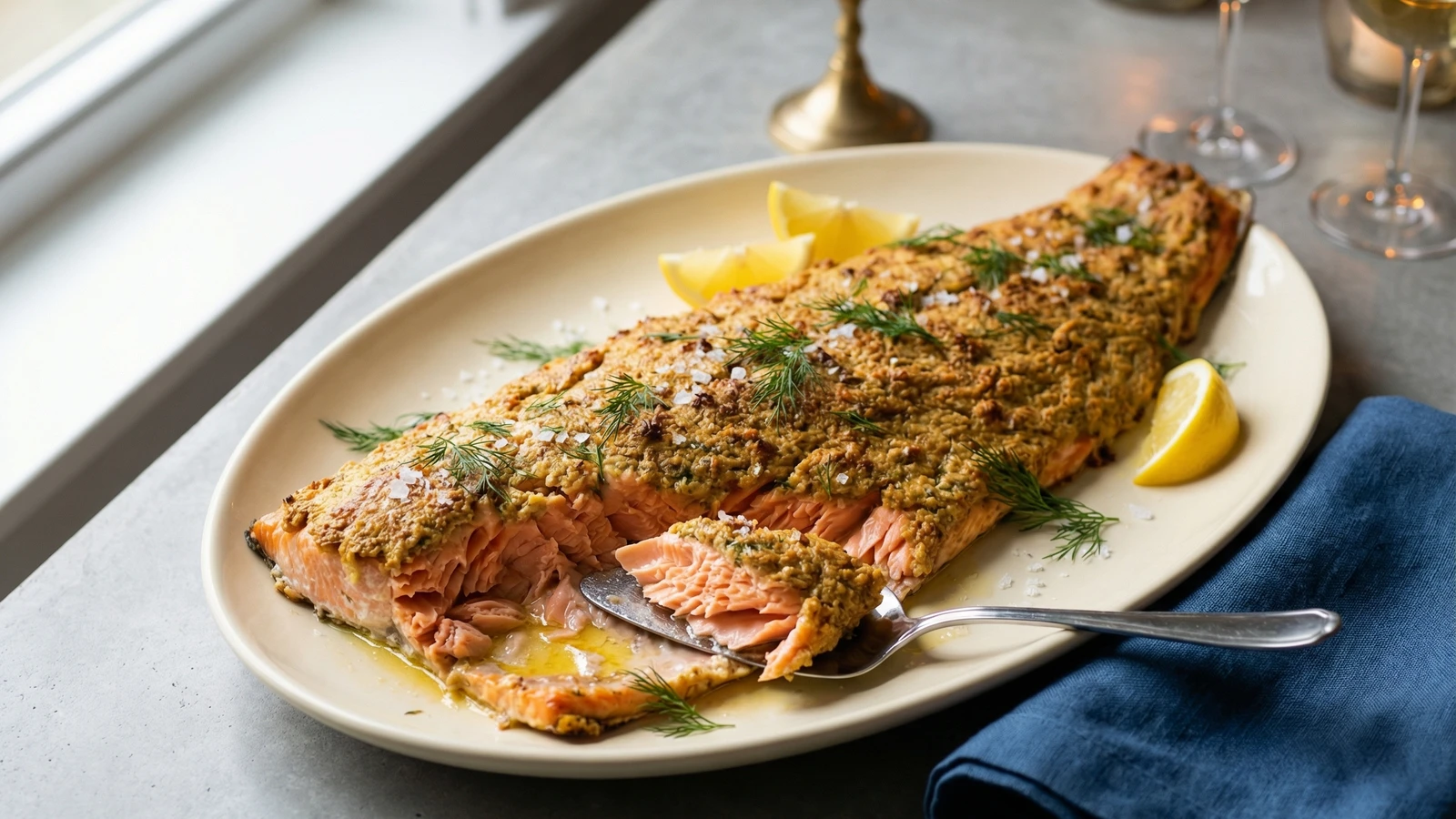
Horseradish-Crusted Salmon
Created by
A golden-crusted salmon roast where pungent horseradish meets buttery breadcrumbs, creating the perfect contrast of heat and richness against tender, coral-pink fish. This is holiday cooking that honors tradition while respecting your time.
Horseradish belongs to Jewish cooking the way garlic belongs to Italian. The fiery root arrived in Eastern European shtetls centuries ago and never left, becoming inseparable from Passover seders and holiday tables. When you combine it with salmon, you're participating in a tradition that stretches back generations.
This preparation works beautifully for gatherings because it solves the host's eternal problem: how to serve something impressive without being chained to the stove. The salmon roasts unattended. The crust turns golden and fragrant while you set the table, light the candles, welcome your guests. Pull it from the oven, let it rest five minutes, and you've got a centerpiece worthy of any celebration.
I've taught this recipe to nervous home cooks convinced they couldn't handle fish for a crowd. They all succeeded. The technique is forgiving. Salmon wants to be cooked gently, and the horseradish crust protects it, keeping the flesh moist even if you overshoot by a few minutes. The crust also telegraphs doneness visually: when it's deeply golden and the fish flakes at the edges, you're there.
For Hanukkah, this dish offers something lighter amid the latkes and brisket. The horseradish carries enough punch to hold its own against richer foods, while the salmon provides a welcome counterpoint. Your guests will remember it.
The technique, the tradition, and the story behind every dish.
Discover Culinary AdvisorIngredients
whole side of salmon, skin-on, pin bones removed
Quantity
1 (about 3 pounds)
prepared horseradish
Quantity
1 cup
well-drained
fresh breadcrumbs (from day-old challah or good white bread)
Quantity
1 1/2 cups
unsalted butter
Quantity
4 tablespoons
melted
Dijon mustard
Quantity
2 tablespoons
fresh dill
Quantity
2 tablespoons
finely chopped
fresh lemon zest
Quantity
1 tablespoon
kosher salt
Quantity
1 teaspoon
freshly ground black pepper
Quantity
1/2 teaspoon
olive oil
Quantity
2 tablespoons
lemon wedges
Quantity
for serving
fresh dill sprigs (optional)
Quantity
for garnish
| Ingredient | Quantity |
|---|---|
| whole side of salmon, skin-on, pin bones removed | 1 (about 3 pounds) |
| prepared horseradishwell-drained | 1 cup |
| fresh breadcrumbs (from day-old challah or good white bread) | 1 1/2 cups |
| unsalted buttermelted | 4 tablespoons |
| Dijon mustard | 2 tablespoons |
| fresh dillfinely chopped | 2 tablespoons |
| fresh lemon zest | 1 tablespoon |
| kosher salt | 1 teaspoon |
| freshly ground black pepper | 1/2 teaspoon |
| olive oil | 2 tablespoons |
| lemon wedges | for serving |
| fresh dill sprigs (optional) | for garnish |
Equipment Needed
- •Rimmed baking sheet (18x13 inches for a whole side)
- •Instant-read thermometer
- •Two large spatulas for transferring
- •Clean kitchen towel for draining horseradish
Instructions
- 1
Prepare the salmon
Remove the salmon from the refrigerator 30 minutes before cooking. A cold fish hitting a hot oven cooks unevenly, leaving you with overdone edges and a raw center. Run your fingers along the flesh side, feeling for pin bones. Any your fishmonger missed can be pulled with needle-nose pliers or sturdy tweezers. Pat the surface completely dry with paper towels.
Ask your fishmonger to remove pin bones when you purchase the salmon. Most will do this gladly and save you considerable time. - 2
Prepare your pan
Position a rack in the center of your oven and heat to 400°F. Line a rimmed baking sheet with parchment paper or aluminum foil for easier cleanup. Brush the parchment lightly with olive oil. Place the salmon skin-side down on the prepared sheet. The skin acts as a natural barrier, protecting the delicate flesh from direct heat while keeping everything intact for serving.
- 3
Make the crust
Squeeze the prepared horseradish firmly in a clean kitchen towel to extract excess liquid. This step matters. Wet horseradish creates a soggy crust that steams rather than crisps. Combine the drained horseradish with breadcrumbs, melted butter, Dijon mustard, chopped dill, lemon zest, salt, and pepper in a medium bowl. Mix until everything is evenly distributed and the crumbs are moistened throughout. The mixture should hold together loosely when squeezed.
Fresh horseradish, grated and mixed with a splash of white vinegar, delivers more heat than jarred. If using fresh, start with 3/4 cup and adjust to your taste. - 4
Apply the mustard base
Spread the Dijon mustard evenly over the entire flesh side of the salmon using an offset spatula or the back of a spoon. This thin layer serves two purposes: it provides tangy depth that complements the horseradish, and it acts as glue, helping the crust adhere during roasting. Don't skip this step.
- 5
Apply the crust
Distribute the horseradish mixture evenly over the mustard-coated salmon, pressing gently to help it adhere. Build the layer about half an inch thick across the entire surface, taking care to cover the edges where the fish tends to dry out first. Pat everything firmly but don't compact it into a dense mass. You want air pockets that will crisp in the oven's heat.
- 6
Roast the salmon
Roast for 18 to 22 minutes, depending on thickness. The crust should turn deep golden brown and the salmon should flake easily when pressed at the thickest point. An instant-read thermometer inserted into the center should register 125°F for medium (which will carry over to 130°F as it rests), or 130°F for medium-well. Watch the crust during the final minutes. If it's browning too quickly, tent loosely with foil.
For a more dramatic crust, switch to broil for the final 2 minutes. Watch constantly. Broilers are unforgiving and will take your crust from golden to charred in seconds. - 7
Rest and serve
Remove the salmon from the oven and let it rest on the baking sheet for 5 minutes. The proteins relax, the juices redistribute, and the carryover heat finishes the cooking gently. Transfer the whole side to a warm serving platter using two large spatulas, one at each end. Work confidently but carefully. Surround with lemon wedges and scatter fresh dill sprigs over the top. Bring it to the table whole and slice portions at serving time.
Chef Tips
- •Buy your salmon from a fishmonger who moves product quickly. The fish should smell like the ocean, clean and briny, never fishy or ammoniac. If it smells wrong, walk away. No amount of horseradish will rescue inferior fish.
- •For large gatherings, two smaller fillets (1.5 pounds each) are easier to handle than one massive side. They also cook more evenly and give you flexibility in plating.
- •Challah makes exceptional breadcrumbs for this dish, connecting two Jewish traditions on one plate. Pulse day-old challah in your food processor until you have coarse, fluffy crumbs. Panko works in a pinch but lacks the same symbolic resonance.
- •The heat level of prepared horseradish varies dramatically between brands. Taste before you commit. Gold's and Kelchner's deliver reliable punch. Avoid anything labeled 'creamy' or 'mild' unless you want something tame.
- •Serve this alongside latkes for Hanukkah, letting the salmon's lightness balance the richness of fried potatoes. A simple cucumber salad with sour cream dressing rounds out the plate beautifully.
Advance Preparation
- •The horseradish crust mixture can be made up to 24 hours ahead and refrigerated. Bring to room temperature before applying to prevent shocking the fish with cold topping.
- •The salmon can be crusted and refrigerated, loosely covered, up to 4 hours before roasting. Add 3 to 5 minutes to your cooking time if roasting directly from the refrigerator.
- •For the best results, season the salmon with salt, cover, and refrigerate overnight. The salt penetrates the flesh, seasoning it throughout rather than just on the surface. Pat dry before applying mustard and crust.
- •Leftover salmon keeps refrigerated for 2 days and makes exceptional salmon salad when flaked and mixed with mayonnaise, capers, and more fresh dill.
Frequently Asked Questions
Nutrition Information
1 serving (about 170g)
Where cooking meets culture.
Culinary mentorship, cultural storytelling, and the editorial depth that makes cooking meaningful.
Explore Culinary Advisor