Culinary Advisor
A cooking platform built around craft, culture, and the stories behind what we eat.
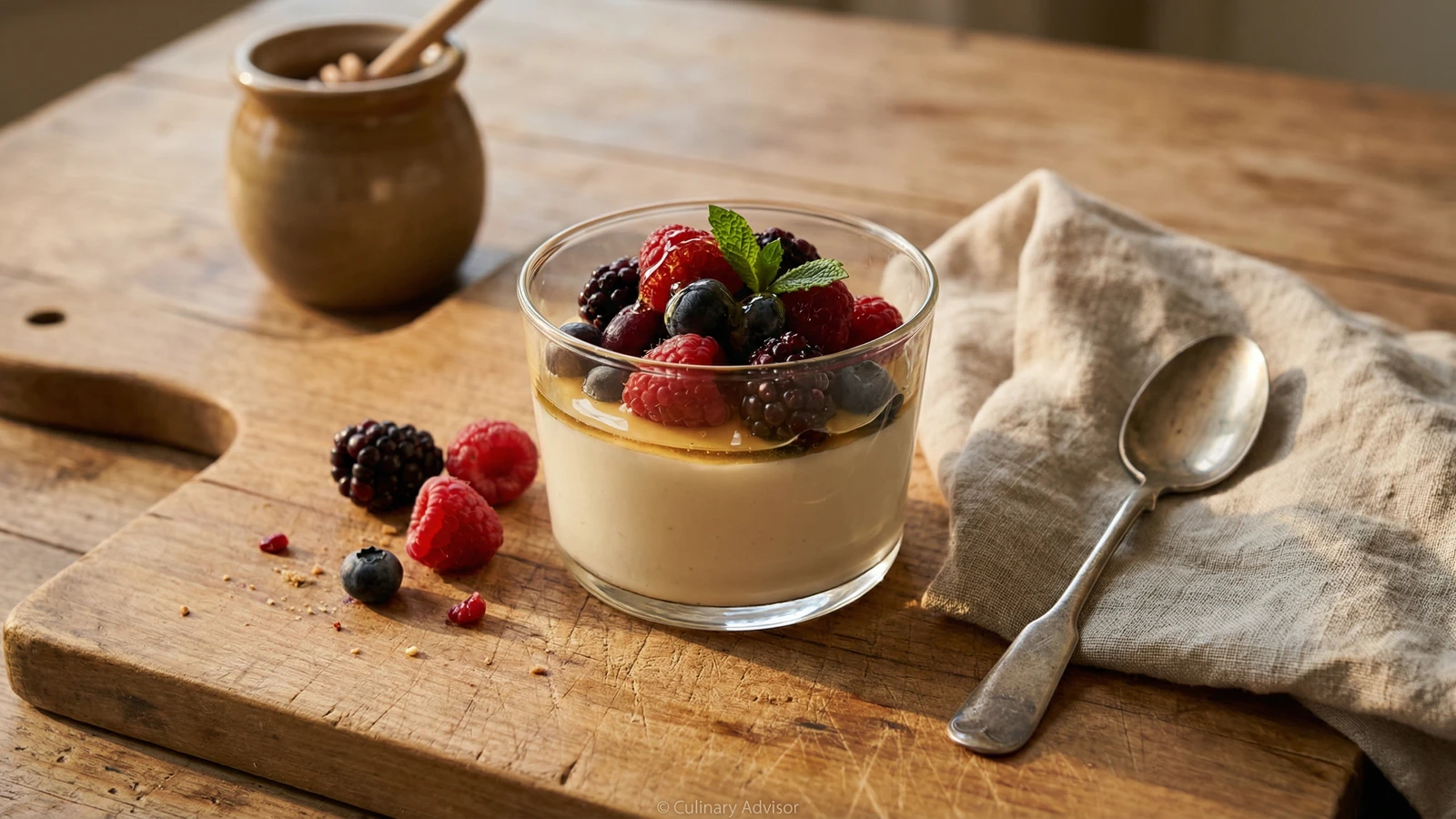
Honey Yogurt Panna Cotta with Seasonal Fruit
Created by Chef Ally
A gentle, trembling dessert where tangy Greek yogurt meets local wildflower honey, barely held together by cream and crowned with whatever fruit the market offers that morning.
Start with the yogurt. Find one made from whole milk, thick enough to hold a spoon upright, tangy enough to remind you that dairy is alive. The best comes from small producers who care about their animals and their craft. This is the backbone of the dessert.
Then the honey. Local wildflower honey carries the taste of place. The bees visited clover or orange blossoms or buckwheat, and that journey lives in every golden spoonful. Industrial honey tastes of nothing. Spend a few dollars more.
Panna cotta means cooked cream, but this version leans toward yogurt, lighter and brighter than the traditional. The technique asks almost nothing of you: warm, stir, chill, wait. The waiting is the hardest part. Four hours feels like forever when you know what is coming.
The fruit changes everything and should change with the seasons. August berries tumbled on top. October figs split open to show their seeds. February citrus supremed into jeweled segments. This is a dessert that asks you to pay attention to what is ripe, what is ready, what the land is offering right now.
The technique, the tradition, and the story behind every dish.
Discover Culinary AdvisorIngredients
heavy cream
Quantity
1 cup
local wildflower honey
Quantity
1/3 cup, plus more for drizzling
unflavored gelatin
Quantity
1 packet (2 1/4 teaspoons)
cold water
Quantity
3 tablespoons
whole milk Greek yogurt
Quantity
2 cups
pure vanilla extract
Quantity
1/2 teaspoon
fine sea salt
Quantity
pinch
seasonal fruit
Quantity
2 cups
prepared according to type
| Ingredient | Quantity |
|---|---|
| heavy cream | 1 cup |
| local wildflower honey | 1/3 cup, plus more for drizzling |
| unflavored gelatin | 1 packet (2 1/4 teaspoons) |
| cold water | 3 tablespoons |
| whole milk Greek yogurt | 2 cups |
| pure vanilla extract | 1/2 teaspoon |
| fine sea salt | pinch |
| seasonal fruitprepared according to type | 2 cups |
Equipment Needed
- •Small saucepan
- •Whisk
- •6 ramekins, small jars, or wine glasses (6-ounce capacity)
Instructions
- 1
Bloom the gelatin
Sprinkle the gelatin over cold water in a small bowl. Let it sit for five minutes. The granules will absorb the water and become soft, spongy, translucent. This step matters. Unblocked gelatin creates lumps that will haunt your panna cotta.
Always add gelatin to liquid, never the reverse. Dumping liquid onto gelatin powder creates clumps that refuse to dissolve. - 2
Warm cream and honey
Pour the cream into a small saucepan and add the honey. Set over medium-low heat and stir gently until the honey dissolves and the mixture is warm to the touch, steaming slightly but nowhere near simmering. This should take three to four minutes. Remove from heat immediately.
Good honey tastes of where it came from. Ask your farmer what flowers the bees visited. That terroir will flavor your dessert. - 3
Dissolve the gelatin
Add the bloomed gelatin to the warm cream mixture and stir until completely dissolved, about one minute. The mixture should look smooth and uniform. No granules visible. Add the vanilla and salt, stirring to combine.
- 4
Fold in the yogurt
Place the Greek yogurt in a large bowl. Pour the warm cream mixture over it in a slow, steady stream while whisking constantly. Work gently. You want the two to become one, not to incorporate air or create foam. The result should be silky and pourable, with that beautiful tang from the yogurt still present.
Whole milk Greek yogurt is essential here. Low-fat versions lack the body this dessert needs, and the tang becomes sharp rather than pleasant. - 5
Pour and chill
Divide the mixture evenly among six ramekins, small jars, or wine glasses. Each should hold about two-thirds cup. Cover with plastic wrap, pressing gently against the surface to prevent a skin from forming. Refrigerate for at least four hours, or overnight. The panna cotta is ready when it trembles like a living thing when nudged but holds its shape.
- 6
Prepare seasonal fruit
Let the season guide you. Summer demands ripe berries, halved if large, macerated briefly in a spoonful of honey if they need coaxing. Autumn brings figs quartered to show their ruby centers, or roasted grapes that collapse into jammy sweetness. Winter calls for citrus segments, supremed to remove every trace of bitter pith. Spring offers the first stone fruits, sliced thin and fanned like delicate petals.
- 7
Serve simply
Spoon the prepared fruit over each panna cotta. Drizzle with a little more honey if you like, letting it pool in the curves of the fruit. Serve cold, directly in the vessel. There is no need to unmold. The beauty is in the wobble, the layers visible through glass, the anticipation before the first spoonful breaks the surface.
Chef Tips
- •Your choices shape the food system. Seek out honey from a local beekeeper at your farmers market. Ask them about their bees. That conversation is part of the meal.
- •If the panna cotta seems too firm after chilling, you have used too much gelatin or too little yogurt. Next time, measure carefully. This dessert should tremble, not bounce.
- •Do not sweeten the fruit unless it truly needs help. Perfect ripeness requires nothing but a knife. Taste before you add honey.
- •For a dinner party, make these a full day ahead. They keep beautifully and free you to focus on your guests rather than dessert.
- •In winter when fresh fruit is scarce, a compote of dried apricots and golden raisins simmered in wine makes a lovely topping. The seasons still offer gifts if you look.
Advance Preparation
- •Panna cotta can be made up to three days ahead and refrigerated, covered. The texture actually improves after the first night.
- •Prepare fruit no more than two hours before serving to preserve its aliveness. Stone fruits and berries weep if cut too early.
- •If serving in ramekins you wish to unmold, lightly oil them before pouring. Run a thin knife around the edge and invert onto plates.
Frequently Asked Questions
Nutrition Information
1 serving (about 195g)
Where cooking meets culture.
Culinary mentorship, cultural storytelling, and the editorial depth that makes cooking meaningful.
Explore Culinary Advisor