Culinary Advisor
A cooking platform built around craft, culture, and the stories behind what we eat.
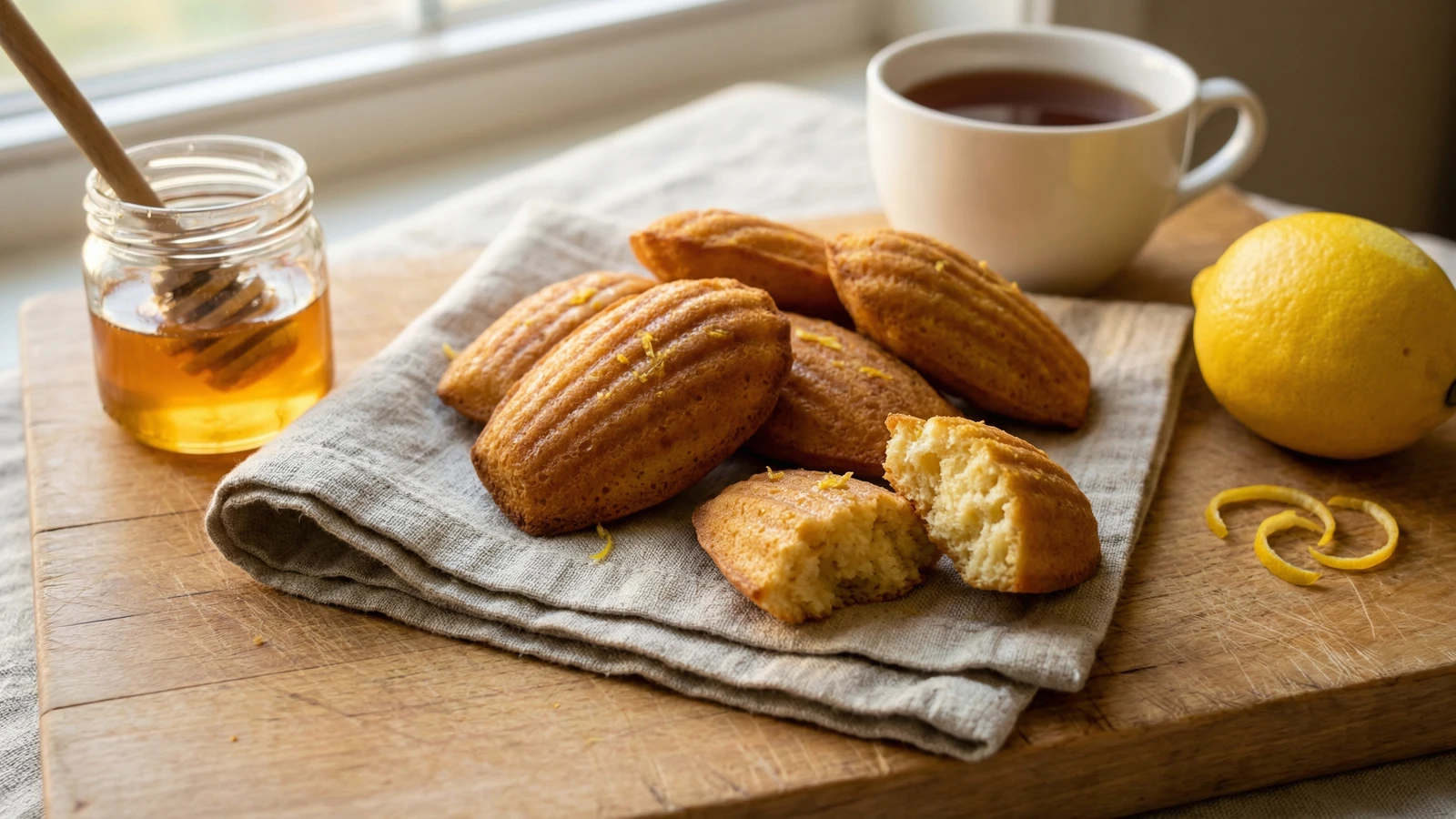
Honey Madeleines with Lemon Zest
Created by Chef Ally
Delicate shell-shaped cakes perfumed with local honey and fragrant lemon zest, their golden edges giving way to tender, slightly springy centers that taste of butter and quiet Sunday afternoons.
Start with the honey. Find a jar from bees that foraged near your home, something with character and place. Wildflower, orange blossom, buckwheat if you like darkness. The honey you choose will shape everything that follows.
Madeleines ask for so little. Good butter, fresh eggs, a lemon with skin that smells alive when you scratch it. The technique is nearly nothing: whisk, fold, rest, bake. What makes them extraordinary is the quality of what goes in.
Proust understood this. His famous madeleine dipped in tea unlocked a lifetime of memory not because of clever preparation, but because it tasted of exactly what it was. That is the whole point. Let things taste of what they are.
These cakes want to be eaten warm, standing at the counter, before anyone else knows they exist. The honey pools in the shell ridges. The lemon zest perfumes your fingers. This is baking as it should be: honest, alive, and meant to be shared.
The technique, the tradition, and the story behind every dish.
Discover Culinary AdvisorIngredients
large eggs
Quantity
2
at room temperature
granulated sugar
Quantity
1/2 cup (100g)
local honey
Quantity
2 tablespoons
all-purpose flour
Quantity
1 cup (120g)
baking powder
Quantity
1/2 teaspoon
fine sea salt
Quantity
1/4 teaspoon
unsalted butter
Quantity
1/2 cup (1 stick/113g)
melted and cooled, plus more for the pan
lemon
Quantity
1
zested finely
pure vanilla extract
Quantity
1/2 teaspoon
| Ingredient | Quantity |
|---|---|
| large eggsat room temperature | 2 |
| granulated sugar | 1/2 cup (100g) |
| local honey | 2 tablespoons |
| all-purpose flour | 1 cup (120g) |
| baking powder | 1/2 teaspoon |
| fine sea salt | 1/4 teaspoon |
| unsalted buttermelted and cooled, plus more for the pan | 1/2 cup (1 stick/113g) |
| lemonzested finely | 1 |
| pure vanilla extract | 1/2 teaspoon |
Equipment Needed
- •Madeleine pan (12-shell capacity)
- •Fine-mesh sieve for sifting
- •Flexible spatula
- •Pastry brush for buttering
Instructions
- 1
Whisk eggs and sugar
In a medium bowl, whisk together the eggs and sugar until the mixture lightens in color and thickens slightly, about two minutes by hand. You are not looking for stiff peaks, just a batter that falls in lazy ribbons when you lift the whisk. Add the honey and whisk until incorporated.
Room temperature eggs whip better and create a more tender crumb. Set them out an hour before you begin. - 2
Add dry ingredients
Sift the flour, baking powder, and salt directly over the egg mixture. Fold gently with a spatula until no dry streaks remain. Work slowly. Overmixing develops gluten and makes dense cakes.
- 3
Fold in butter and aromatics
Drizzle the cooled melted butter around the edge of the bowl. Add the lemon zest and vanilla. Fold everything together until the batter is glossy and uniform. It will be thick, like cake batter with body.
The butter must be cool enough to touch comfortably. Hot butter will cook the eggs and deflate your batter. - 4
Rest the batter
Press plastic wrap directly onto the surface of the batter to prevent a skin from forming. Refrigerate for at least three hours, or overnight. This rest is essential. Cold batter hitting a hot pan creates the signature bump on the back of each madeleine.
- 5
Prepare the pan
Generously brush a madeleine pan with softened butter, making sure to coat every ridge of each shell mold. Place the pan in the freezer for ten minutes. This cold, well-buttered surface ensures clean release and crisp edges.
- 6
Fill and bake
Preheat your oven to 375°F. Spoon about one tablespoon of cold batter into each mold, filling them three-quarters full. Do not spread the batter; it will find its way. Bake for ten to twelve minutes, until the edges are golden and the centers spring back when touched lightly.
A hot oven is crucial. If your oven runs cool, increase to 400°F and watch carefully. The bump forms when cold batter meets high heat. - 7
Unmold and serve warm
Immediately turn the pan over and tap firmly. The madeleines should release cleanly, shell-side up, each one showing the ridged pattern with a proud bump on the back. Eat them warm if you can. They are best in the first hour, still fragrant with honey and lemon.
Chef Tips
- •Seek out honey from a local beekeeper or farmers market. The flavor varies with what the bees foraged, and that variation is the whole point. Clover honey tastes different from wildflower, which tastes different from orange blossom.
- •Use a lemon with tight, unblemished skin that releases fragrance when you scratch it. If it smells like nothing, it will taste like nothing. Meyer lemons, when in season, bring a gentler, more floral brightness.
- •The batter rests better overnight. Make it before dinner and bake them for breakfast. The flavor deepens and the texture improves with time.
- •If your madeleines stick, your pan was not buttered generously enough or cold enough. Learn from it and adjust.
Advance Preparation
- •Batter can be refrigerated for up to three days before baking. The flavor improves as it rests.
- •Baked madeleines are best eaten within hours of baking. They lose their delicate texture quickly. If you must store them, keep in an airtight container for one day and warm briefly in a low oven before serving.
Frequently Asked Questions
Nutrition Information
1 serving (about 18g)
Where cooking meets culture.
Culinary mentorship, cultural storytelling, and the editorial depth that makes cooking meaningful.
Explore Culinary Advisor