Culinary Advisor
A cooking platform built around craft, culture, and the stories behind what we eat.
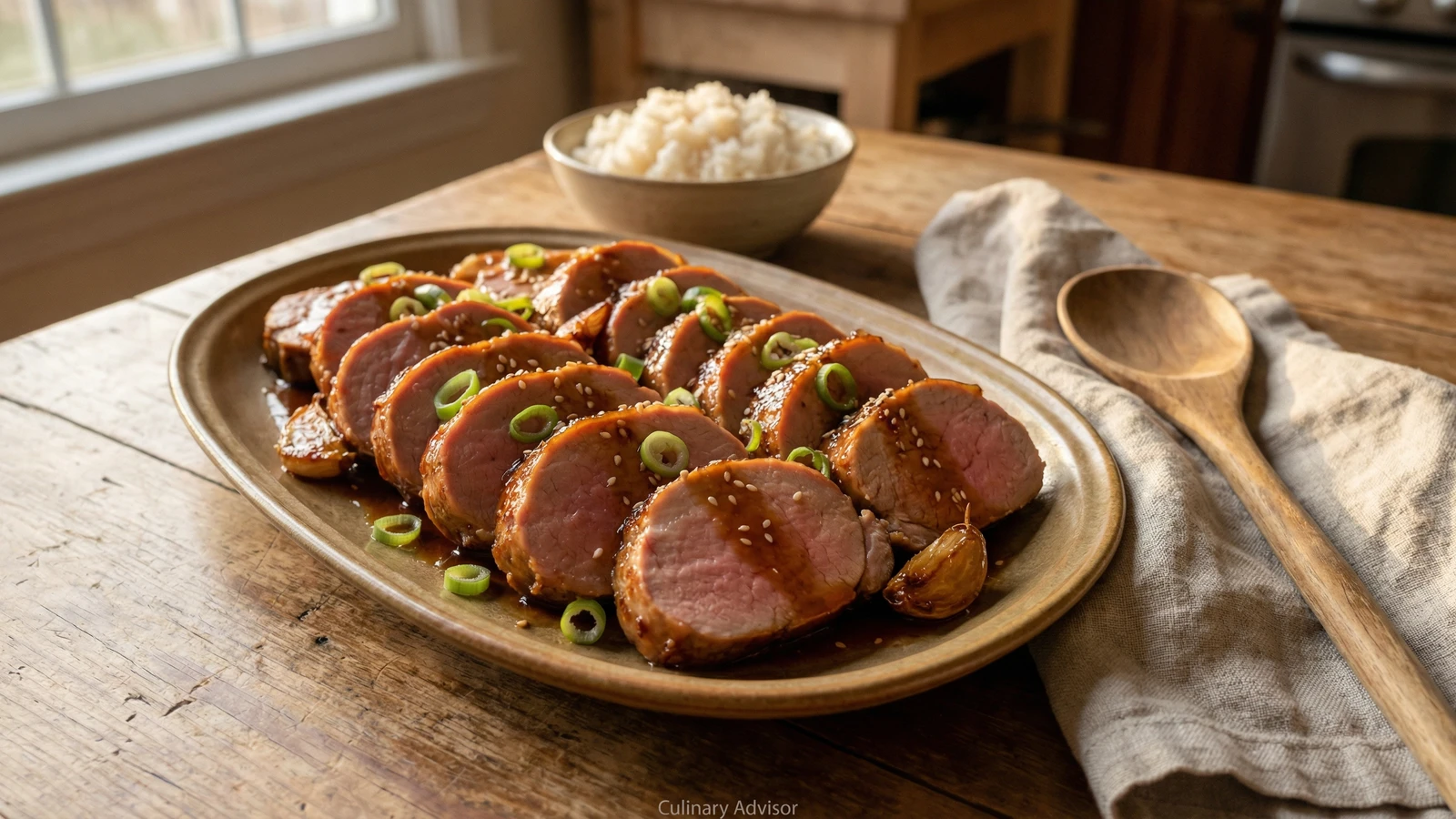
Honey Garlic Pork Tenderloin
Created by Chef Ally
Tender pork medallions lacquered with a sticky honey-garlic glaze, finished with bright scallions and sesame. The kind of weeknight cooking that feels like a gift to yourself.
Start with the pork. A good tenderloin comes from a pig that lived well, moved freely, ate what pigs should eat. The meat will be rosy pink, firm to the touch, and smell clean. If you can find a local farmer raising heritage breeds, the difference in flavor will startle you.
This is fast cooking. Twenty-five minutes from cold pan to table. The technique is simple: sear hard to build a crust, then finish gently in the oven while a glaze forms around it. The honey caramelizes with the soy and garlic into something sticky and savory and slightly sweet.
I learned to respect quick-cooking cuts like tenderloin because they demand attention. There is no margin for distraction. You watch, you respond, you pull the meat at precisely the right moment. This is not a braise you can forget about. It rewards presence.
Every meal is a meaningful choice. The honey you use matters. Raw honey from a beekeeper you know will have depth and floral notes that commercial honey cannot match. The garlic should be firm and heavy, not dried out or sprouting. Good ingredients need almost nothing done to them.
The technique, the tradition, and the story behind every dish.
Discover Culinary AdvisorIngredients
pork tenderloin
Quantity
1 1/2 pounds (about 2 small tenderloins)
kosher salt
Quantity
1 teaspoon
black pepper
Quantity
1/2 teaspoon
freshly ground
neutral oil
Quantity
2 tablespoons
garlic
Quantity
8 cloves
minced
raw honey
Quantity
1/4 cup
soy sauce or tamari
Quantity
3 tablespoons
low-sodium
rice vinegar
Quantity
1 tablespoon
toasted sesame oil
Quantity
1 teaspoon
crushed red pepper flakes
Quantity
1/4 teaspoon
scallions
Quantity
2
thinly sliced on the bias
sesame seeds
Quantity
1 teaspoon
| Ingredient | Quantity |
|---|---|
| pork tenderloin | 1 1/2 pounds (about 2 small tenderloins) |
| kosher salt | 1 teaspoon |
| black pepperfreshly ground | 1/2 teaspoon |
| neutral oil | 2 tablespoons |
| garlicminced | 8 cloves |
| raw honey | 1/4 cup |
| soy sauce or tamarilow-sodium | 3 tablespoons |
| rice vinegar | 1 tablespoon |
| toasted sesame oil | 1 teaspoon |
| crushed red pepper flakes | 1/4 teaspoon |
| scallionsthinly sliced on the bias | 2 |
| sesame seeds | 1 teaspoon |
Equipment Needed
- •12-inch oven-safe skillet (cast iron works beautifully)
- •Instant-read thermometer
- •Sharp carving knife
Instructions
- 1
Prepare the pork
Remove the tenderloin from the refrigerator thirty minutes before cooking. Pat it completely dry with paper towels. Season all sides generously with salt and pepper, pressing the seasoning into the meat. Dry meat sears. Wet meat steams.
If your tenderloin has a silver skin still attached, slide a sharp knife beneath it and pull it away. The membrane will not render and becomes chewy. - 2
Sear until golden
Heat a large oven-safe skillet over medium-high heat until a drop of water sizzles and evaporates immediately. Add the oil, then the tenderloin. Sear without moving for three minutes until a deep golden crust forms. Roll and sear each side, about two minutes per turn, until browned all over. The kitchen should smell of caramelizing pork.
- 3
Build the glaze
Reduce heat to medium. Push the pork to one side. Add the garlic to the empty space and stir for thirty seconds until fragrant but not brown. Pour in the honey, soy sauce, rice vinegar, sesame oil, and red pepper flakes. Stir to combine, scraping up any fond from the pan. Let the mixture bubble for one minute.
- 4
Roast to finish
Transfer the skillet to a 400 degree oven. Roast for twelve to fifteen minutes, spooning the glaze over the pork once halfway through. The tenderloin is done when an instant-read thermometer inserted into the thickest part reads 140 degrees. Carry-over cooking will bring it to a perfect 145.
Pork tenderloin is lean and unforgiving. Pull it early rather than late. Overcooked tenderloin turns dry and chalky within minutes. - 5
Rest and slice
Transfer the pork to a cutting board and tent loosely with foil. Rest for five to eight minutes while the glaze continues to reduce in the still-warm pan. The juices need time to redistribute. Cut into medallions about half an inch thick.
- 6
Finish and serve
Arrange the medallions on a warm platter. Spoon the thickened glaze over the pork, letting it pool around the edges. Scatter the scallions and sesame seeds over everything. Serve immediately while the glaze is still glossy and the pork is warm throughout.
Chef Tips
- •Seek out pork from farms that raise animals on pasture. The flavor is incomparable, and your purchase supports a better food system.
- •Raw honey from a local beekeeper adds complexity that processed honey cannot. Ask at your farmers market.
- •Fresh garlic in midsummer, when the new harvest arrives, will have a sweeter, less sharp flavor. Adjust the quantity to your taste.
- •This pairs beautifully with simple steamed rice and quickly sauteed greens. Let the pork be the centerpiece.
Advance Preparation
- •The glaze ingredients can be combined in a small bowl up to a day ahead and refrigerated.
- •Leftover sliced pork keeps refrigerated for three days. Reheat gently in a covered pan with a splash of water to prevent drying.
Frequently Asked Questions
Nutrition Information
1 serving (about 165g)
Where cooking meets culture.
Culinary mentorship, cultural storytelling, and the editorial depth that makes cooking meaningful.
Explore Culinary Advisor