Culinary Advisor
A cooking platform built around craft, culture, and the stories behind what we eat.
Honey Beer Bread
Created by
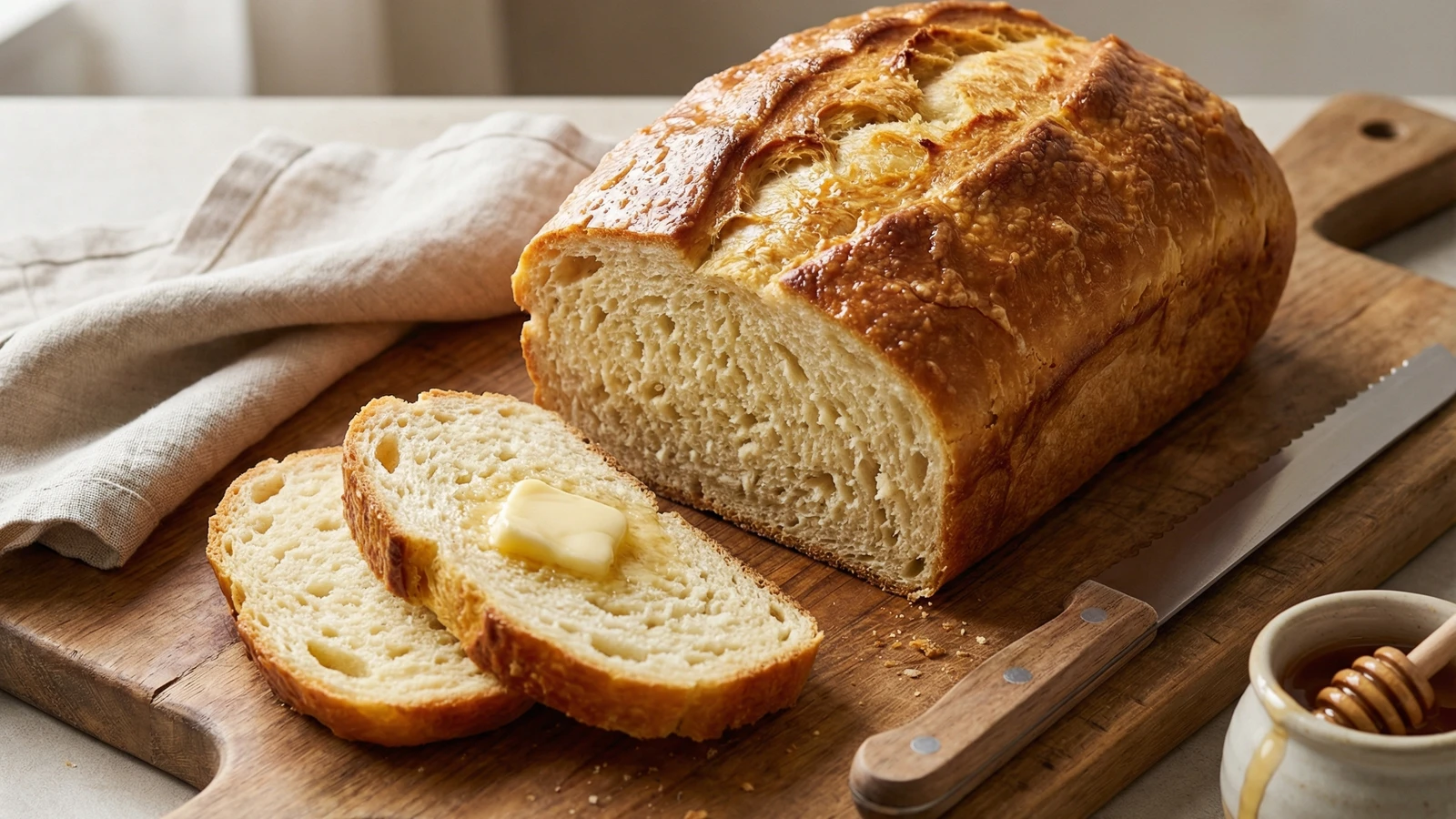
A golden-crusted loaf that proves bread making needn't intimidate anyone. Just flour, beer, and honey stirred together in five minutes, yet the result rivals loaves that took all day.
This bread exists to liberate nervous bakers from their fears. No yeast to proof. No kneading. No anxious watching of dough that refuses to rise. You stir three ingredients together, scrape them into a pan, and sixty minutes later you have bread worthy of any table.
The magic here is chemistry, not sorcery. Self-rising flour brings its own leavening. The carbonation in beer adds lift while the alcohol evaporates in the oven's heat, leaving behind malty sweetness and a tender crumb. The honey does double duty, bringing flavor and encouraging that burnished crust you want.
I've taught this bread to first-time bakers and seasoned cooks alike. Both groups arrive skeptical that something this simple could produce something this satisfying. They leave converted. The loaf emerges with a crust that crackles under your knife and an interior soft enough to tear with your hands. Slather it with butter while it's warm. That's an order.
American quick breads have a noble history stretching back to frontier kitchens where yeast was unreliable and time was scarce. This recipe honors that tradition. It asks only that you measure honestly, mix without overthinking, and trust the process.
The technique, the tradition, and the story behind every dish.
Discover Culinary AdvisorIngredients
self-rising flour
Quantity
3 cups (360g)
beer
Quantity
12 oz (355ml)
room temperature
honey
Quantity
3 tablespoons (63g)
fine sea salt
Quantity
1/2 teaspoon
unsalted butter
Quantity
4 tablespoons (56g)
melted, divided
| Ingredient | Quantity |
|---|---|
| self-rising flour | 3 cups (360g) |
| beerroom temperature | 12 oz (355ml) |
| honey | 3 tablespoons (63g) |
| fine sea salt | 1/2 teaspoon |
| unsalted buttermelted, divided | 4 tablespoons (56g) |
Equipment Needed
- •9x5-inch loaf pan
- •Large mixing bowl
- •Wire cooling rack
- •Pastry brush for butter
Instructions
- 1
Prepare your pan
Position a rack in the center of your oven and heat to 375°F (190°C). Brush a 9x5-inch loaf pan generously with 2 tablespoons of the melted butter, making sure to coat the corners where bread loves to stick. This butter does more than prevent sticking. It fries the exterior of the loaf as it bakes, giving you that shattering crust.
A glass or light-colored metal pan works best. Dark pans can overbrown the bottom before the center cooks through. - 2
Combine dry ingredients
Whisk together the flour and salt in a large mixing bowl. Create a well in the center. The salt may seem redundant given that self-rising flour contains some, but bread without adequate salt tastes flat. This small addition makes the difference between good and memorable.
- 3
Mix the batter
Pour the beer and honey into the well. Stir with a wooden spoon or rubber spatula using broad, folding strokes. Stop the moment the flour is incorporated. You'll see a shaggy, sticky batter with visible lumps. This is correct. Overmixing develops gluten and produces a tough, dense loaf. Restraint is your friend here.
If your honey is cold and thick, warm it for 10 seconds in the microwave or set the jar in warm water. It needs to flow freely to distribute evenly. - 4
Transfer to pan
Scrape the batter into your prepared pan using a spatula to get every bit. Spread it roughly into the corners. Don't fuss over making it perfectly level. The batter will find its own way as it bakes, and an uneven top adds rustic character.
- 5
Bake until golden
Slide the pan into your oven and bake for 45 to 50 minutes. The bread is done when the top turns deep golden brown and a wooden skewer inserted into the center comes out clean. You'll hear a faint hollow sound if you tap the top with your knuckle. Trust your senses more than your timer.
- 6
Apply butter finish
Remove the bread from the oven and immediately brush the hot crust with the remaining 2 tablespoons of melted butter. Watch it soak in and glisten. This step isn't optional. The butter enriches the crust, adds shine, and seals in moisture. Without it, the exterior turns dry and pale within hours.
- 7
Cool before slicing
Let the bread rest in the pan for 10 minutes, then turn it out onto a wire rack. Allow it to cool for at least 20 minutes more before slicing. Cutting into hot bread releases all that precious steam and leaves you with a gummy interior. Patience rewards you with clean slices and proper texture.
Use a serrated knife with long, gentle sawing motions. Pressing down crushes the delicate crumb.
Chef Tips
- •Your beer choice matters more than you might think. A pale lager produces mild, slightly sweet bread perfect for spreading with jam. Amber ales add malty depth that pairs beautifully with sharp cheeses. Stouts and porters create dark, robust loaves that belong alongside hearty stews. Avoid heavily hopped IPAs unless you enjoy bitter bread.
- •Room temperature beer is essential. Cold beer straight from the refrigerator shocks the leavening agents and produces a denser crumb. Set your bottle or can on the counter for 30 minutes before mixing, or pour it into your measuring cup and let it sit while you preheat the oven.
- •This bread is best the day it's made but keeps well for two days wrapped tightly in plastic at room temperature. After that, slice and toast it. Toasting revives stale beer bread beautifully, crisping the edges while warming the interior.
- •For a savory variation, fold in a cup of shredded sharp cheddar and a teaspoon of dried rosemary with the dry ingredients. The cheese melts into pockets throughout the loaf and crisps on top.
Advance Preparation
- •Dry ingredients can be whisked together and stored in a sealed container for up to one week, making this bread even faster when you want it.
- •Leftover bread freezes well for up to two months. Wrap individual slices in plastic, then aluminum foil. Toast directly from frozen.
Frequently Asked Questions
Nutrition Information
1 slice (about 117g)
Where cooking meets culture.
Culinary mentorship, cultural storytelling, and the editorial depth that makes cooking meaningful.
Explore Culinary Advisor