Culinary Advisor
A cooking platform built around craft, culture, and the stories behind what we eat.
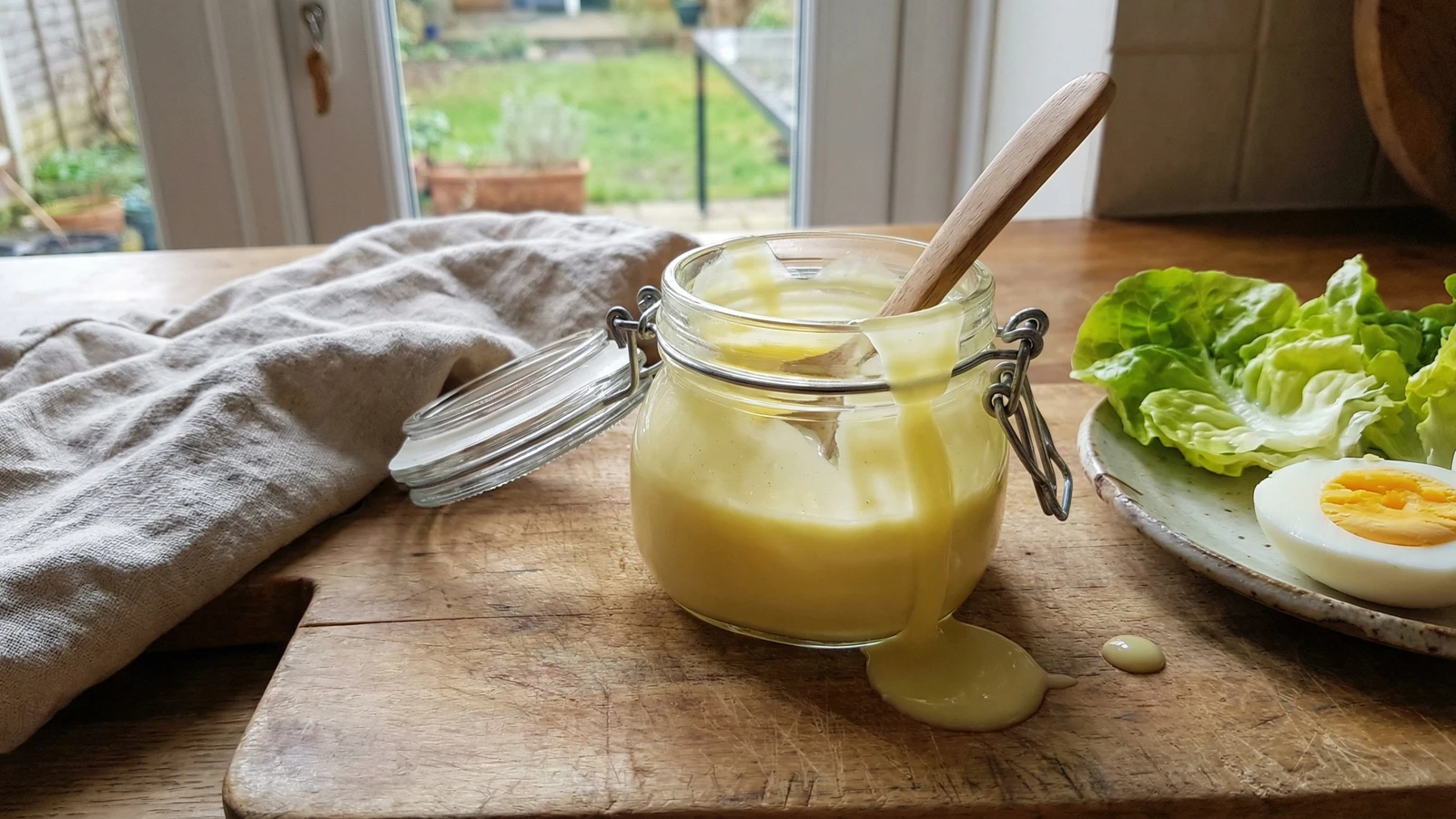
Homemade Salad Cream
Created by Chef Thomas
A proper English salad cream made the old way: cooked egg yolks, mustard, cider vinegar, and cream, stirred together in ten minutes and worth the small trouble of doing it yourself.
There's a moment in early summer when the first proper lettuces arrive at the market, the round, soft sort with leaves the colour of pale jade, and they ask for something better than oil and vinegar. They ask for salad cream. Not the fluorescent stuff in the bottle. The real thing.
Salad cream is older than mayonnaise in British kitchens, and for years it lived in jars on supermarket shelves until most people forgot it had ever been homemade. Which is a shame, because it takes ten minutes and tastes like something. Cooked egg yolks pushed through a sieve, English mustard, a sharp cider vinegar, a slow pour of double cream. That's the whole thing. Sharp and mustardy and gently sweet, thinner than mayonnaise, glossy and pourable, the kind of dressing that clings to a butterhead leaf without drowning it.
I make a small jar most weeks through the summer. It goes on everything. New potatoes still warm from the pan. A wedge of cos with hard-boiled eggs and some good ham. Cold roast chicken on a Monday. Sliced tomatoes from the garden when they finally come in. We're only making dinner, but a spoonful of this turns a plate of cold things into a proper meal.
I wrote it down in the notebook years ago: yolks, mustard, vinegar, cream, lettuce, June. That was the whole entry. It hasn't needed updating.
The technique, the tradition, and the story behind every dish.
Discover Culinary AdvisorIngredients
large eggs
Quantity
3
hard-boiled, yolks only
English mustard powder
Quantity
1 teaspoon
caster sugar
Quantity
1 teaspoon
fine sea salt
Quantity
½ teaspoon
white pepper
Quantity
good pinch
cider vinegar
Quantity
2 tablespoons
double cream
Quantity
150ml
lemon (optional)
Quantity
a squeeze
to finish, if needed
| Ingredient | Quantity |
|---|---|
| large eggshard-boiled, yolks only | 3 |
| English mustard powder | 1 teaspoon |
| caster sugar | 1 teaspoon |
| fine sea salt | ½ teaspoon |
| white pepper | good pinch |
| cider vinegar | 2 tablespoons |
| double cream | 150ml |
| lemon (optional)to finish, if needed | a squeeze |
Equipment Needed
- •Small saucepan for the eggs
- •Fine sieve or fork for the yolks
- •Mixing bowl
- •Clean jar with a lid for storing
Instructions
- 1
Hard-boil the eggs
Lower the eggs into a small pan of simmering water and cook them for nine minutes. Lift them straight into a bowl of cold water and leave them until they are cool enough to handle. You want the yolks fully set and dry, no jammy centre, no grey ring around the edge. Peel them carefully and separate the yolks from the whites. Keep the whites for something else. Egg mayonnaise on toast tomorrow, perhaps.
Older eggs peel more cleanly than fresh ones. If you've got eggs that have been sitting in the bowl for a week, this is their moment. - 2
Mash the yolks to a paste
Push the cooked yolks through a sieve into a bowl, or mash them very thoroughly with the back of a fork. You're after a fine, dry, sandy crumb with no lumps. This is the only fiddly bit, and it matters. A lumpy yolk makes a lumpy salad cream, and there's no rescuing it later.
- 3
Build the base
Add the mustard powder, sugar, salt, and white pepper to the yolks and stir them through. The dry ingredients should disappear into the yolks completely. Now add the cider vinegar a little at a time, stirring as you go. The mixture will loosen and turn from a paste into a thick, glossy cream the colour of pale custard. Trust your nose. It should smell sharp and mustardy, properly awake.
- 4
Stir in the cream
Pour in the double cream slowly, stirring all the while. The dressing will thin out into something pourable but still clinging, somewhere between a thin custard and a thick vinaigrette. It should coat the back of a spoon and slide off in a slow ribbon. If it feels too thick, a teaspoon more vinegar will sort it. Too thin, a touch more cream.
Don't whisk it. A spoon or a spatula is all you need. Whisking introduces air and you'll lose the smooth, glossy texture that makes salad cream what it is. - 5
Taste and adjust
Now the important part. Dip a spoon in. Taste it. It should be sharp, mustardy, gently sweet, a bit creamy, all four working together. If it's flat, more salt. If it's harsh, a little more sugar. If it's dull, a squeeze of lemon will lift the whole thing. Season and taste. Then taste again. Decant into a clean jar, lid on, and into the fridge. It's better after an hour, when the flavours have settled into each other.
Chef Tips
- •Cider vinegar is the right vinegar here. White wine vinegar will do at a pinch, but cider vinegar has a softer, fruitier sharpness that suits the cream and the mustard better. Malt vinegar is too aggressive. Save it for the chips.
- •English mustard powder is non-negotiable. Colman's, in the yellow tin. Wet mustard from a jar will make the dressing taste muddled. The dry powder gives you that clean, sinus-clearing heat that defines a proper salad cream.
- •Double cream gives the right body. Single cream is too thin and the dressing won't hold together. If you want it lighter, thin a finished batch with a splash of milk rather than starting with a lighter cream.
- •It keeps in a clean jar in the fridge for about a week. Give it a stir before each use. The flavour gets rounder and a little less sharp on the second day, which I prefer.
Advance Preparation
- •Salad cream is a make-ahead dressing by nature. It's better an hour after you've made it, and better still the next day, once the mustard and vinegar have softened into the cream.
- •Keeps in a sealed jar in the fridge for up to a week. Give it a stir before serving.
- •Don't freeze it. The cream will split and you'll be left with something sad and grainy that no amount of stirring will fix.
Frequently Asked Questions
Nutrition Information
1 serving (about 15g)
Where cooking meets culture.
Culinary mentorship, cultural storytelling, and the editorial depth that makes cooking meaningful.
Explore Culinary Advisor