Culinary Advisor
A cooking platform built around craft, culture, and the stories behind what we eat.
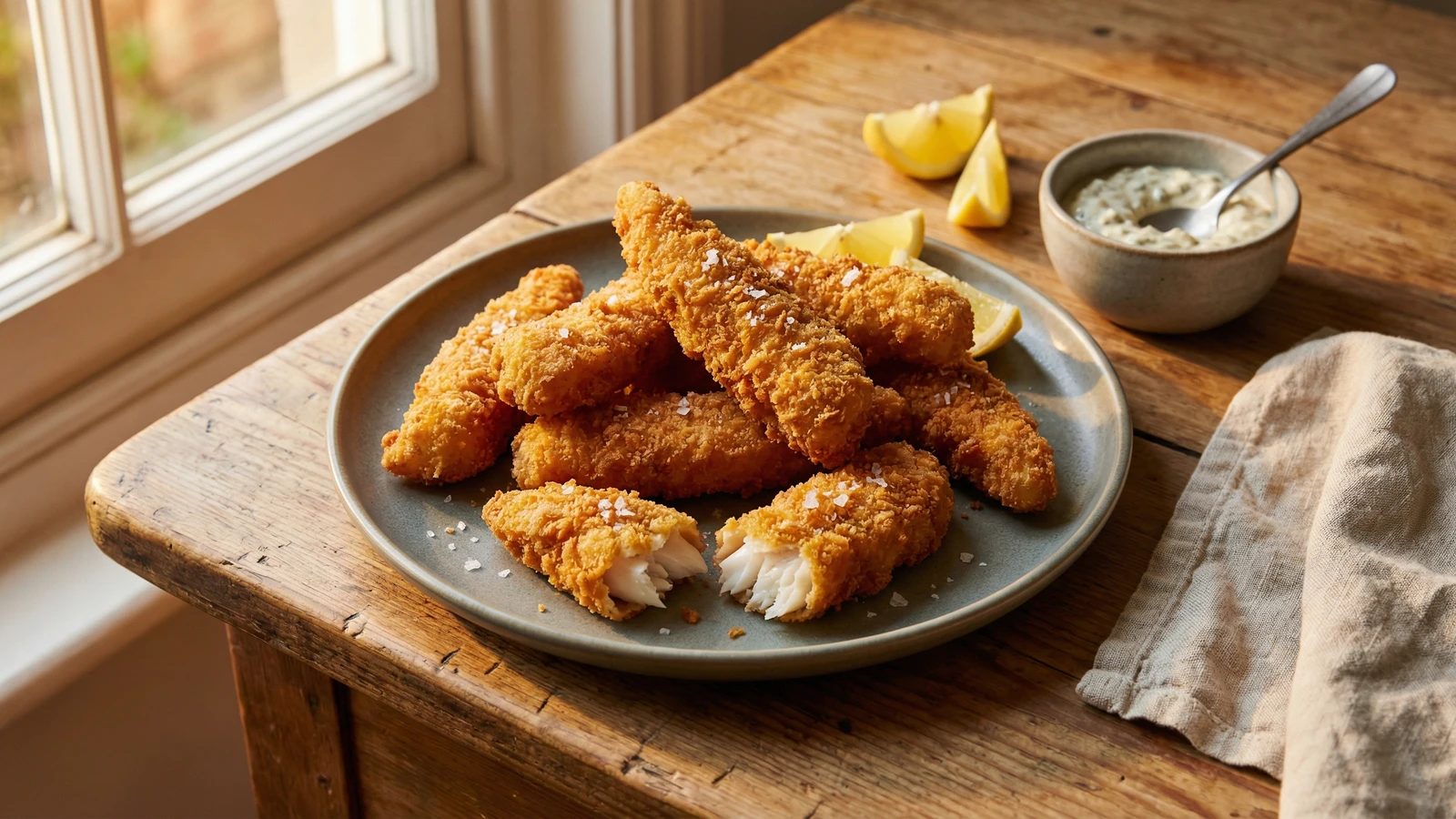
Homemade Fish Goujons
Created by Chef Thomas
Strips of fresh white fish in a golden, lemony crumb, fried in a hot pan until they crackle when you bite through. The honest fish finger, made at home, and better in every way that counts.
The smell of fish frying in breadcrumbs is one of those kitchen smells that brings people into the room without being asked. Something about it, the golden, toasty warmth of it, crosses the hallway and tugs at whoever is sitting at the other end of the house. Within minutes, someone will appear in the doorway and say, quietly hopeful, "Is that fish fingers?"
Not exactly. Better. These are strips of real fish, good cod or haddock, the thick part of the fillet where the flesh is dense and white, coated in breadcrumbs with a little lemon zest grated through. They fry in a few minutes. The outside goes properly golden and crunchy. The fish inside stays soft and pulls apart in clean flakes. That's it. No batter, no deep fryer, no fuss.
I make these on a Friday, usually. Not for any reason except that Friday has always felt like a fish evening. The market decides what I buy and the calendar decides the rest. A piece of cod from the fishmonger, a lemon, some bread whizzed into crumbs. Twenty minutes from kitchen counter to table. There are few better feelings than putting a warm plate of these in front of someone and watching the first one disappear before the plate has settled on the table.
A recipe is a conversation, not a contract. If you want to use pollock or whiting, do. If you want to add a pinch of cayenne to the crumbs, or some finely chopped parsley, go ahead. Your kitchen, your rules. The principle is simple: good fish, a crisp coat, a hot pan, and the confidence to know when it is done.
The technique, the tradition, and the story behind every dish.
Discover Culinary AdvisorIngredients
thick cod or haddock fillet
Quantity
500g
skinned and pin-boned
plain flour
Quantity
75g
large eggs
Quantity
2
beaten
fresh white breadcrumbs
Quantity
150g
lemon zest
Quantity
zest of 1 lemon
finely grated
fine sea salt
Quantity
to taste
black pepper
Quantity
to taste
sunflower or groundnut oil
Quantity
enough for shallow frying
lemon wedges
Quantity
1 lemon
cut into wedges
| Ingredient | Quantity |
|---|---|
| thick cod or haddock filletskinned and pin-boned | 500g |
| plain flour | 75g |
| large eggsbeaten | 2 |
| fresh white breadcrumbs | 150g |
| lemon zestfinely grated | zest of 1 lemon |
| fine sea salt | to taste |
| black pepper | to taste |
| sunflower or groundnut oil | enough for shallow frying |
| lemon wedgescut into wedges | 1 lemon |
Equipment Needed
- •Heavy-bottomed frying pan, 28cm or wider
- •Three wide shallow bowls for crumbing
- •Kitchen paper for draining
- •Fish tweezers or sturdy kitchen tweezers
Instructions
- 1
Cut the fish
Pat the fish dry with kitchen paper. This matters more than you think. Wet fish won't take the breadcrumbs properly. Cut the fillet into strips roughly the width of two fingers, working with the grain of the flesh so they hold together. They don't need to be uniform. Some will be fatter, some thinner. The thin ones will get extra crisp and someone will eat them standing at the stove before the rest reach the table. That's fine.
Run your fingertips along the fillet to feel for pin bones. A pair of tweezers pulls them out cleanly. It takes a minute and saves someone an unpleasant surprise. - 2
Set up the crumbing station
Get three wide, shallow bowls in a row. Flour in the first, seasoned well with salt and pepper. Beaten egg in the second. Breadcrumbs in the third, mixed with the lemon zest. The lemon zest is the quiet difference here. It doesn't make this taste of lemon. It lifts the fish, gives the crust a brightness that you'd miss if it weren't there.
- 3
Coat the goujons
Take each strip of fish and roll it through the flour, shaking off whatever doesn't cling. Then into the egg, letting the excess drip back. Then into the breadcrumbs, pressing them on gently so they stick. Lay each goujon on a plate or board as you go. Don't skip the flour. It gives the egg something to grip, and the egg gives the crumbs something to grip. The whole thing is a chain of small kindnesses each layer does for the next.
Use one hand for the dry bowls and the other for the egg. It keeps you from ending up with breadcrumb gloves, which is inevitable otherwise. - 4
Fry until golden
Pour oil into a heavy frying pan to a depth of about a centimetre. Set it over a medium-high heat. The oil is ready when a breadcrumb dropped in sizzles immediately and turns golden in a few seconds. Not smoking, not timid. Confident. Lay the goujons in the pan without crowding them. You may need to do two batches. Cook for two to three minutes on each side, turning once, until the coating is deep gold and properly crunchy. The sound should be a steady, contented sizzle, not a furious splutter.
If the oil is too cool, the crumbs soak up fat and go soggy. If it is too hot, the outside burns before the fish cooks through. Trust your ears. A steady sizzle means you are in the right place. - 5
Drain and serve
Lift the goujons onto a plate lined with kitchen paper and season them with a pinch of salt while they are still hot. The salt sticks better when there is warmth to receive it. Serve within a few minutes, with lemon wedges alongside. These are at their best the moment they leave the pan: the crumb still crackling, the fish inside white and just set, pulling apart in clean flakes. A bowl of tartare sauce if you have it. A pile of something green. We're only making dinner.
Chef Tips
- •Buy your fish from a fishmonger if you can. You want a thick fillet, not the thin tail end that dries out before the crumb has coloured. Press the flesh with your finger. It should spring back. Smell it. Fresh fish smells of the sea, not of fish. Trust your nose. It knows before you do.
- •Make your own breadcrumbs from a day-old white loaf. Tear it into rough pieces and pulse in a blender until you have coarse, irregular crumbs. They fry up lighter and crunchier than anything from a packet. The unevenness is the point: you get craggy edges that catch and crisp.
- •If you are feeding children, cut the strips a bit smaller and they become proper fish fingers. Honestly, these are fish fingers. Just made with care and real fish, which puts them a world away from the frozen sort. No guilt, no apology.
- •Tartare sauce takes five minutes: mayonnaise, chopped cornichons, capers, a squeeze of lemon, a scattering of parsley. Stir it together in a bowl. It keeps in the fridge for days and makes these goujons feel like a proper occasion.
Advance Preparation
- •The goujons can be crumbed up to four hours ahead and kept on a tray in the fridge, uncovered, until you are ready to fry. The coating firms up in the cold, which actually helps it stay on in the pan.
- •Fresh breadcrumbs freeze well for up to three months. Make a large batch when you have stale bread and keep a bag in the freezer. One less thing to think about on a Friday.
Frequently Asked Questions
Nutrition Information
1 serving (about 175g)
Where cooking meets culture.
Culinary mentorship, cultural storytelling, and the editorial depth that makes cooking meaningful.
Explore Culinary Advisor