Culinary Advisor
A cooking platform built around craft, culture, and the stories behind what we eat.
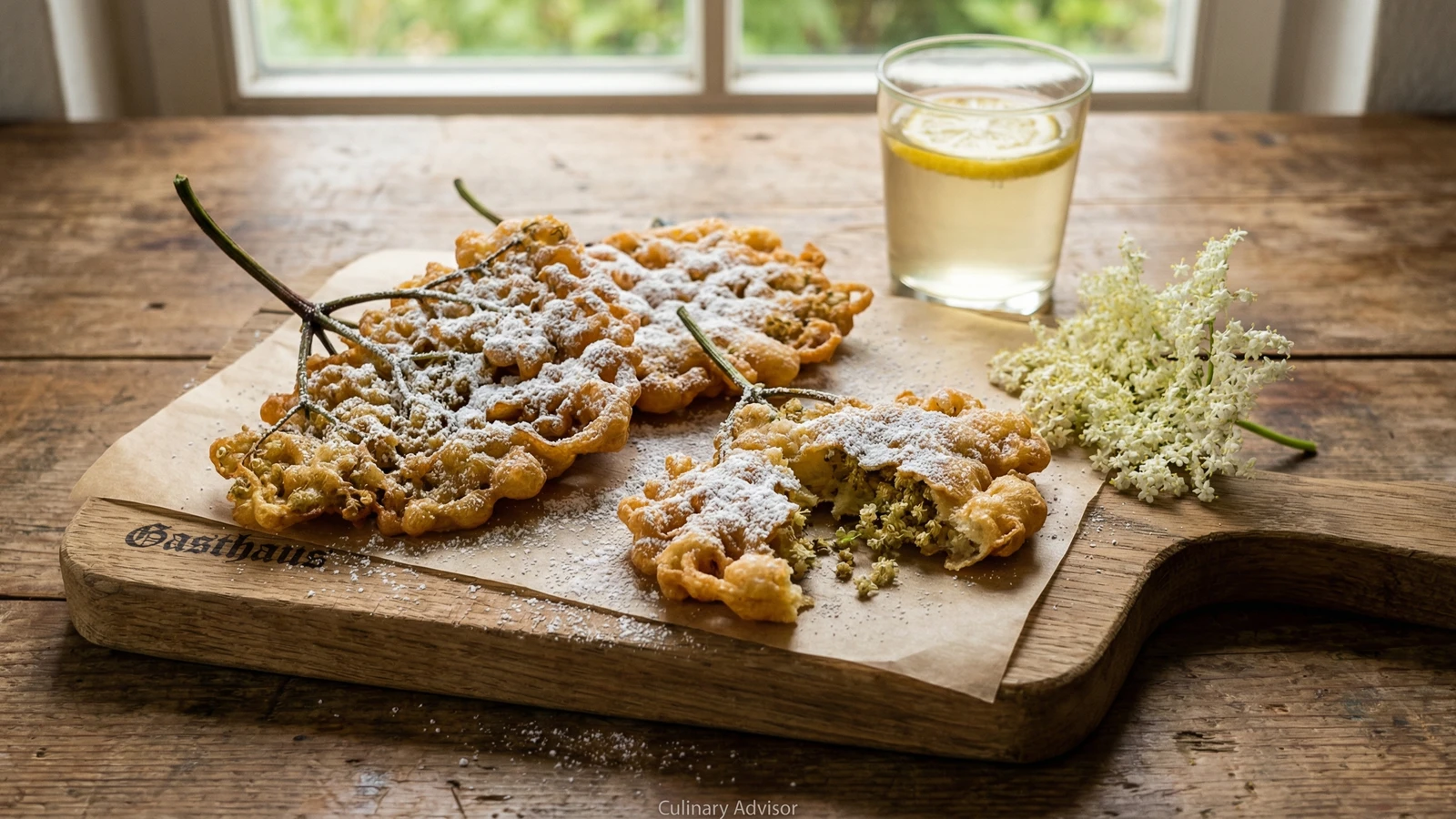
Hollerkücherl (Elderflower Fritters)
Created by Chef Elsa
Whole elderflower heads dipped in a crisp, golden beer batter and fried until shattering, dusted with powdered sugar and Vanillezucker while the short Austrian bloom lasts.
There are maybe four weeks in the year when you can make Hollerkücherl. The elderflower, Holler in Austrian dialect, blooms from late May into June, and when it does, every hedge and garden fence and roadside ditch in Austria fills with those flat, creamy white flower heads that smell like summer distilled into a single breath. You pick them in the morning when the pollen is still heavy on the blossoms. By afternoon the scent fades. By July the flowers are gone and the berries are coming. This is a dish that exists inside a window, and that's part of what makes it beautiful.
Gretel always said that Hollerkücherl were the first thing she missed about Austria that had nothing to do with people. The taste of fried elderflower dusted with sugar, eaten standing in a garden while the batter was still crackling. She couldn't get elderflower in Kent the way you get it in Austria, where it grows wild and abundant and everyone knows exactly when the blooms are ready. On the trips we took together through the Salzkammergut, she'd spot the bushes from a car window and make us pull over.
The recipe is absurdly simple. You make a light batter with beer, flour, eggs, and a pinch of salt. You hold the elderflower head by its stem, dip the whole thing face-down into the batter, and fry it in hot oil until it turns golden and crisp. The tiny flowers puff up inside the coating. You eat it hot, dusted with powdered sugar, tearing the lacy fritter apart with your fingers. It tastes like flowers and honey and fried dough all at once, and there is nothing else in the world quite like it.
If elderflower isn't blooming where you are right now, wait for it. Don't try this with dried flowers or elderflower cordial or anything that isn't a fresh, fragrant blossom picked that morning. Austrian cooking is seasonal. That's part of what makes it honest.
Hollerkücherl belong to the tradition of Gebackenes, fried battered foods that appear across Austrian regional cooking from Tyrol to Lower Austria. The elderflower bush, Sambucus nigra, has been part of Austrian folk culture for centuries, valued for its blossoms, berries, and supposed medicinal properties. Rural Austrians called the elder bush the 'pharmacy of the poor' and considered it bad luck to cut one down. Frying the blossoms in batter likely began as farmhouse cooking, using the brief seasonal abundance before the flowers turned to fruit.
The technique, the tradition, and the story behind every dish.
Discover Culinary AdvisorIngredients
fresh elderflower heads
Quantity
12 large
stems trimmed to 5cm handles
plain flour
Quantity
150g
egg
Quantity
1 large
separated
light lager
Quantity
200ml
cold
sunflower oil (for batter)
Quantity
1 tablespoon
granulated sugar
Quantity
1 tablespoon
salt
Quantity
pinch
sunflower or rapeseed oil
Quantity
about 1 liter
for deep-frying
powdered sugar
Quantity
for dusting
vanilla sugar (Vanillezucker)
Quantity
1 teaspoon
for dusting
| Ingredient | Quantity |
|---|---|
| fresh elderflower headsstems trimmed to 5cm handles | 12 large |
| plain flour | 150g |
| eggseparated | 1 large |
| light lagercold | 200ml |
| sunflower oil (for batter) | 1 tablespoon |
| granulated sugar | 1 tablespoon |
| salt | pinch |
| sunflower or rapeseed oilfor deep-frying | about 1 liter |
| powdered sugar | for dusting |
| vanilla sugar (Vanillezucker)for dusting | 1 teaspoon |
Equipment Needed
- •Deep heavy-bottomed pot (at least 20cm diameter)
- •Kitchen thermometer
- •Slotted spoon or spider strainer
- •Wire rack or kitchen paper for draining
Instructions
- 1
Prepare the elderflower
Inspect each elderflower head and shake it gently over the sink to dislodge any small insects. Don't wash them. Running water strips the pollen, and the pollen is where half the flavor lives. Trim the stems to about five centimeters, just long enough to hold comfortably when you dip. Remove any brown or wilted florets. You want heads that are fully open, creamy white, and fragrant. If they don't smell like anything when you hold them to your nose, they're past their prime.
Pick elderflower in the morning on a dry day when the sun has been on them for an hour or two. That's when the pollen is heaviest and the scent is strongest. Flowers picked after rain or in the evening will taste flat. - 2
Make the beer batter
Whisk the flour, egg yolk, cold beer, tablespoon of oil, sugar, and salt together until smooth. The batter should be the consistency of thick cream, coating the back of a spoon but still flowing freely. Cold beer is important here: the carbonation gives the batter lift when it hits hot oil, and the cold temperature keeps the gluten from developing too much. You want a crisp, lacy coating, not a heavy shell. Let the batter rest for ten minutes while you deal with the egg white.
Use a light lager, nothing hoppy or dark. You want the beer's carbonation and a hint of its sweetness, not a bitter flavor competing with the elderflower. - 3
Fold in the egg white
Beat the egg white with a clean whisk until it holds stiff peaks. Fold it into the rested batter gently, in two additions. Don't stir, fold. You're keeping the air in. This is the difference between a Hollerkücherl that puffs up golden and airy and one that fries into a flat, heavy disc. The batter will look slightly lumpy. That's fine. Overmixing it defeats the purpose.
- 4
Heat the oil
Pour the oil into a deep, heavy-bottomed pot to a depth of about eight centimeters. Heat it to 170°C. Use a thermometer if you have one. If you don't, drop a small blob of batter into the oil: it should sink briefly, then rise and sizzle immediately, turning golden within thirty seconds. If it sits on the surface and browns instantly, your oil is too hot. If it sinks and stays down, too cold. Getting the temperature right matters more than anything else in frying. Too hot and the batter burns before the flower cooks. Too cold and the fritter absorbs oil and goes greasy.
Use a neutral oil with a high smoke point. Sunflower or rapeseed are traditional. Olive oil is wrong here: its flavor will overwhelm the elderflower. - 5
Dip and fry
Hold an elderflower head by its stem, blossom facing down. Dip the flower head into the batter, letting the excess drip off for a few seconds. The batter should coat the blossoms evenly without filling in all the gaps between the tiny flowers. Lower it gently into the hot oil, blossom side down. Let go of the stem once the batter begins to set, about five seconds. Fry for one and a half to two minutes on the first side, until deep golden, then flip with a slotted spoon or tongs and fry the other side for another minute. The fritter should be crisp and lacy, with the outline of individual blossoms visible through the golden crust. Work in batches of two or three. Don't crowd the pot or the oil temperature drops and everything goes soggy.
- 6
Drain and dust
Lift each fritter out with a slotted spoon and drain on kitchen paper for no more than ten seconds. While they're still hot and glistening, dust them generously with powdered sugar mixed with a little Vanillezucker. The sugar should melt slightly on contact, forming a thin sweet crust over the golden batter. Serve immediately. I mean it. Hollerkücherl have about three minutes of perfection between the moment they leave the oil and the moment the batter loses its crunch. Eat them standing in the kitchen if you have to. Mahlzeit!
Chef Tips
- •Never wash elderflower heads under running water. The pollen carries most of the fragrance and flavor. If you're worried about insects, shake the heads gently or lay them on a white cloth for a few minutes. Anything living will crawl out on its own.
- •Keep the batter cold. If your kitchen is warm, set the bowl of batter over a larger bowl of ice while you work. Warm batter loses its lift and your fritters won't puff properly.
- •The stem is your handle, so leave enough of it to grip comfortably when dipping. After frying, you can eat around it or trim it off on the plate. Austrians usually just hold the stem and bite the fritter off like a lollipop.
- •If you've missed elderflower season but have good Holunderblütensirup (elderflower cordial), save it for a Spritzer or a Palatschinken filling. It won't work here. This dish lives and dies with the fresh blossom.
Advance Preparation
- •The batter can be made up to one hour ahead and refrigerated without the egg white. Fold in the beaten egg white just before frying.
- •Hollerkücherl cannot be made ahead, reheated, or held. They are a right-now food. Fry them, dust them, eat them.
Frequently Asked Questions
Nutrition Information
1 serving (about 120g)
Where cooking meets culture.
Culinary mentorship, cultural storytelling, and the editorial depth that makes cooking meaningful.
Explore Culinary Advisor