Culinary Advisor
A cooking platform built around craft, culture, and the stories behind what we eat.
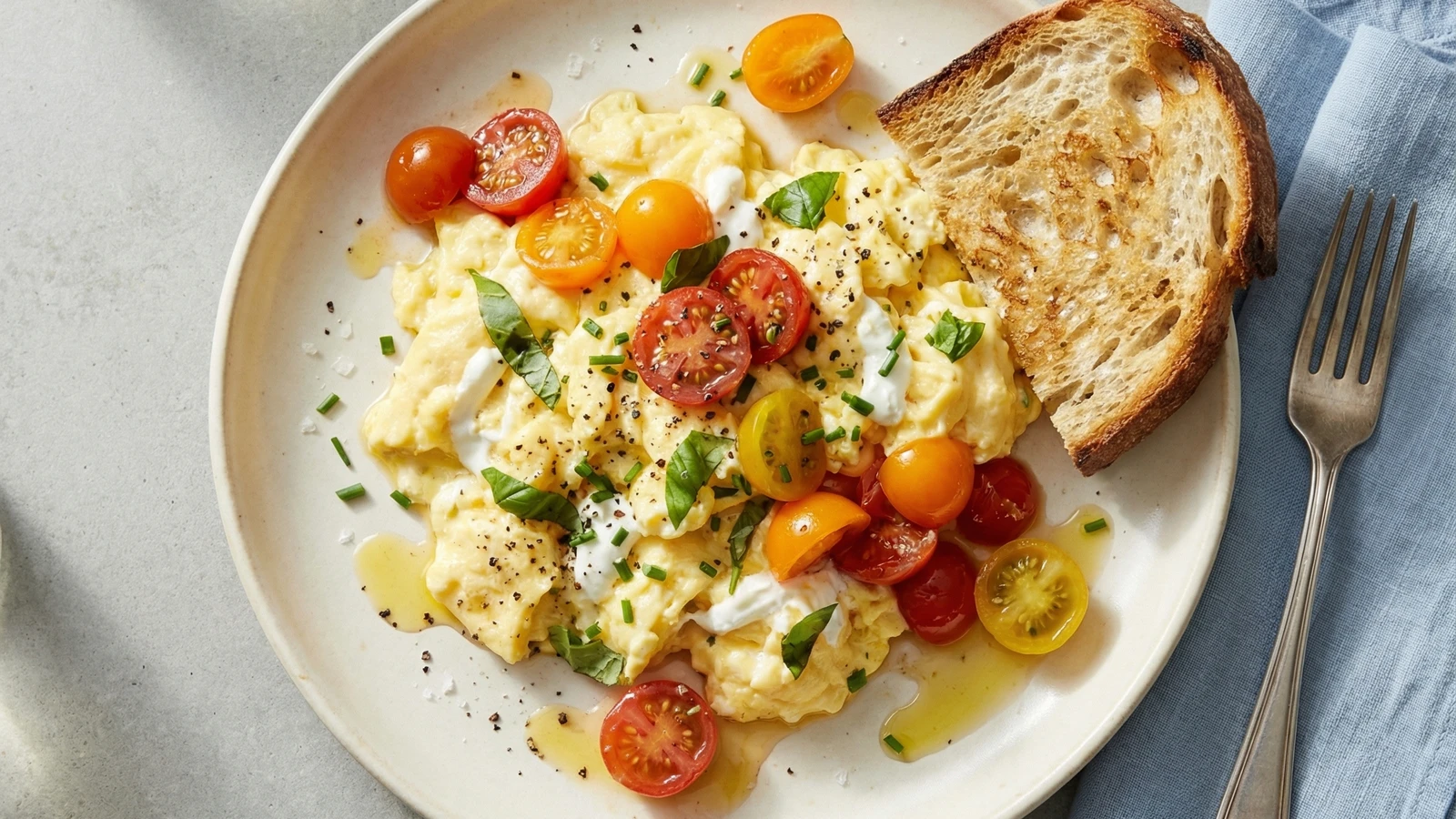
Herbed Goat Cheese Scrambled Eggs with Summer Tomatoes
Created by
Pillowy soft-scrambled eggs enriched with tangy goat cheese and summer herbs, crowned with barely warmed cherry tomatoes that burst with concentrated sweetness. This is California farmers market cooking at its most honest.
The French understood something about eggs that Americans are only now rediscovering: patience creates luxury. These aren't the rubbery scrambled eggs of diner counters and hotel buffets. These are curds so soft they barely hold their shape, enriched with goat cheese that melts into ribbons of tangy cream throughout.
I first encountered this style of scrambled eggs in a small bistro near the Marché d'Aligre in Paris, where the cook stirred them over the lowest possible flame with the dedication of a watchmaker. She would have scoffed at the American habit of cranking up the heat and calling the eggs done in sixty seconds. Good eggs require the same respect we give to any protein worth eating.
The California twist here comes from the tomatoes. Summer cherry tomatoes, warmed just enough in good olive oil to concentrate their sugars and release their juices, become a sauce unto themselves. They don't cook. They surrender. Pile them over those creamy curds with torn basil and a crack of black pepper, and you have a dish that honors both traditions: French technique married to California abundance.
This takes ten minutes of active attention. Not multitasking time. Stand at the stove, stir constantly, and trust that the slow approach delivers something no shortcut can replicate.
The technique, the tradition, and the story behind every dish.
Discover Culinary AdvisorIngredients
large eggs
Quantity
6
unsalted butter
Quantity
2 tablespoons
divided
fresh goat cheese
Quantity
3 ounces
crumbled
cherry tomatoes
Quantity
1 pint
halved
extra-virgin olive oil
Quantity
2 tablespoons
fresh chives
Quantity
2 tablespoons
finely snipped
fresh tarragon
Quantity
1 tablespoon
chopped
fresh basil leaves
Quantity
1/4 cup
torn
garlic
Quantity
1 small clove
minced
flaky sea salt
Quantity
to taste
freshly ground black pepper
Quantity
to taste
crusty bread (optional)
Quantity
for serving
| Ingredient | Quantity |
|---|---|
| large eggs | 6 |
| unsalted butterdivided | 2 tablespoons |
| fresh goat cheesecrumbled | 3 ounces |
| cherry tomatoeshalved | 1 pint |
| extra-virgin olive oil | 2 tablespoons |
| fresh chivesfinely snipped | 2 tablespoons |
| fresh tarragonchopped | 1 tablespoon |
| fresh basil leavestorn | 1/4 cup |
| garlicminced | 1 small clove |
| flaky sea salt | to taste |
| freshly ground black pepper | to taste |
| crusty bread (optional) | for serving |
Equipment Needed
- •10-inch nonstick skillet
- •Small skillet for tomatoes
- •Rubber spatula (not wooden spoon)
- •Medium mixing bowl
- •Fork for beating eggs
Instructions
- 1
Warm the tomatoes
Heat olive oil in a small skillet over medium-low heat. Add the halved cherry tomatoes cut-side down and let them warm gently for 3 to 4 minutes. You're not searing them. You're coaxing out their juices. Add the minced garlic in the final minute, stirring once. The tomatoes should soften slightly and release a slick of rosy liquid into the oil. Season with a pinch of salt, then slide the skillet off the heat. They'll stay warm while you attend to the eggs.
Choose tomatoes that smell like tomatoes. If they have no fragrance at the stem end, they'll have no flavor on the plate. Farmers market Sungolds are ideal if you can find them. - 2
Prepare the egg mixture
Crack the eggs into a bowl. Do not add milk, cream, or water. The eggs contain everything they need. Beat them with a fork until the whites and yolks are fully combined, roughly 30 seconds of vigorous stirring. You should see no streaks of white remaining. Season with a good pinch of salt and several grinds of black pepper.
- 3
Begin the slow scramble
Place a nonstick or well-seasoned skillet over the lowest heat your burner allows. Add 1 tablespoon of butter and let it melt slowly, swirling to coat the pan. When the butter has melted but hasn't begun to foam, pour in the beaten eggs. Now begins the patient work. Stir constantly with a rubber spatula, scraping the bottom and sides of the pan in long, sweeping motions. The eggs will seem to do nothing for the first two minutes. This is correct. Keep stirring.
If the eggs begin setting too quickly or you see firm curds forming, pull the pan completely off the heat and keep stirring. The residual heat will continue cooking them. Return to low heat once the cooking slows. - 4
Build soft curds
After 4 to 5 minutes of constant stirring, small curds will begin forming throughout. They should look almost creamy, like a loose custard starting to set. This is the critical moment. Add the remaining tablespoon of butter and the crumbled goat cheese. Continue stirring as the cheese softens into the curds, creating ribbons of tangy richness. The butter adds gloss and stops the cooking slightly.
- 5
Finish with herbs
When the eggs are just barely set, still wet and glistening on top, remove the pan from the heat. They will continue cooking for another thirty seconds from residual warmth. Fold in the chives and tarragon now, while the eggs are still receptive to their flavor. The scramble should mound softly when you tilt the pan, not run like liquid or sit firm like a hockey puck.
Undercooked is far easier to fix than overcooked. If the eggs look too loose, a few more seconds over heat solves the problem. Rubbery eggs have no remedy. - 6
Plate and serve
Divide the eggs between two warmed plates, letting them settle into soft mounds. Spoon the warm tomatoes and their garlicky oil over the top. Scatter the torn basil generously across each portion. Finish with flaky sea salt and another crack of black pepper. Serve immediately with thick slices of crusty bread to drag through the tomato juices and capture every trace of creamy egg.
Chef Tips
- •The goat cheese makes all the difference. Seek out a local creamery if you have one nearby. Supermarket logs work fine, but fresh chèvre from a farmers market transforms this dish entirely. The texture should be moist and spreadable, not chalky.
- •Room temperature eggs scramble more evenly than cold ones. Pull them from the refrigerator fifteen minutes before you begin. This small step prevents the exterior from overcooking while the center stays cold.
- •A true nonstick pan earns its place here. Eggs this soft will cling to stainless steel no matter how much butter you use. If you only own stainless, increase the butter and accept that some curds will stay behind.
- •This pairs beautifully with a glass of crisp rosé or sparkling wine for a weekend brunch. The acidity cuts through the richness of the eggs and cheese.
Advance Preparation
- •Tomatoes can be halved and herbs chopped up to 2 hours ahead. Store separately at room temperature.
- •Do not beat the eggs until ready to cook. They lose volume and become watery if they sit.
- •Goat cheese can be crumbled ahead and refrigerated, but bring it to room temperature before using so it melts smoothly into the eggs.
Frequently Asked Questions
Nutrition Information
1 serving (about 320g)
Where cooking meets culture.
Culinary mentorship, cultural storytelling, and the editorial depth that makes cooking meaningful.
Explore Culinary Advisor