Culinary Advisor
A cooking platform built around craft, culture, and the stories behind what we eat.
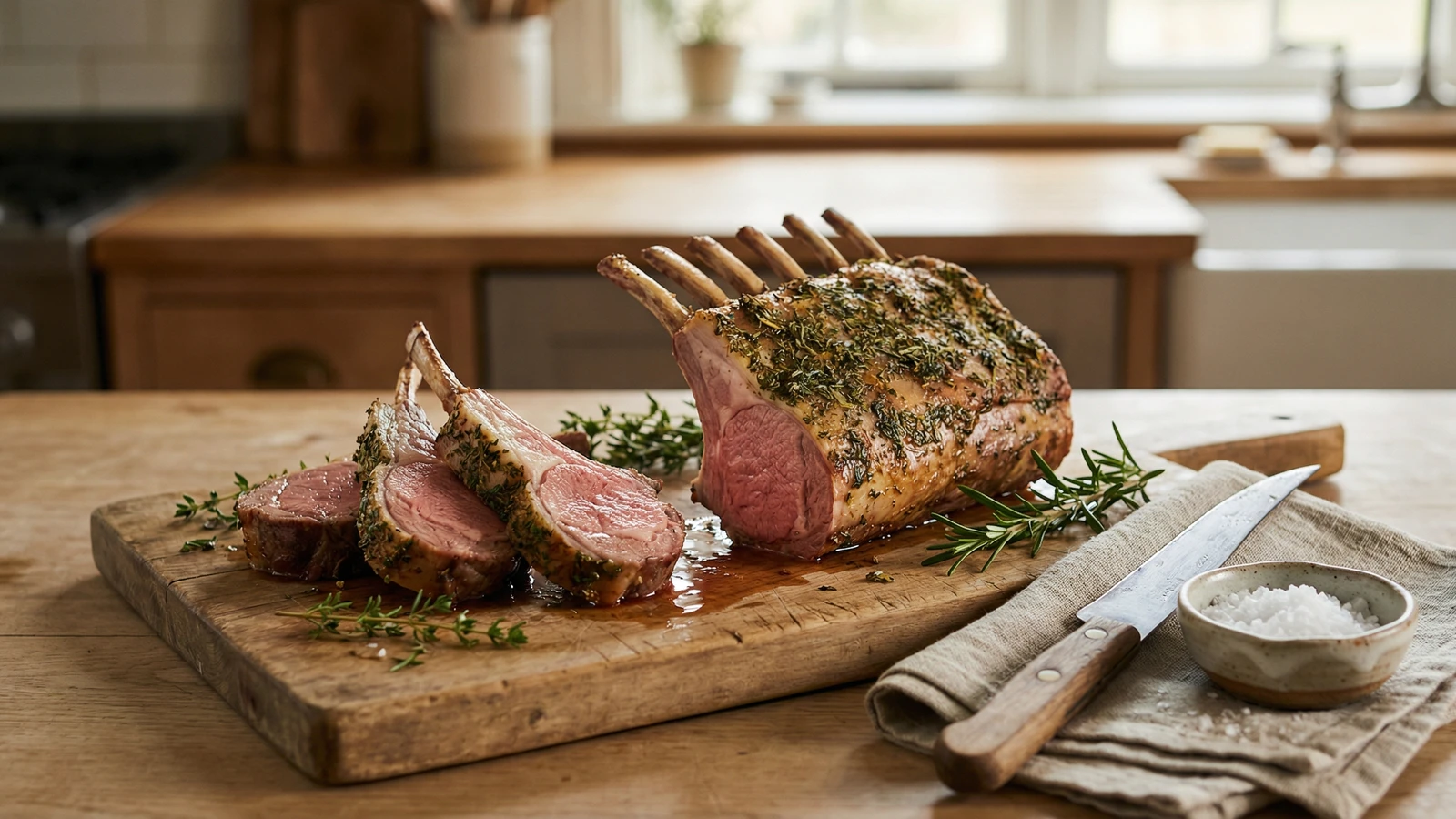
Herb-Crusted Rack of Lamb
Created by Chef Ally
Tender, grass-fed lamb roasted with a fragrant crust of garden herbs and sharp Dijon, carved to reveal a rosy interior that needs nothing more than its own juices.
Start with the lamb. This matters more than any technique I can teach you. Find a farmer who raises animals on pasture, who can tell you what the sheep ate and how they lived. The meat should smell clean and faintly sweet, the fat white and firm. If you have that, you are most of the way to something extraordinary.
Spring is the traditional season for lamb, and for good reason. Young animals that have grazed on new grass produce meat that is tender, delicate, and full of the land they walked on. An Easter rack of lamb is not just a meal. It is a celebration of the turning year.
The herb crust exists to enhance, not to hide. Fresh rosemary, thyme, and parsley from the garden or farmers market, pounded with garlic and good olive oil, pressed onto a thin layer of Dijon. The mustard helps the herbs cling and adds a quiet heat that wakes everything up. Then you roast it hot and fast, let it rest, and carve.
Every meal is a meaningful choice. When you buy lamb from someone who cares about the animal and the land, you are voting for a different kind of food system. And the lamb tastes better for it. That is not a coincidence.
The technique, the tradition, and the story behind every dish.
Discover Culinary AdvisorIngredients
rack of lamb, frenched
Quantity
1 rack (8 ribs, 1 1/2 to 2 pounds)
Dijon mustard
Quantity
2 tablespoons
fresh rosemary leaves
Quantity
3 tablespoons
fresh thyme leaves
Quantity
2 tablespoons
fresh flat-leaf parsley leaves
Quantity
2 tablespoons
garlic
Quantity
3 cloves
extra-virgin olive oil
Quantity
3 tablespoons, plus more for searing
flaky sea salt
Quantity
1/2 teaspoon, plus more for seasoning
freshly cracked black pepper
Quantity
1/2 teaspoon
unsalted butter
Quantity
1 tablespoon
| Ingredient | Quantity |
|---|---|
| rack of lamb, frenched | 1 rack (8 ribs, 1 1/2 to 2 pounds) |
| Dijon mustard | 2 tablespoons |
| fresh rosemary leaves | 3 tablespoons |
| fresh thyme leaves | 2 tablespoons |
| fresh flat-leaf parsley leaves | 2 tablespoons |
| garlic | 3 cloves |
| extra-virgin olive oil | 3 tablespoons, plus more for searing |
| flaky sea salt | 1/2 teaspoon, plus more for seasoning |
| freshly cracked black pepper | 1/2 teaspoon |
| unsalted butter | 1 tablespoon |
Equipment Needed
- •12-inch cast iron skillet or heavy oven-safe pan
- •Instant-read thermometer
- •Sharp carving knife
Instructions
- 1
Temper the lamb
Remove the rack from the refrigerator one hour before cooking. Cold meat seizes in a hot pan, and a chilled center will never cook evenly. Season generously with salt and pepper on all sides. Let it sit on the counter, loosely covered, while you prepare everything else.
Ask your butcher to french the rack for you. This means scraping the rib bones clean. It is tedious work, and they do it better. - 2
Make the herb paste
Strip the rosemary, thyme, and parsley leaves from their stems. Pile them on your cutting board with the garlic cloves and a pinch of salt. Chop and scrape, chop and scrape, until you have a rough paste. Transfer to a small bowl and stir in the olive oil. The mixture should be loose enough to spread but thick with herbs. You want to smell the garden when you lean close.
A mortar and pestle works beautifully here if you have one. The pounding releases more oils than chopping alone. - 3
Preheat and sear
Set your oven to 425 degrees. Heat a cast iron skillet or heavy oven-safe pan over high heat until nearly smoking. Add a thin film of olive oil and the butter. When the butter foam subsides, lay the rack in the pan, fat side down. Sear without moving for two minutes until deeply golden. Turn and sear the other meaty side for one minute more. The bones do not need searing.
- 4
Apply mustard and herbs
Remove the pan from heat. Using a brush or the back of a spoon, spread the Dijon mustard in a thin, even layer over the seared fat cap and meaty sides. Press the herb paste firmly onto the mustard, coating every surface the meat will present when carved. The mustard acts as glue. Be generous.
- 5
Roast to pink perfection
Transfer the pan to your hot oven. Roast for 15 to 20 minutes for medium-rare, until an instant-read thermometer inserted into the thickest part reads 125 degrees. The herbs will turn fragrant and slightly crisp. The fat will render and baste the meat as it cooks. Trust your nose and your thermometer, not the clock.
Lamb continues cooking as it rests. Pull it at 125 degrees and it will coast to a perfect 130 to 135, which is medium-rare. If you prefer medium, pull at 135 degrees. - 6
Rest before carving
Transfer the rack to a cutting board, tent loosely with foil, and let it rest for 10 minutes. This is not optional. The juices need time to redistribute. If you carve too soon, they will flood the board instead of staying in the meat. Use this time to warm your plates and gather your people.
- 7
Carve and serve
Slice between the bones into individual chops. Arrange on a warmed platter or divide among plates. Spoon any collected juices over the top. Serve immediately. The lamb needs nothing else, though a simple salad of bitter greens or roasted spring vegetables would be welcome alongside.
Chef Tips
- •Seek out lamb from farms that practice rotational grazing. The meat has a cleaner flavor and the farming builds soil rather than depleting it. Your butcher should know the source.
- •The herbs must be fresh. Dried herbs will not cling properly and lack the brightness this dish requires. If you grow rosemary and thyme, now is the time to use them.
- •Save the lamb bones after dinner. Roasted lamb bones make an extraordinary stock for risotto or a spring vegetable soup.
- •A simple red wine from the Rhône or a rustic Bandol pairs beautifully. Look for something with enough structure to stand up to the lamb but not so heavy that it overwhelms the herbs.
Advance Preparation
- •The herb paste can be made up to 4 hours ahead and refrigerated. Bring to room temperature before using.
- •The lamb can be seared up to 2 hours before roasting. Keep at room temperature, loosely covered, then apply mustard and herbs just before the oven.
Frequently Asked Questions
Nutrition Information
1 serving (about 175g)
Where cooking meets culture.
Culinary mentorship, cultural storytelling, and the editorial depth that makes cooking meaningful.
Explore Culinary Advisor