Culinary Advisor
A cooking platform built around craft, culture, and the stories behind what we eat.
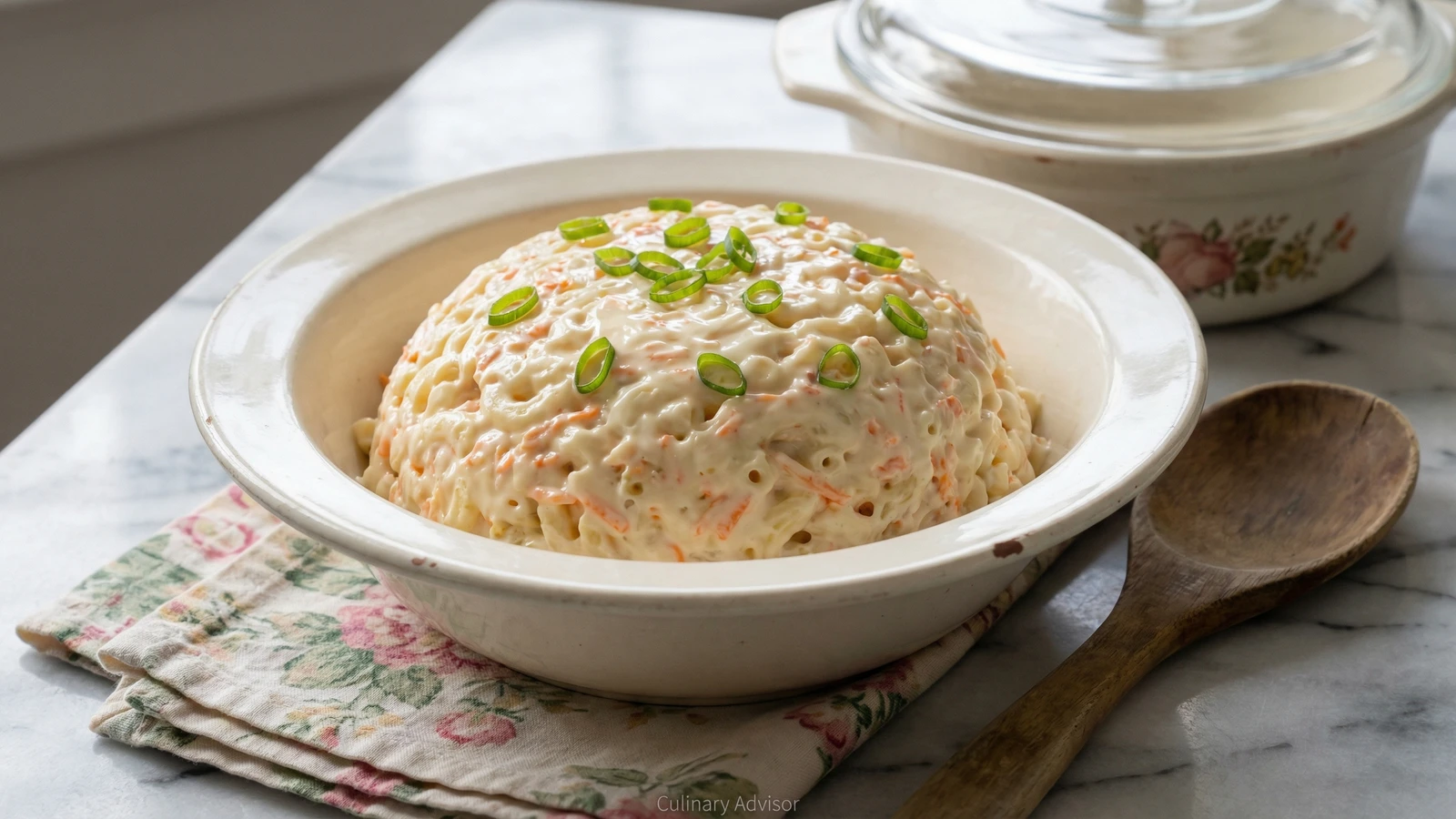
Hawaiian Macaroni Salad
Created by
The iconic plate lunch side dish from the islands: impossibly creamy, subtly sweet, and tangy enough to cut through any kalua pork or teriyaki chicken you set beside it. This is comfort food that travels well and feeds a crowd.
Every cuisine develops dishes that become inseparable from place. In Hawaii, that dish is macaroni salad. Not the mainland version studded with celery and hard-boiled eggs, but something simpler and more profound: soft elbow noodles bound in a creamy, slightly sweet dressing with nothing more than finely grated carrot and onion for company.
The origins trace back to the plantation era, when workers from Japan, China, the Philippines, Portugal, and elsewhere gathered around shared meals. The plate lunch emerged from these gatherings: two scoops of rice, a protein, and that essential scoop of mac salad. The combination became ritual. It persists today at lunch wagons across Oahu and in the muscle memory of anyone who grew up there.
What makes Hawaiian mac salad different? First, the pasta cooks soft. Not al dente, not with any resistance whatsoever. This horrifies Italian traditionalists, but tradition isn't universal. The soft noodles absorb the dressing, becoming one with it rather than merely wearing it. Second, the dressing starts loose and wet, then transforms over hours of refrigeration into something silky and cohesive. Third, there are no distractions. No peas, no pickles, no hard-boiled eggs cluttering the experience. Just pasta, mayo, and the gentle sweetness of grated carrot.
This is food born from community, from workers sharing what they had. It deserves the same respect you'd give any regional classic.
The technique, the tradition, and the story behind every dish.
Discover Culinary AdvisorIngredients
elbow macaroni
Quantity
1 pound
kosher salt (for pasta water)
Quantity
1 tablespoon
best-quality mayonnaise
Quantity
2 cups
whole milk
Quantity
1/4 cup
apple cider vinegar
Quantity
2 tablespoons
granulated sugar
Quantity
1 tablespoon
kosher salt
Quantity
1 1/2 teaspoons
white pepper
Quantity
1/2 teaspoon
freshly ground
carrots
Quantity
2 medium
finely grated
yellow onion
Quantity
1/4 cup
finely grated
green onions (optional)
Quantity
2
thinly sliced
| Ingredient | Quantity |
|---|---|
| elbow macaroni | 1 pound |
| kosher salt (for pasta water) | 1 tablespoon |
| best-quality mayonnaise | 2 cups |
| whole milk | 1/4 cup |
| apple cider vinegar | 2 tablespoons |
| granulated sugar | 1 tablespoon |
| kosher salt | 1 1/2 teaspoons |
| white pepperfreshly ground | 1/2 teaspoon |
| carrotsfinely grated | 2 medium |
| yellow onionfinely grated | 1/4 cup |
| green onions (optional)thinly sliced | 2 |
Equipment Needed
- •Large pot for boiling pasta
- •Box grater with fine holes
- •Large mixing bowl
- •Rimmed baking sheet for cooling pasta
Instructions
- 1
Boil the pasta soft
Bring a large pot of water to a rolling boil and add one tablespoon of kosher salt. Add the elbow macaroni and cook until very soft, about two to three minutes past the package directions. This is not Italian cooking. You want pasta that yields completely to the tooth, almost bordering on mushy. The noodles will absorb the dressing and firm up slightly as they chill.
Taste a piece before draining. If there's any resistance at the center, it needs more time. Hawaiian mac salad demands tender pasta. - 2
Rinse and cool
Drain the pasta in a colander and rinse thoroughly under cold running water, tossing gently to cool it down quickly and wash away excess starch. Shake off as much water as possible, then spread the pasta on a rimmed baking sheet to continue cooling. Warm pasta will thin your dressing into something greasy and unappealing.
- 3
Build the dressing
In a large mixing bowl, whisk together the mayonnaise, milk, apple cider vinegar, sugar, salt, and white pepper until completely smooth. The dressing should be looser than you think necessary. It will thicken considerably as the pasta absorbs it over the next few hours. Taste it now. It should be tangy with a whisper of sweetness, well-seasoned but not aggressive.
White pepper is traditional here. It provides heat without the visual speckling of black pepper, keeping that characteristic pale appearance. - 4
Combine pasta and vegetables
Add the cooled pasta to the dressing along with the finely grated carrots and onion. Fold everything together gently but thoroughly, ensuring every noodle gets coated. The mixture will look quite wet at this stage. That's exactly right. The pasta is still absorbing.
- 5
Rest and develop
Cover the bowl tightly with plastic wrap, pressing it directly onto the surface of the salad to prevent a skin from forming. Refrigerate for at least four hours, though overnight is better. The flavors meld. The texture transforms. This resting period is not optional.
The salad will thicken dramatically as it rests. This is why we started with a loose dressing. Patience rewards you here. - 6
Adjust and serve
Before serving, stir the salad thoroughly and taste again. The pasta will have absorbed much of the dressing. Add two to three tablespoons more mayonnaise and a splash of milk if needed to restore that creamy, spoonable consistency. Adjust salt and pepper to taste. Transfer to a serving bowl and scatter green onion slices over the top if you like a bit of color and bite.
Chef Tips
- •The mayonnaise matters enormously. Best Foods (called Hellmann's east of the Rockies) is the traditional choice in Hawaii. Duke's works beautifully too. Avoid anything labeled 'light' or 'reduced fat' because they lack the richness this salad demands.
- •Grate your carrots on the finest holes of a box grater, almost to a pulp. You want them to disappear into the dressing, providing sweetness and color without texture. Chunky carrot bits belong in a different salad.
- •If serving at a potluck or picnic, pack the salad in a cooler and bring extra mayonnaise and milk on the side. You'll likely need to loosen it just before serving, as it continues to thicken even when chilled.
- •Some cooks add a tablespoon of rice vinegar instead of apple cider vinegar for a slightly milder tang. Both work. Use what you have.
Advance Preparation
- •This salad improves with time. Make it the day before your event and refrigerate overnight. The flavors become more cohesive and the texture more luxurious.
- •The salad keeps refrigerated for up to four days. Stir in additional mayonnaise and milk to refresh the texture before each serving.
- •For potlucks, transport in a cooler with ice packs. Bring a small container of mayonnaise thinned with milk to adjust consistency on site.
Frequently Asked Questions
Nutrition Information
1 serving (about 215g)
Where cooking meets culture.
Culinary mentorship, cultural storytelling, and the editorial depth that makes cooking meaningful.
Explore Culinary Advisor