Culinary Advisor
A cooking platform built around craft, culture, and the stories behind what we eat.
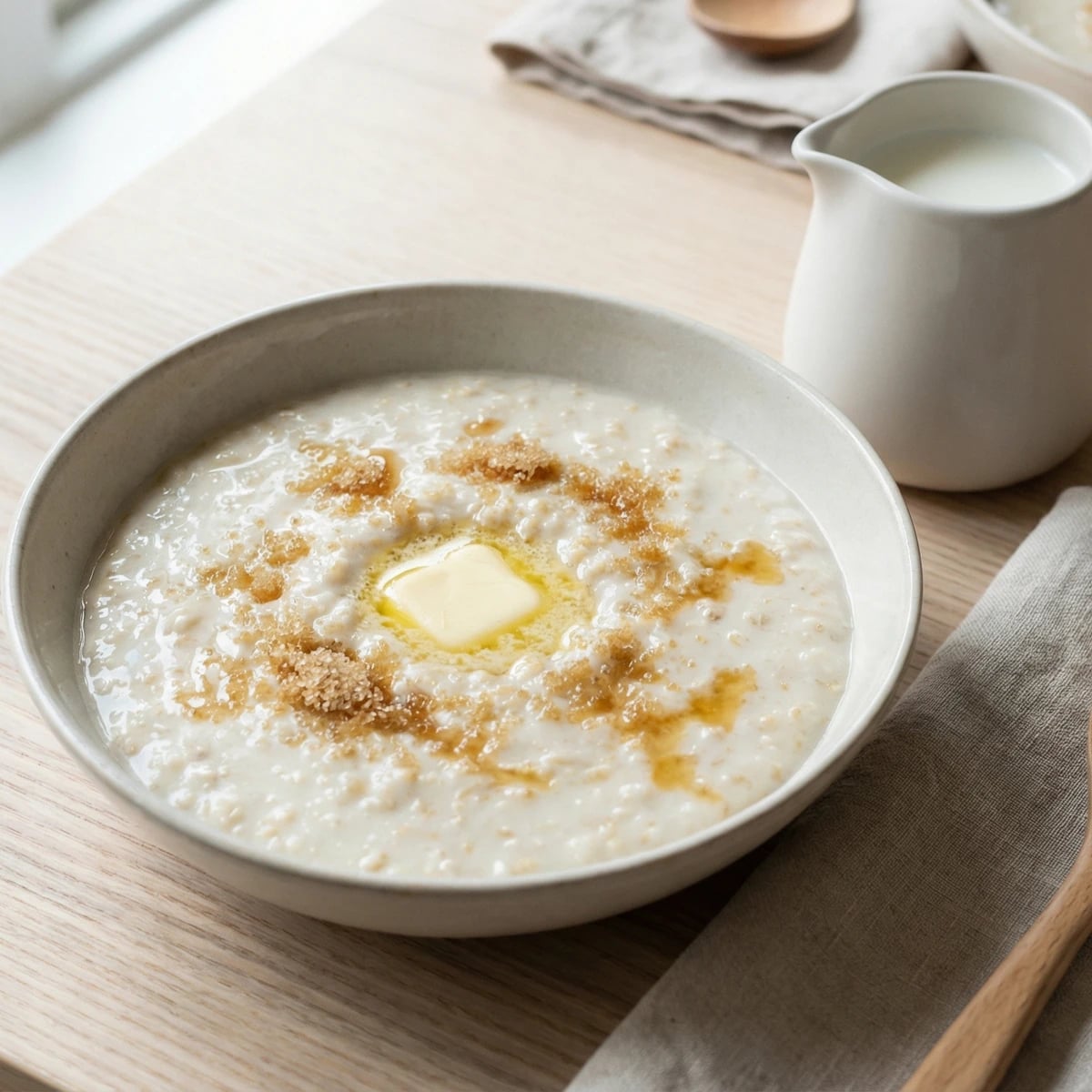
Havregrynsgrod
Created by Chef Freja
Danish oatmeal porridge simmered slowly in milk with a pinch of salt, finished with a golden pool of butter and brown sugar at the center. The breakfast that carries Danish winter mornings.
Winter mornings in Denmark are dark at seven and darker at eight. The kind of dark where you turn on the kitchen light before the kettle and the windows hold nothing but your own reflection. This is when havregrynsgrod comes into its own. A pan of oats on the stove, a wooden spoon moving slowly, the steam-free warmth of milk coming up to a simmer. A small act of care before the day begins.
Porridge is not trying to be clever. It's oats, milk, and salt, cooked slowly until the starch releases and the whole thing turns creamy. What makes the Danish version Danish is the finish: a well pressed into the center, a knob of cold butter dropped in, a spoonful of brown sugar melting over the top into a golden pool. We call this the smorhul, the butter hole, and it's the small ritual that turns a bowl of oats into breakfast. You dig your spoon through the pool as you eat, so each bite carries a bit of sweet and salt and fat.
What matters most is patience. Grod cooked too fast is grainy and thin. Grod cooked slowly, stirred often, and rested under a lid for two minutes before serving is something else entirely. Silky, rounded, deeply comforting. I'll walk you through every step so the first bowl you make is already the bowl you want. And I want you to resist the urge to stir the butter and sugar in at the end. That pool at the center is not decoration. It's the point.
Ingredients
rolled oats (havregryn)
Quantity
150g
whole milk
Quantity
500ml
water
Quantity
200ml
| Ingredient | Quantity |
|---|---|
| rolled oats (havregryn) | 150g |
| whole milk | 500ml |
| water | 200ml |