Culinary Advisor
A cooking platform built around craft, culture, and the stories behind what we eat.
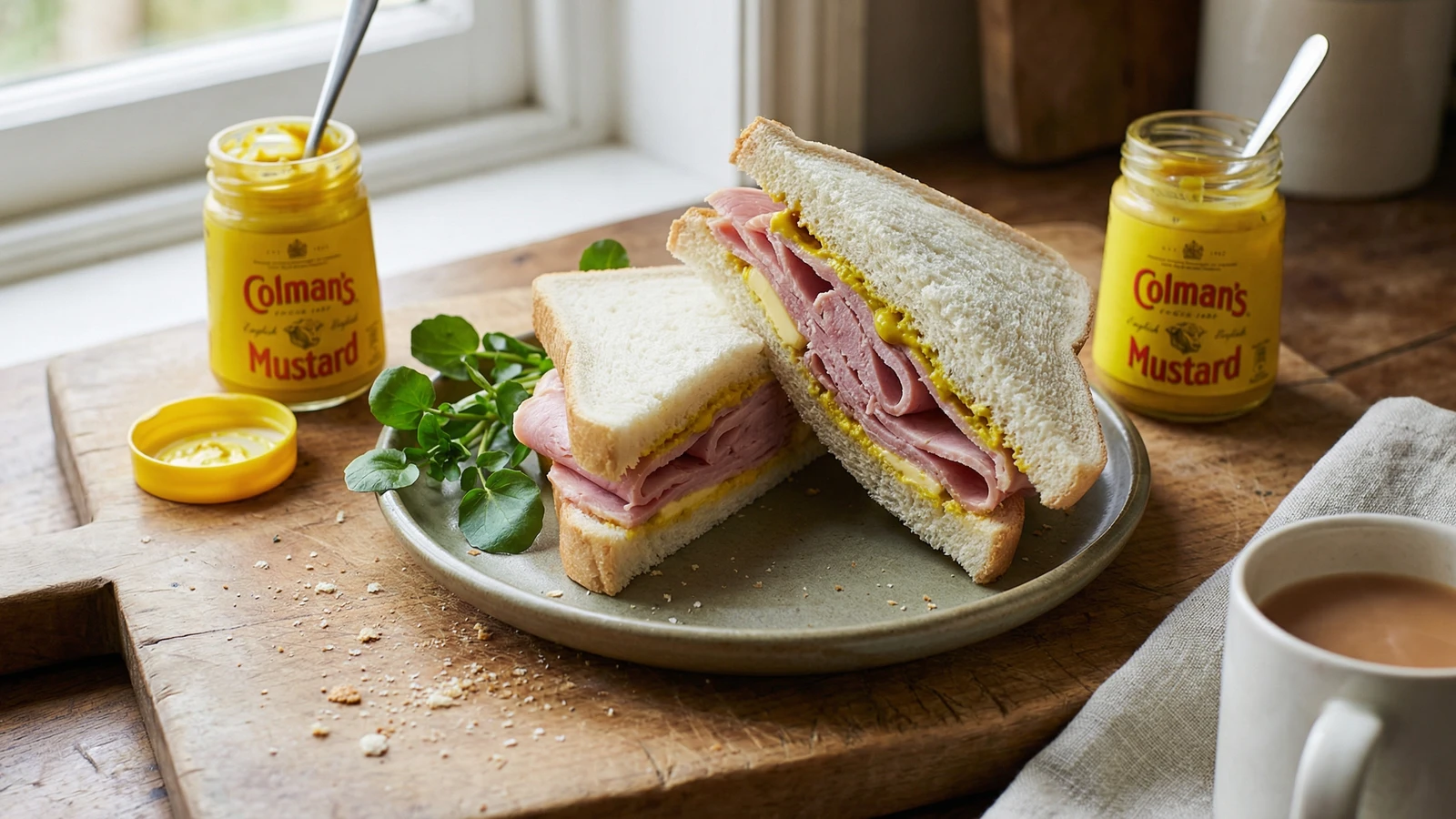
Ham and English Mustard Sandwich
Created by Chef Thomas
Thick-cut ham folded onto buttered white bread with a sharp smear of Colman's, the kind of sandwich that asks nothing of you and gives back more than it should.
Saturday. Back from the market with a paper bag of tomatoes, a loaf still warm from the baker, and a few slices of ham cut thick from the bone while you waited. The kettle is on. The kitchen smells of bread. And before you unpack anything else, before you plan the week or think about dinner, you make this sandwich. Because you're hungry now, and this is what hungry looks like when you've got good ham and a jar of Colman's in the cupboard.
There is nothing to teach here. A ham and mustard sandwich is not a recipe. It's an instinct. Two slices of white bread, buttered properly. Ham with some texture to it, not the wafer-thin, vacuum-packed sort that tastes of water and apology. And English mustard, the real kind, the one that clears your sinuses and reminds you that condiments should have opinions.
I've eaten this sandwich a thousand times and I wrote it in the notebook once. The entry reads: ham, mustard, white bread, Saturday, good. There was nothing else to say. Some things don't need improving. They just need making, with attention and without fuss, and eating before the bread goes stale.
The technique, the tradition, and the story behind every dish.
Discover Culinary AdvisorIngredients
good white bread
Quantity
2 slices
real butter
Quantity
enough to spread generously
softened
proper ham
Quantity
2-3 thick slices
carved from the bone if possible
Colman's English mustard
Quantity
to taste
watercress or little gem lettuce (optional)
Quantity
a few leaves
| Ingredient | Quantity |
|---|---|
| good white bread | 2 slices |
| real buttersoftened | enough to spread generously |
| proper hamcarved from the bone if possible | 2-3 thick slices |
| Colman's English mustard | to taste |
| watercress or little gem lettuce (optional) | a few leaves |
Equipment Needed
- •Bread knife
- •Butter knife
Instructions
- 1
Butter the bread
Butter both slices of bread, properly. Right to the edges, not a thin scrape in the centre. Cold butter tears bread, so let it come to room temperature first. The butter is doing more work than you think here. It seals the bread against the moisture of the ham and adds a quiet richness that holds the whole thing together. This isn't the place for olive oil spread or margarine. Real butter. You'll know the difference.
- 2
Apply the mustard
Spread a thin, even layer of Colman's English mustard on one slice. How much depends on your relationship with mustard. A timid smear will barely register. A confident one will catch you at the back of the throat and make your eyes prick. Start with less than you think, then build. The mustard should be present in every bite, not just the middle. This is not French mustard, not wholegrain, not Dijon. Colman's. The yellow tin. Nothing else has the same clean, nasal heat.
If you're making this for someone else, go easy. You can always add more. You can never take it back. English mustard is not a negotiable condiment. - 3
Layer the ham
Lay the ham on the mustard side, folding the slices loosely rather than laying them flat. You want texture, a bit of give when you bite into it. Ham that lies perfectly flat in a sandwich tastes like a photograph. Folded ham traps little pockets of air and mustard between the layers, and that's where the pleasure is. If you've got watercress, tuck a few sprigs in now. Its pepperiness works with the mustard without competing.
- 4
Close and cut
Press the second slice of bread on top, buttered side down, and press gently. Not flat. Just enough to hold. Cut in half, corner to corner. I can't explain why a diagonal cut makes a sandwich taste better, but it does. Everyone knows this and nobody can account for it. Eat it standing at the counter if you're alone, or wrap it in greaseproof paper if it's going somewhere.
Chef Tips
- •The ham is everything. Go to a proper butcher or a good deli counter and ask for it sliced thick, off the bone if they have it. You want ham that tastes of pork, cured and smoky or mild and sweet, but recognisably meat. The pre-packed slices in plastic trays have been pressed and reformed and injected with water. They're a different food entirely.
- •Colman's English mustard is not interchangeable. Dijon is lovely, but it belongs in a different sandwich. Wholegrain is fine on a cheese ploughman's. Here, you want the sharp, sinus-clearing heat that only Colman's delivers. The powder mixed fresh is even better if you have it: mix a teaspoon with cold water, stir it smooth, and let it sit for ten minutes before using. The heat develops as it rests.
- •White bread. I know. But a ham and mustard sandwich on brown bread or sourdough is a different lunch. The soft, slightly sweet crumb of a good white loaf is part of the architecture. It yields when you bite, it absorbs the butter, and it lets the ham and mustard do the talking. A proper bakery loaf, not sliced supermarket bread if you can manage it.
Advance Preparation
- •This sandwich is best made and eaten immediately, but it travels well wrapped in greaseproof paper for a packed lunch or a picnic. Make it no more than a few hours ahead.
- •If you're making several for a picnic, wrap them tightly in greaseproof paper and stack them in a tin. They press gently against each other and improve slightly for it.
Frequently Asked Questions
Nutrition Information
1 serving (about 185g)
Where cooking meets culture.
Culinary mentorship, cultural storytelling, and the editorial depth that makes cooking meaningful.
Explore Culinary Advisor