Culinary Advisor
A cooking platform built around craft, culture, and the stories behind what we eat.
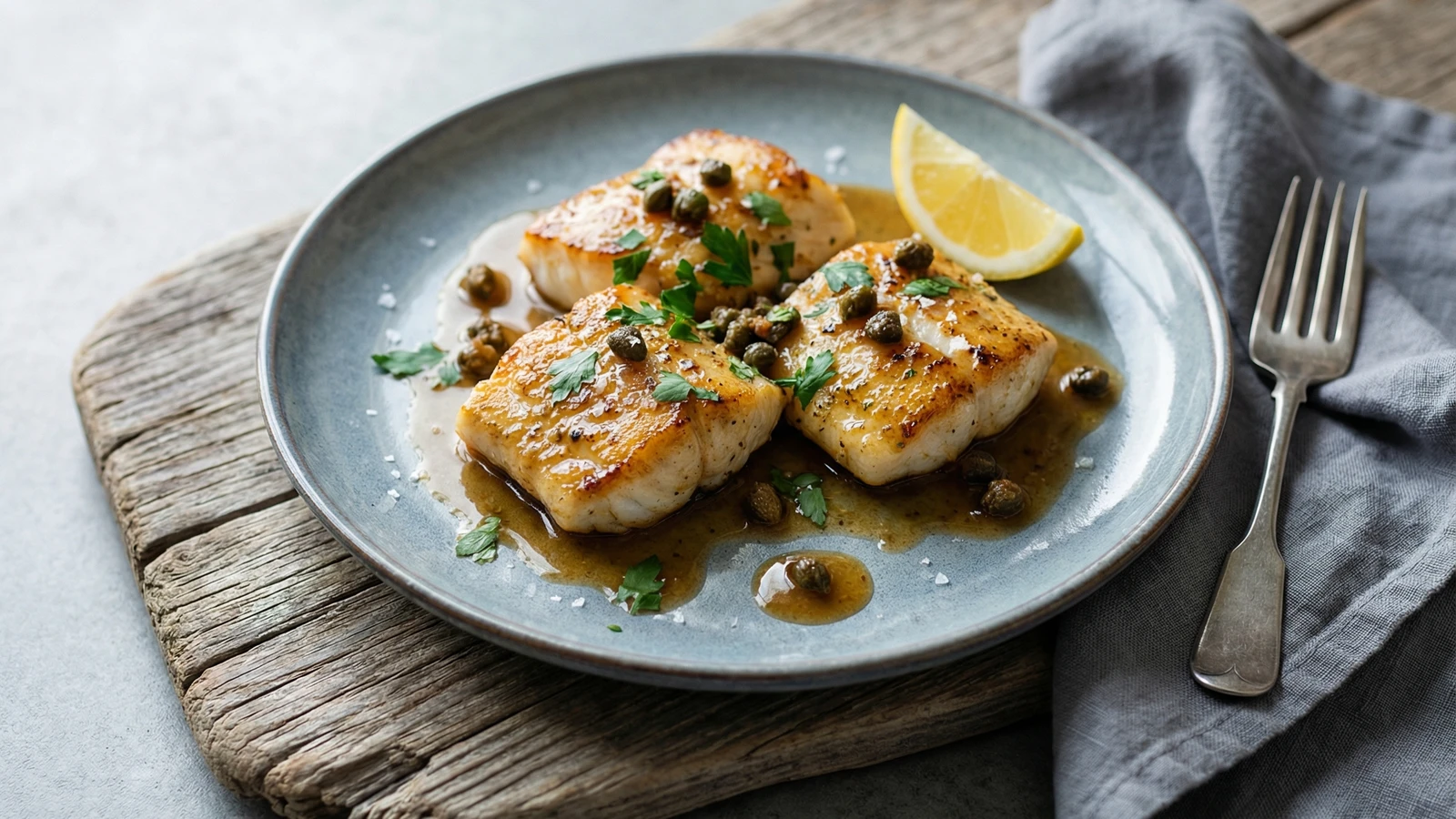
Halibut Cheeks with Brown Butter
Created by
Silky halibut cheeks seared golden and bathed in nutty brown butter with briny capers and a squeeze of lemon. This is the cut fishermen keep for themselves, now yours to master.
The halibut cheek is one of the Pacific Northwest's great culinary secrets. For generations, commercial fishermen kept these morsels for themselves while sending the rest of the catch to market. They knew what they had: a small muscle of extraordinary tenderness, similar in texture to a sea scallop but with the clean, sweet flavor of prime halibut. You won't find cheeks at every fish counter. When you do, buy them.
This dish traces its lineage through the cultures that shaped our coastal cooking. The technique of browning butter comes from the French, who call it beurre noisette for its hazelnut aroma. The capers nod to Scandinavian traditions of pairing fish with sharp, briny accents. And the reverence for the whole animal, for using every honorable part, reflects the practices of Coast Salish peoples who have fished these waters for thousands of years.
The method is simple. Sear the cheeks until golden, then build your sauce in the same pan. The butter transforms as it heats: first foaming white, then settling into amber, releasing an aroma like toasted nuts. This happens quickly. Watch the color, not the clock. Add your capers and lemon at the moment the butter reaches that deep gold, and the sizzle will tell you everything is right.
I've served this dish at dinner parties where guests assumed it required hours of preparation. It takes fifteen minutes. The elegance comes from the ingredient itself and your willingness to treat it with respect.
The technique, the tradition, and the story behind every dish.
Discover Culinary AdvisorIngredients
halibut cheeks
Quantity
1 1/2 pounds (about 8-12 pieces)
fine sea salt
Quantity
to taste
freshly ground black pepper
Quantity
to taste
neutral oil (grapeseed or vegetable)
Quantity
2 tablespoons
unsalted butter
Quantity
6 tablespoons
cut into pieces
capers
Quantity
3 tablespoons
drained and patted dry
lemon
Quantity
1
halved
fresh flat-leaf parsley
Quantity
2 tablespoons
roughly chopped
flaky sea salt (optional)
Quantity
for finishing
| Ingredient | Quantity |
|---|---|
| halibut cheeks | 1 1/2 pounds (about 8-12 pieces) |
| fine sea salt | to taste |
| freshly ground black pepper | to taste |
| neutral oil (grapeseed or vegetable) | 2 tablespoons |
| unsalted buttercut into pieces | 6 tablespoons |
| capersdrained and patted dry | 3 tablespoons |
| lemonhalved | 1 |
| fresh flat-leaf parsleyroughly chopped | 2 tablespoons |
| flaky sea salt (optional) | for finishing |
Equipment Needed
- •12-inch stainless steel or carbon steel skillet
- •Fish spatula with thin, flexible blade
- •Instant-read thermometer (optional)
Instructions
- 1
Prepare the cheeks
Remove halibut cheeks from the refrigerator 20 minutes before cooking. Inspect each piece and trim away any membrane or connective tissue clinging to the edges. Pat them thoroughly dry with paper towels, pressing firmly. Season both sides with fine sea salt and black pepper. The surface must be dry. Moisture creates steam, and steam prevents the golden crust you're after.
Halibut cheeks vary in size. If yours are larger than two ounces each, consider slicing them horizontally to ensure even cooking. - 2
Heat the pan
Set a large stainless steel or carbon steel skillet over medium-high heat. Add the neutral oil and let it heat until you see the first wisps of smoke rising from the surface. Swirl to coat the pan evenly. This takes two to three minutes. Resist the temptation to rush. A properly heated pan is the difference between searing and steaming.
- 3
Sear the halibut cheeks
Lay the cheeks in the pan in a single layer, leaving space between each piece. You should hear an immediate, aggressive sizzle. If the sound is gentle, your pan wasn't hot enough. Let them cook undisturbed for 90 seconds to 2 minutes. The edges will turn opaque and creep upward. When the bottom releases easily and shows deep golden color, flip each cheek with a fish spatula. Cook the second side for 60 to 90 seconds until just cooked through. The center should be barely opaque. Transfer to a warm plate.
Work in batches if necessary. Crowding causes the temperature to drop and produces pale, steamed fish instead of properly seared cheeks. - 4
Brown the butter
Reduce heat to medium. Add the butter pieces to the pan. They will foam vigorously at first, bubbling white and hissing as the water cooks out. Watch carefully now. Swirl the pan gently to promote even cooking. After about two minutes, the foam will subside and the butter will begin to change color: first pale gold, then deeper amber. Golden flecks of milk solids will settle at the bottom. The aroma shifts from dairy to something like toasted hazelnuts. This is beurre noisette. The transformation happens quickly once it starts.
Brown butter goes from perfect to burnt in seconds. Pull the pan from the heat the moment you see deep amber color. Residual heat will finish the job. - 5
Finish the sauce
The instant the butter reaches that deep gold color, add the capers. They will sputter and pop as their moisture hits the hot fat. Stand back slightly. Let them fry for 20 seconds until they bloom open and turn crispy at the edges. Remove the pan from heat entirely. Squeeze the lemon halves directly into the butter, catching seeds with your other hand. The sauce will foam and sizzle dramatically. Swirl to combine. The acid brightens everything.
- 6
Plate and serve
Arrange the halibut cheeks on warmed plates, two or three per person depending on size. Spoon the brown butter and capers generously over each portion, making sure everyone gets their share of the crispy caper bits. Scatter the parsley over the top. Finish with a pinch of flaky sea salt. Serve immediately. This dish waits for no one.
Chef Tips
- •Seek out halibut cheeks from a fishmonger who knows their source. Pacific halibut from Alaska and British Columbia is managed sustainably under strict catch limits. Ask questions. A good fishmonger will know when the boats came in and where the fish was caught.
- •If halibut cheeks prove elusive, this preparation works beautifully with thick-cut halibut steaks, large sea scallops, or even fresh cod cheeks. The technique transfers.
- •Serve this over creamy polenta, crushed fingerling potatoes, or alongside sautéed greens. The brown butter becomes a sauce for everything on the plate.
- •For a distinctly Pacific Northwest touch, toast a handful of Oregon hazelnuts and scatter them over the finished dish. The nuts echo the flavor of the browned butter.
- •A crisp, mineral-driven white wine stands up well here. Look for Albariño, dry Riesling, or an unoaked Chardonnay from the Willamette Valley.
Advance Preparation
- •Halibut cheeks can be trimmed, patted dry, and refrigerated uncovered on a plate for up to 4 hours before cooking. This additional drying improves the sear.
- •The capers can be drained and patted dry ahead of time and held at room temperature.
- •Brown butter sauce does not hold well. Make it the moment before serving.
Frequently Asked Questions
Nutrition Information
1 serving (about 435g)
Where cooking meets culture.
Culinary mentorship, cultural storytelling, and the editorial depth that makes cooking meaningful.
Explore Culinary Advisor