Culinary Advisor
A cooking platform built around craft, culture, and the stories behind what we eat.
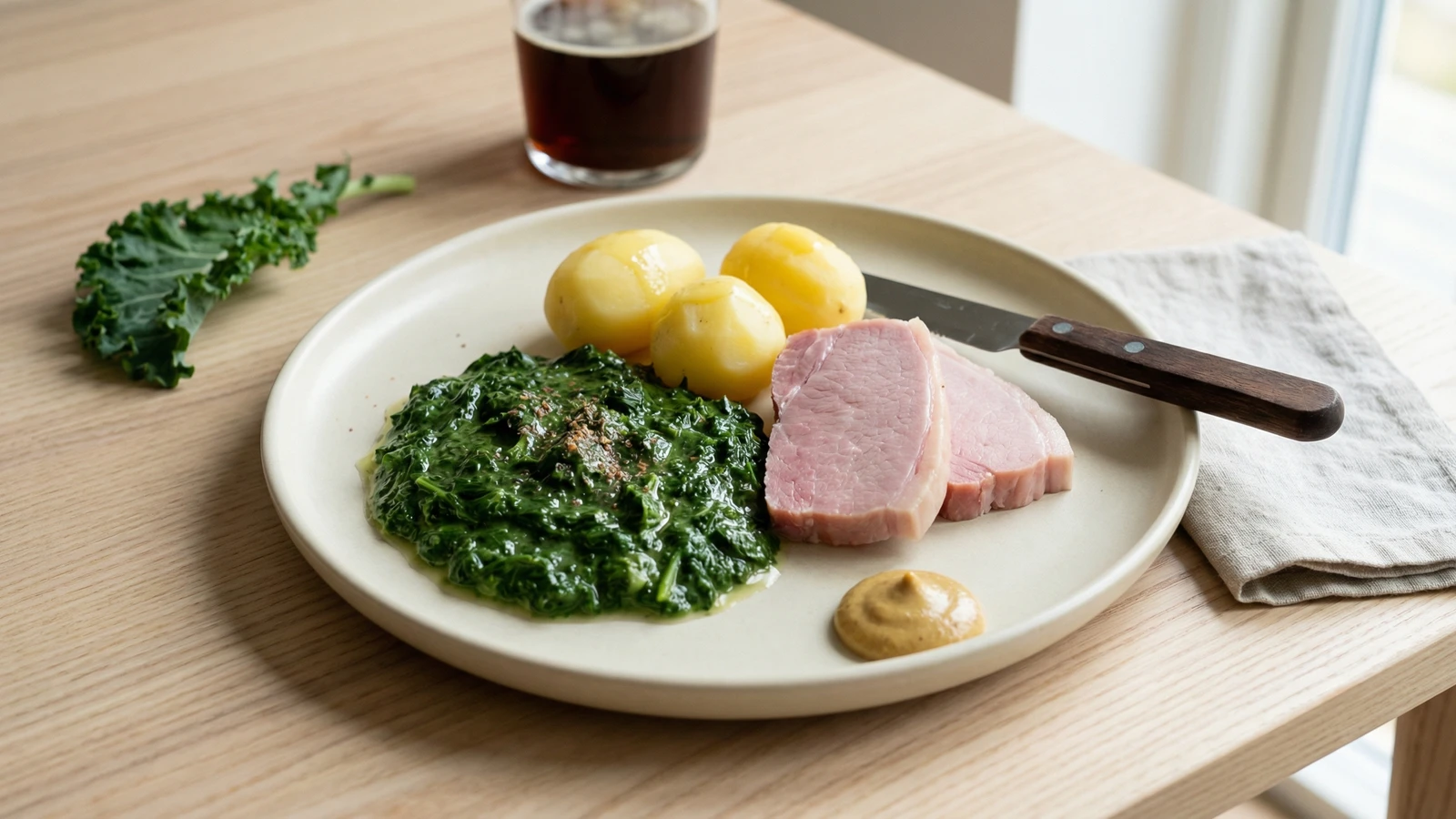
Gronlangkaal med Flaesk
Created by Chef Freja
Denmark's oldest Christmas dish. Curly kale blanched, chopped fine, and folded into a creamy base with nutmeg, served with salted pork, boiled potatoes, and sharp mustard on a dark December evening.
Kale is a winter plant. It gets better after the first frost, sweeter, deeper, the bitterness softening into something closer to earth and iron. By December, when everything else in the Danish garden has given up, the kale is still standing in the cold beds, dark green and curled and waiting. This is when gronlangkaal comes to the table.
Gronlangkaal med flaesk is one of the oldest dishes Denmark still cooks. The name means green long kale, a reference to the way the leaves are sliced long and fine before they go into the creamy base. It holds the middle of a Jutland Christmas lunch, and for many families it is not Christmas without it. Salted pork on one side, boiled potatoes on the other, a spoon of sharp mustard on the rim of the plate. The season decides, and in December, the kale decides everything.
What matters most is the kale itself. You blanch it until it is tender but still holds its color. You chop it fine, almost to a paste. Then you let it cook slowly into a roux of butter and flour loosened with milk, cream, and the salty cooking water from the pork. I'll walk you through each step so you're never guessing, and by the end you'll have a pot of stew that tastes of winter and cream and a kitchen that someone has cooked in with love. The joy of waiting for December is waiting for this.
Gronlangkaal is among the oldest documented Danish dishes, with curly kale cultivated in Denmark since the Viking age, centuries before the headed cabbage became common in northern Europe. Medieval Danish sources describe long-kale preparations that are recognizably the ancestors of the dish still cooked today. It became firmly anchored to the Christmas table in the 1800s, particularly in Jutland and on Funen, where it is served alongside salted or smoked pork, boiled potatoes, and sharp mustard. Some older recipes include a small spoonful of sugar in the cream base, a Jutland touch that survives in some households and has been quietly dropped in others, and the argument over whether it belongs is one of those small, affectionate debates that keeps the dish alive.
The technique, the tradition, and the story behind every dish.
Discover Culinary AdvisorIngredients
curly kale
Quantity
1kg
tough stems stripped
salted pork loin (hamburgerryg) or salted pork belly
Quantity
1kg
bay leaf
Quantity
1
black peppercorns
Quantity
6
onion
Quantity
1
halved
unsalted butter
Quantity
60g
plain flour
Quantity
60g
whole milk
Quantity
500ml
double cream
Quantity
200ml
reserved pork cooking liquid
Quantity
250ml
freshly grated nutmeg
Quantity
to taste
sugar (optional)
Quantity
1 teaspoon
fine sea salt
Quantity
to taste
white pepper
Quantity
to taste
small waxy potatoes
Quantity
900g
peeled, to serve
strong Danish mustard
Quantity
to serve
| Ingredient | Quantity |
|---|---|
| curly kaletough stems stripped | 1kg |
| salted pork loin (hamburgerryg) or salted pork belly | 1kg |
| bay leaf | 1 |
| black peppercorns | 6 |
| onionhalved | 1 |
| unsalted butter | 60g |
| plain flour | 60g |
| whole milk | 500ml |
| double cream | 200ml |
| reserved pork cooking liquid | 250ml |
| freshly grated nutmeg | to taste |
| sugar (optional) | 1 teaspoon |
| fine sea salt | to taste |
| white pepper | to taste |
| small waxy potatoespeeled, to serve | 900g |
| strong Danish mustard | to serve |
Equipment Needed
- •Large pot for the pork, 6 litre
- •Second large pot for blanching kale
- •Heavy-bottomed pot for the stew, 4 litre
- •Large chef's knife
- •Fine grater for nutmeg
- •Whisk
Instructions
- 1
Cook the pork
Place the salted pork in a large pot and cover with cold water. Add the bay leaf, peppercorns, and halved onion. Bring the pot slowly to a gentle simmer. Never a rolling boil. A hard boil toughens salted pork and drives the flavor out into the water instead of keeping it in the meat. Simmer gently for about an hour, or until a skewer slides into the thickest part with no resistance. Turn off the heat and leave the pork in its liquid to stay warm while you make the stew.
Save the cooking liquid. You'll use some of it in the sauce, and the rest is the best base imaginable for pea soup the next day. - 2
Blanch the kale
Bring a large pot of salted water to a hard boil. Strip the kale leaves from their tough stems and drop the leaves into the water. Blanch for four minutes. The leaves should soften and turn a deeper, brighter green. Lift them out with a slotted spoon and plunge them straight into a bowl of cold water. This stops the cooking and locks the color. Grey kale is kale that kept cooking when it shouldn't have.
- 3
Chop the kale fine
Drain the blanched kale and squeeze it hard with your hands to get rid of as much water as you can. Wet kale will make the stew loose and watery, and no amount of flour will save it later. Gather the squeezed kale into a tight bundle on a cutting board and chop it as finely as you can, almost to a paste. This is where the name comes from. Long kale, chopped long and fine, is what gives gronlangkaal its texture.
A big chef's knife and a rocking motion does this faster than a food processor, and keeps the texture more interesting. The processor turns it into mush. - 4
Build the roux
Melt the butter in a heavy pot over medium heat. When it stops foaming, add the flour all at once and whisk it into the butter until you have a smooth paste. Cook this, stirring constantly, for two or three minutes. You want the raw flour smell to go and the roux to turn the color of pale straw. Any darker and the sauce will taste of toast. Any paler and the flour will still taste raw in the finished stew.
- 5
Loosen with liquid
Whisk in the milk a little at a time, making sure each addition is smooth before you add the next. Lumps form when cold liquid meets hot roux too fast, so take your time. Once the milk is in, add the cream and the pork cooking liquid. Bring everything to a gentle simmer, whisking, until the sauce thickens to the consistency of soft custard. This takes about five minutes.
- 6
Fold in the kale
Tip the chopped kale into the sauce and stir it through. The stew will look very thick at first. That's right. As the kale warms through and releases a little of its own moisture, it will loosen into the creamy, unified stew you're after. Turn the heat down low and let it cook gently for ten minutes, stirring now and then so the bottom doesn't catch. This slow finish is where the flavors marry.
If the stew feels too thick at the end, loosen it with a splash more cream or pork liquid. If it feels too loose, simmer a minute longer. You'll know when it's right when a spoon drawn through the pot leaves a clean trail for a second before it closes. - 7
Season the stew
Grate in fresh nutmeg generously. Nutmeg is the spice that belongs to gronlangkaal, and it should be tasted, not hinted at. Add sugar if you like, a Jutland touch some families keep and others have dropped. Season with salt and white pepper. Taste, adjust, taste again. The pork will bring its own salt to the plate, so go carefully with the seasoning here.
- 8
Boil the potatoes
While the stew finishes, boil the peeled potatoes in salted water until a knife slides through them easily, about fifteen minutes depending on size. Drain and keep them warm. Small waxy potatoes are what you want. Floury potatoes break apart and go gluey next to the creamy kale.
- 9
Slice and serve
Lift the pork from its warm liquid and slice it thickly, about a centimetre per slice. Spoon a generous heap of gronlangkaal onto each warm plate. Lay two or three slices of pork beside it. Add the boiled potatoes and a spoon of strong Danish mustard on the rim of the plate. Serve at once, while everything is warm, and say tak for mad before the first bite.
Chef Tips
- •Wait for kale that has seen frost. Supermarket kale in September is fine, but kale picked after the first cold snap in November or December is sweeter and deeper, and the stew you make from it tastes like a completely different dish.
- •Hamburgerryg (lightly smoked, salted pork loin) is the most common choice today, but saltet flaesk (salted pork belly) is the older version and richer in flavor. If you can find either at a good butcher, choose by the day you're cooking. Pork belly for a long leisurely meal, pork loin for something lighter.
- •Gronlangkaal is better the next day. The flavors settle and the texture firms up into something even more satisfying. If you're cooking for Christmas, make it the day before and reheat it gently with a splash more cream.
- •Serve with a dark Danish beer or a small glass of aquavit. Red wine fights the cream and the nutmeg. Beer and aquavit lean into the dish instead.
Advance Preparation
- •The stew can be made a full day ahead and kept covered in the fridge. Reheat gently over low heat, stirring, and loosen with a splash more milk or cream if it has thickened overnight.
- •The pork can be cooked the day before as well. Let it cool in its cooking liquid so it stays moist, then lift it out and slice cold. Warm the slices through in a little of the reserved liquid just before serving.
- •Kale can be blanched, squeezed, and chopped a day in advance. Keep it covered in the fridge and fold it into the sauce when you're ready.
Frequently Asked Questions
Nutrition Information
1 serving (about 520g)
Where cooking meets culture.
Culinary mentorship, cultural storytelling, and the editorial depth that makes cooking meaningful.
Explore Culinary Advisor