Culinary Advisor
A cooking platform built around craft, culture, and the stories behind what we eat.
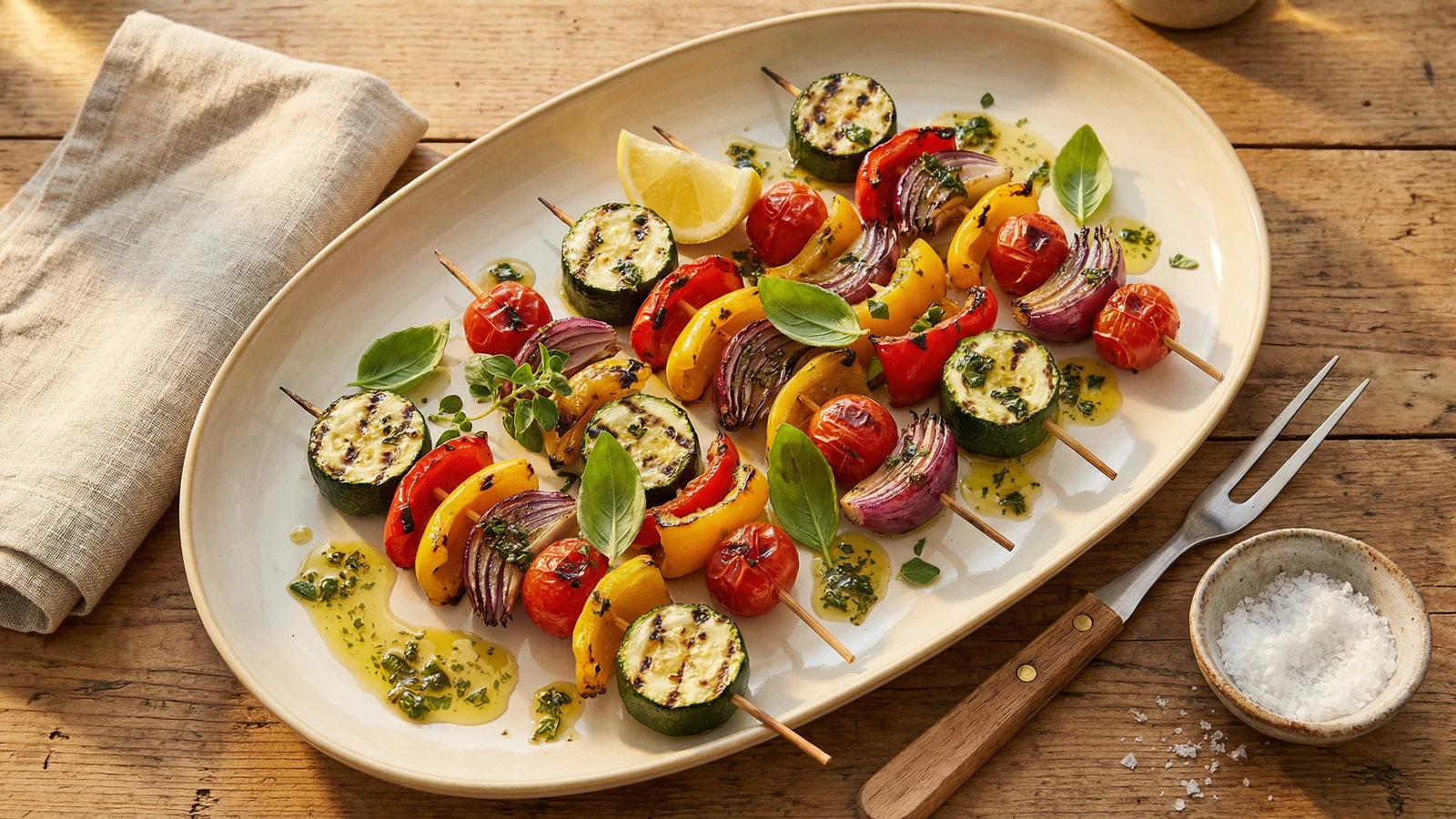
Grilled Summer Vegetable Skewers with Herb Oil
Created by Chef Ally
Summer vegetables from the market, threaded on skewers and charred over flame, then brushed with a fragrant oil of fresh herbs and garlic. Simple food that tastes like the best of the season.
Start at the market. Look for zucchini that are firm and heavy, no bigger than your forearm. Peppers should be glossy and taut, their skin snapping when you press a nail to it. Red onions with papery outer layers and a weight that promises sweetness inside. These are the ingredients that need almost nothing done to them.
The grill does the work here. Fire transforms vegetables in a way no other cooking method can: it caramelizes natural sugars, softens flesh while leaving structure, and adds that whisper of smoke that makes people lean in and ask what you are cooking. Your job is to get out of the way.
The herb oil is simple. Good olive oil, the best you have, steeped briefly with garlic and whatever herbs look alive at the market. Basil, oregano, parsley. The oil carries their fragrance to the warm vegetables, and that fragrance carries across the table. Every meal is a meaningful choice. When you cook like this, with ingredients you can trace back to a farm and a face, the food tastes like it means something. Because it does.
The technique, the tradition, and the story behind every dish.
Discover Culinary AdvisorIngredients
zucchini
Quantity
3 medium
cut into 1-inch rounds
bell peppers
Quantity
2 (any color)
cut into 1 1/2-inch pieces
red onion
Quantity
1 large
cut into wedges
extra-virgin olive oil
Quantity
1/2 cup
garlic
Quantity
3 cloves
smashed
fresh basil leaves
Quantity
1/4 cup
loosely packed
fresh oregano leaves
Quantity
2 tablespoons
fresh flat-leaf parsley
Quantity
2 tablespoons
flaky sea salt
Quantity
1 teaspoon, plus more for finishing
freshly cracked black pepper
Quantity
1/2 teaspoon
lemon
Quantity
1
halved
| Ingredient | Quantity |
|---|---|
| zucchinicut into 1-inch rounds | 3 medium |
| bell pepperscut into 1 1/2-inch pieces | 2 (any color) |
| red onioncut into wedges | 1 large |
| extra-virgin olive oil | 1/2 cup |
| garlicsmashed | 3 cloves |
| fresh basil leavesloosely packed | 1/4 cup |
| fresh oregano leaves | 2 tablespoons |
| fresh flat-leaf parsley | 2 tablespoons |
| flaky sea salt | 1 teaspoon, plus more for finishing |
| freshly cracked black pepper | 1/2 teaspoon |
| lemonhalved | 1 |
Equipment Needed
- •6-8 metal or wooden skewers
- •Small saucepan for herb oil
- •Pastry brush for oiling
- •Grill or grill pan
Instructions
- 1
Make the herb oil
Combine the olive oil, smashed garlic, basil, oregano, and parsley in a small saucepan. Warm over the lowest heat for five to eight minutes. You want the herbs to perfume the oil, not fry in it. The oil should feel warm to the touch, never hot enough to sizzle. Remove from heat and let steep while you prepare the vegetables.
If you can hear the herbs sizzling, the heat is too high. The goal is infusion, not cooking. - 2
Prepare the vegetables
Cut the zucchini into rounds thick enough to stay on a skewer without breaking. The peppers should be large pieces that will char on the edges but stay tender inside. Keep the onion wedges intact at the root so they hold together on the grill. Uniformity matters here: pieces of similar size cook at the same rate.
- 3
Thread the skewers
If using wooden skewers, soak them in water for twenty minutes first. Thread the vegetables, alternating colors and shapes for even cooking and honest beauty. Leave a small space between each piece so the heat can reach all sides. You should have six to eight skewers.
Metal skewers conduct heat into the center of vegetables, cooking them more evenly. They are worth owning if you grill often. - 4
Season and oil the skewers
Strain about three tablespoons of the herb oil into a small bowl, reserving the rest for finishing. Brush the skewers generously on all sides with this oil. Season with salt and pepper. The oil will help the vegetables char beautifully rather than stick.
- 5
Grill over direct heat
Heat your grill to medium-high. Clean the grates and oil them lightly. Place skewers directly over the flame. Grill for ten to twelve minutes total, turning every three minutes or so. You are looking for deep char marks and vegetables that yield when pressed but still have structure. The zucchini will cook fastest; the onions take longest.
Resist the urge to move the skewers constantly. Let them sit long enough to develop proper char before turning. - 6
Finish with herb oil and lemon
Transfer the skewers to a platter. Immediately spoon the remaining herb oil over the hot vegetables, letting the herbs and garlic fall where they may. Squeeze half the lemon over everything. Finish with another pinch of flaky salt. Serve warm or at room temperature. These skewers are patient; they taste beautiful for an hour after cooking.
Chef Tips
- •Buy vegetables that were picked within the last day or two. Farmers' market zucchini has a sweetness and aliveness that supermarket versions, picked underripe and shipped cold, simply cannot match.
- •The herb oil can be made with whatever looks freshest. Thyme, marjoram, or summer savory would all be welcome. Trust what the market offers.
- •If grilling is not an option, a very hot cast iron grill pan works beautifully. Open a window.
- •These skewers pair perfectly with a chilled rosé or a crisp white wine. Something from the Mediterranean feels right.
Advance Preparation
- •The herb oil can be made up to four hours ahead and left at room temperature. The flavor deepens as it sits.
- •Vegetables can be cut and threaded onto skewers up to two hours before grilling. Keep covered at room temperature.
- •Grilled skewers hold well at room temperature for up to an hour, making them ideal for a buffet or potluck.
Frequently Asked Questions
Nutrition Information
1 serving (about 155g)
Where cooking meets culture.
Culinary mentorship, cultural storytelling, and the editorial depth that makes cooking meaningful.
Explore Culinary Advisor