Culinary Advisor
A cooking platform built around craft, culture, and the stories behind what we eat.
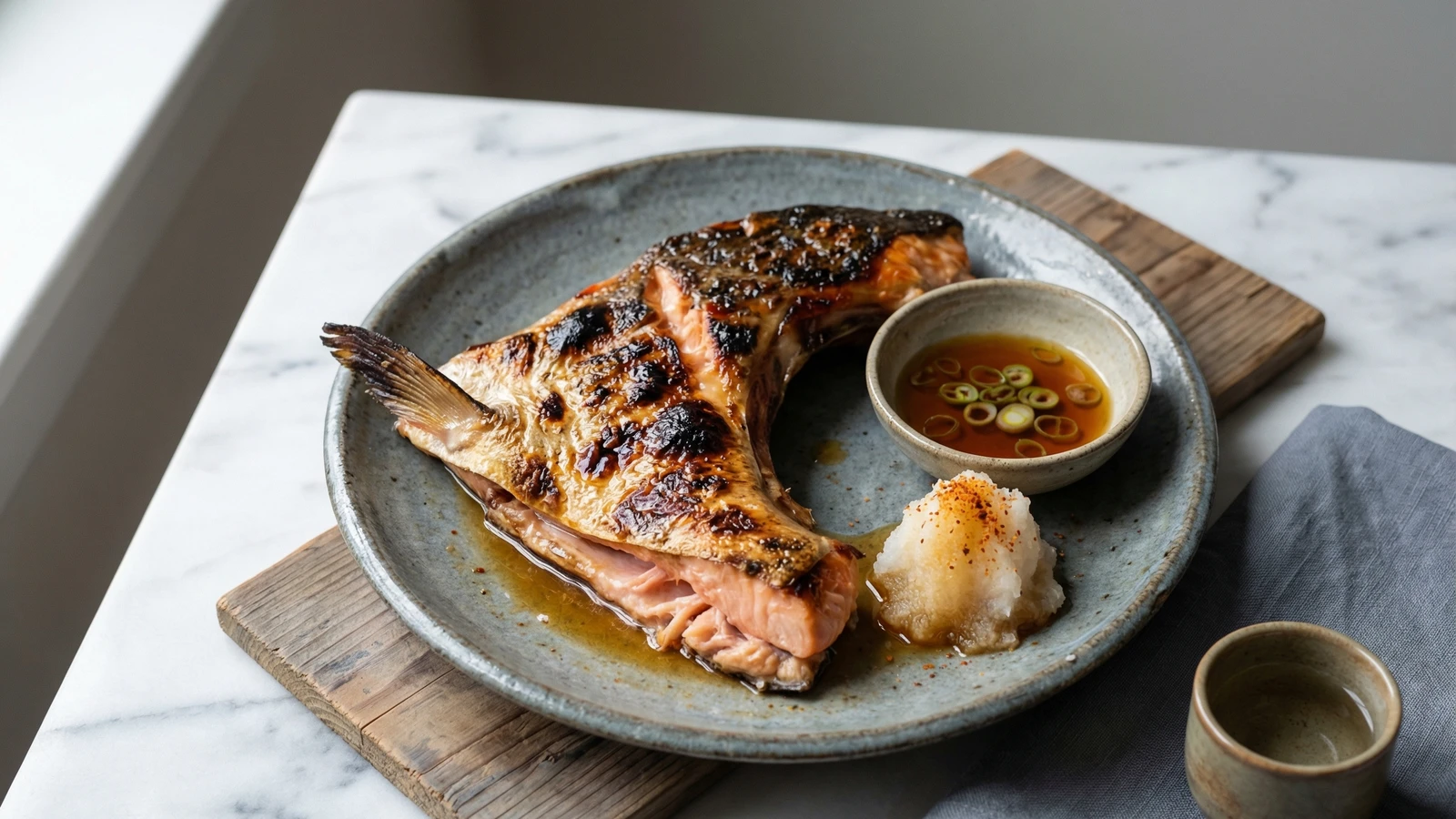
Grilled Salmon Collar with Ponzu
Created by
The fisherman's reward: rich, fatty salmon collar charred over high heat until the skin shatters, served with a bright citrus ponzu that cuts through the richness like a cold Pacific breeze.
The salmon collar is the cut that never makes it to market. Fishermen and their families have always known this secret. That crescent of meat where the head meets the body carries more fat, more flavor, and more character than any pristine fillet. In Seattle's izakayas, you'll find Japanese chefs who learned this truth from the same source: the people who pull fish from the water keep the best parts for themselves.
I first tasted grilled salmon collar at a tiny place under the Alaskan Way Viaduct, long since demolished. The chef was a third-generation fisherman's son from Hokkaido who'd married into a Muckleshoot family. His grandmother salted salmon the Japanese way. His wife's grandmother had been smoking it on cedar for a thousand years. That collar, charred and glistening, represented both traditions meeting on a single plate.
The technique couldn't be simpler. Salt draws moisture from the surface. High heat chars the skin and renders the fat. The ponzu, bright with yuzu or Meyer lemon, provides the counterpoint. This is honest cooking. The kind where you let the ingredient announce itself and get out of the way.
Seek out your salmon collar from a fishmonger who respects the whole fish. During the summer runs, king salmon collars appear briefly at Pike Place Market. Sockeye works beautifully too. Ask for the collar with the pectoral fin still attached. That fin, grilled crisp, is edible. The cartilage softens. Nothing goes to waste.
The technique, the tradition, and the story behind every dish.
Discover Culinary AdvisorIngredients
salmon collars, scales removed
Quantity
4 (8-10 oz each)
coarse sea salt
Quantity
2 tablespoons
sake (for collar)
Quantity
2 tablespoons
soy sauce
Quantity
1/2 cup
fresh yuzu juice or Meyer lemon juice
Quantity
1/4 cup
mirin
Quantity
2 tablespoons
rice vinegar
Quantity
2 tablespoons
sake (for ponzu)
Quantity
1 tablespoon
kombu
Quantity
1 (2-inch) piece
bonito flakes
Quantity
1/4 cup
scallions
Quantity
2
thinly sliced
daikon radish
Quantity
1 tablespoon
grated
shichimi togarashi (optional)
Quantity
for serving
| Ingredient | Quantity |
|---|---|
| salmon collars, scales removed | 4 (8-10 oz each) |
| coarse sea salt | 2 tablespoons |
| sake (for collar) | 2 tablespoons |
| soy sauce | 1/2 cup |
| fresh yuzu juice or Meyer lemon juice | 1/4 cup |
| mirin | 2 tablespoons |
| rice vinegar | 2 tablespoons |
| sake (for ponzu) | 1 tablespoon |
| kombu | 1 (2-inch) piece |
| bonito flakes | 1/4 cup |
| scallionsthinly sliced | 2 |
| daikon radishgrated | 1 tablespoon |
| shichimi togarashi (optional) | for serving |
Equipment Needed
- •Charcoal or gas grill
- •Wire cooling rack
- •Sheet pan
- •Fine-mesh strainer
- •Fish spatula
- •Long-handled tongs
Instructions
- 1
Salt the collars
Rinse the salmon collars under cold water and pat thoroughly dry with paper towels. Lay them on a wire rack set over a sheet pan. Sprinkle both sides generously with coarse sea salt, using about half a tablespoon per collar. The salt should be visible on the surface like the first snow on a mountain. Splash the sake over the flesh side only. Refrigerate uncovered for at least 30 minutes or up to 2 hours. The surface will turn slightly tacky and develop a pellicle, that thin protein layer that helps the skin crisp.
Japanese cooks call this shiojake preparation. The salt firms the flesh and concentrates flavor while drawing out moisture that would otherwise steam the fish. - 2
Make the ponzu
Combine the soy sauce, mirin, rice vinegar, and sake in a small saucepan. Add the kombu. Bring just to a simmer over medium heat, then immediately remove from the flame. Never boil kombu; it turns bitter and slimy. Drop in the bonito flakes and let the mixture steep for 10 minutes. The bonito will sink as it releases its smoky depth. Strain through a fine-mesh sieve, pressing gently on the solids. Stir in the citrus juice. The sauce should taste bright, salty, and faintly sweet with an undertow of ocean. Refrigerate until ready to serve.
Yuzu has no true substitute, but Meyer lemon comes closest with its floral acidity. Regular lemon works in a pinch; add a drop of orange juice to soften the edges. - 3
Prepare the grill
Build a two-zone fire in your charcoal grill: pile coals on one side, leave the other empty. You want ripping heat over the coals, around 500°F at grate level. For gas grills, set one side to high and leave the other off. Clean and oil the grates well. Salmon skin wants to stick. A wad of paper towels dipped in vegetable oil, gripped with long tongs, rubbed across the hot grates three or four times creates the nonstick surface you need.
Binchotan charcoal, if you can find it, burns clean and hot without imparting off-flavors. It's what izakaya chefs prefer. Hardwood lump charcoal is the next best option. - 4
Grill skin-side first
Remove the collars from the refrigerator and brush off any visible salt crystals. Do not rinse them. Place skin-side down over direct heat. You'll hear an aggressive sizzle. Don't touch them. Don't move them. Don't peek underneath. Let the heat do its work for 5 to 6 minutes. The edges of the skin will turn golden and begin to curl. Fat will drip and cause flare-ups; this is good, this is flavor. If flames get too aggressive, slide the collars to the cool zone briefly.
Resist the urge to flip early. The skin releases naturally when ready. If it sticks, it needs more time. - 5
Flip and finish
Using a fish spatula, slide under each collar and flip to flesh-side down. The skin should be deeply bronzed, almost mahogany in spots, with blistered patches that shatter when touched. Cook flesh-side down for 3 to 4 minutes for medium doneness. The flesh near the bone will remain slightly translucent, which is correct. Overcooked collar turns dry and loses its silky quality. Check by pressing the thickest part with your finger: it should yield gently but not feel mushy.
The collar's irregular shape means uneven cooking. The thin belly flaps will cook faster than the meaty shoulder. This variation is a feature, not a flaw. Different textures on the same plate. - 6
Rest briefly
Transfer collars to a warm platter and let them rest for 2 minutes. The residual heat will continue cooking the interior while the juices redistribute. The skin will stay crisp if you've done the salting properly.
- 7
Serve with ponzu
Place each collar on a plate with the skin facing up to preserve its crispness. Spoon ponzu alongside, never over, so each diner can dip as they please. Scatter sliced scallions over the sauce. Place a small mound of grated daikon on each plate. Offer shichimi togarashi at the table. Teach your guests to eat with their hands, pulling meat from the bones, crunching through the crispy fin, sucking the marrow. This is primal eating. Fork and knife miss the point entirely.
Chef Tips
- •Ask your fishmonger to save collars for you during salmon season. Most shops discard them or sell them cheap for stock. Build a relationship and they'll hold the good stuff.
- •Wild king salmon (Chinook) delivers the richest collar, but sockeye and coho work beautifully. Avoid farmed Atlantic salmon; the fat content is high but the flavor lacks the mineral depth of wild fish.
- •The ponzu keeps refrigerated for two weeks and improves after a day or two as the flavors marry. Make a double batch. You'll find uses for it: cold soba noodles, seared tuna, raw oysters, grilled vegetables.
- •If yuzu is unavailable, combine two parts Meyer lemon juice with one part lime juice and a few drops of grapefruit. It approximates yuzu's floral complexity.
- •Pair with a dry junmai sake, slightly chilled, or a Willamette Valley pinot gris with enough acid to match the ponzu.
Advance Preparation
- •Ponzu can be made up to 2 weeks ahead and refrigerated. Add the citrus just before serving for brightest flavor.
- •Collars can be salted up to 2 hours ahead and held in the refrigerator. Longer salting firms the texture further.
- •Grated daikon should be prepared just before serving; it oxidizes and loses pungency quickly.
Frequently Asked Questions
Nutrition Information
1 serving (about 265g)
Where cooking meets culture.
Culinary mentorship, cultural storytelling, and the editorial depth that makes cooking meaningful.
Explore Culinary Advisor