Culinary Advisor
A cooking platform built around craft, culture, and the stories behind what we eat.
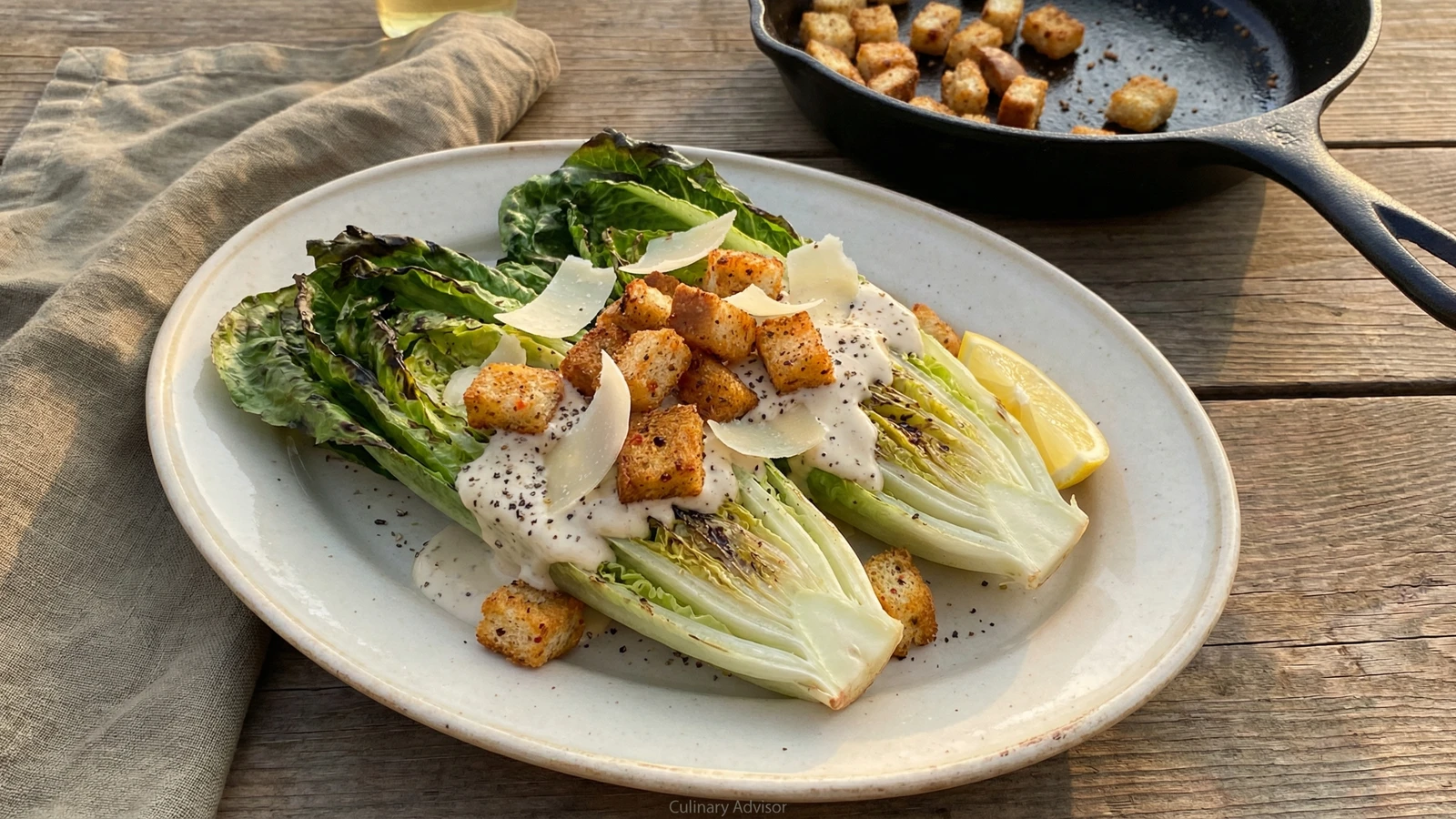
Grilled Romaine Caesar with Cajun Croutons
Created by Chef Remy
Smoky charred romaine hearts dressed in garlicky Caesar, crowned with butter-toasted croutons kissed by Cajun spice, the kind of salad that steals the show at any cookout and leaves folks asking for the recipe.
Most salads apologize for being on the plate. Not this one. This salad walks into the room and announces itself. The char on that romaine, the punch of garlic in the dressing, those croutons that crunch like they mean it: this is a salad with backbone.
I started grilling romaine at Lagniappe back in 2003 when a cook accidentally dropped a head on the flat top. Instead of throwing it away, I tasted it. That smoky, slightly wilted outer leaf with the cool, crisp heart underneath? Pure magic. We've had it on the menu ever since.
The croutons are where Louisiana shows up to the party. You're building flavor in layers here: butter, garlic, and a generous shake of Cajun seasoning. They get toasted in a cast iron skillet until they're golden and fragrant, soaking up all that spiced butter. My grandmother Evangeline would say these croutons could stand on their own as a snack. She wouldn't be wrong.
The dressing is the real deal. Anchovies, raw garlic, egg yolk, good parmesan. None of that bottled stuff that tastes like salad dressing trying to remember what Caesar is supposed to be. You make it fresh, you taste it, you adjust. That's the bayou way.
The technique, the tradition, and the story behind every dish.
Discover Culinary AdvisorIngredients
romaine hearts
Quantity
4
halved lengthwise
olive oil (for romaine)
Quantity
3 tablespoons
kosher salt
Quantity
to taste
black pepper
Quantity
to taste
crusty French bread
Quantity
1/2 loaf
cut into 1-inch cubes (about 4 cups)
unsalted butter
Quantity
4 tablespoons
garlic (for croutons)
Quantity
3 cloves
minced
Cajun seasoning
Quantity
2 tablespoons
anchovy fillets
Quantity
4
minced (or 2 teaspoons anchovy paste)
garlic (for dressing)
Quantity
2 cloves
minced
egg yolk
Quantity
1 large
at room temperature
fresh lemon juice
Quantity
2 tablespoons
Dijon mustard
Quantity
1 teaspoon
Worcestershire sauce
Quantity
1/2 teaspoon
cayenne pepper
Quantity
1/4 teaspoon
extra-virgin olive oil
Quantity
1/2 cup
Parmesan cheese
Quantity
1/2 cup
freshly grated, plus more for shaving
Parmesan shavings
Quantity
for serving
lemon wedges
Quantity
for serving
| Ingredient | Quantity |
|---|---|
| romaine heartshalved lengthwise | 4 |
| olive oil (for romaine) | 3 tablespoons |
| kosher salt | to taste |
| black pepper | to taste |
| crusty French breadcut into 1-inch cubes (about 4 cups) | 1/2 loaf |
| unsalted butter | 4 tablespoons |
| garlic (for croutons)minced | 3 cloves |
| Cajun seasoning | 2 tablespoons |
| anchovy filletsminced (or 2 teaspoons anchovy paste) | 4 |
| garlic (for dressing)minced | 2 cloves |
| egg yolkat room temperature | 1 large |
| fresh lemon juice | 2 tablespoons |
| Dijon mustard | 1 teaspoon |
| Worcestershire sauce | 1/2 teaspoon |
| cayenne pepper | 1/4 teaspoon |
| extra-virgin olive oil | 1/2 cup |
| Parmesan cheesefreshly grated, plus more for shaving | 1/2 cup |
| Parmesan shavings | for serving |
| lemon wedges | for serving |
Equipment Needed
- •12-inch cast iron skillet
- •Outdoor grill or grill pan
- •Long-handled tongs
- •Vegetable peeler for Parmesan shavings
- •Medium mixing bowl and whisk
Instructions
- 1
Make the Caesar dressing
In a medium bowl, combine the minced anchovies and garlic. Use the back of a fork to mash them into a paste against the bowl. This releases the oils and distributes the flavor. Add the egg yolk, lemon juice, Dijon mustard, Worcestershire, and cayenne. Whisk until smooth. Now here's where patience pays: add the olive oil in a thin, steady stream while whisking constantly. You're building an emulsion, and rushing it will break everything. The dressing should become thick and creamy, coating the back of a spoon. Whisk in the grated Parmesan and season with salt and pepper. Taste it. Adjust. Set aside.
If the dressing breaks and looks oily and separated, start fresh with a new egg yolk and slowly whisk the broken dressing into it. It will come together. - 2
Toast the Cajun croutons
Set your largest cast iron skillet over medium heat. Add the butter and let it melt, swirling the pan. When the butter starts to foam, add the minced garlic and stir for about thirty seconds until fragrant. You'll smell it before you see it. Add the bread cubes and toss to coat in the garlic butter. Sprinkle the Cajun seasoning over everything and toss again. Cook, stirring frequently, for eight to ten minutes until the croutons are golden brown on all sides and crispy throughout. They should sound hollow when you tap them. Transfer to a plate and let them cool slightly.
Day-old bread works better than fresh here. The drier texture absorbs that spiced butter without getting soggy. If your bread is fresh, cube it and let it sit out uncovered for a few hours. - 3
Prepare the romaine
Keep the romaine hearts intact at the root end. This is important: the root holds everything together on the grill. Brush the cut sides generously with olive oil and season with salt and pepper. Don't be shy. The outer leaves can handle bold seasoning, and it balances the cool, mild heart inside.
- 4
Heat the grill
Get your grill screaming hot. You want high, direct heat. If you're using charcoal, wait until the coals are white-hot and glowing. Gas grill should be on high for at least ten minutes with the lid closed. Clean and oil the grates with a paper towel dipped in vegetable oil, held with long tongs. The romaine needs to hit that grill and sizzle immediately.
No outdoor grill? A cast iron grill pan works beautifully. Get it smoking hot over high heat and work in batches so you don't crowd the pan. - 5
Grill the romaine
Place the romaine hearts cut-side down on the hottest part of the grill. Do not move them. You want char marks and a little bit of wilt, but the heart should stay crisp and cool. This happens fast: one to two minutes per side, no more. You're looking for dark grill marks and edges that are just starting to turn golden and translucent. The leaves will hiss and pop. That's the sound of flavor developing. Flip once and give the outer rounded side another minute or so. Remove immediately.
The difference between perfect grilled romaine and sad, soggy lettuce is about thirty seconds. Stay at the grill. Watch it. Trust your eyes. - 6
Assemble and serve
Arrange two romaine halves on each plate, cut-side up so you can see those beautiful char marks. Drizzle generously with the Caesar dressing, letting it pool in the natural valleys of the leaves. Scatter the Cajun croutons over the top with a heavy hand. Use a vegetable peeler to shave big curls of Parmesan over everything. Finish with a crack of black pepper and a lemon wedge on the side. Serve immediately while the romaine still has that warm-outside, cool-inside contrast.
Chef Tips
- •Make your own Cajun seasoning if you want to control the heat and salt: combine two parts paprika with one part each garlic powder, onion powder, dried oregano, dried thyme, and cayenne, plus black pepper and salt. At Lagniappe, we mix ours fresh every week.
- •The anchovies are not negotiable. They don't make the dressing taste fishy; they make it taste like Caesar. If you skip them, you've made garlic salad dressing, which is fine, but it isn't this.
- •For a heartier meal, add sliced grilled chicken, blackened shrimp, or even some crispy tasso ham. This salad can be a full dinner with the right protein on top.
- •Leftover dressing keeps refrigerated for up to five days. It thickens as it sits; thin with a splash of lemon juice or water when you're ready to use it.
Advance Preparation
- •The Caesar dressing can be made up to three days ahead and refrigerated. Bring to room temperature and whisk well before serving.
- •Croutons can be made up to two days ahead and stored in an airtight container at room temperature. If they soften, crisp them in a 350°F oven for five minutes.
- •The romaine must be grilled just before serving. There's no way around it. The magic is in that temperature contrast.
Frequently Asked Questions
Nutrition Information
1 serving (about 275g)
Where cooking meets culture.
Culinary mentorship, cultural storytelling, and the editorial depth that makes cooking meaningful.
Explore Culinary Advisor