Culinary Advisor
A cooking platform built around craft, culture, and the stories behind what we eat.
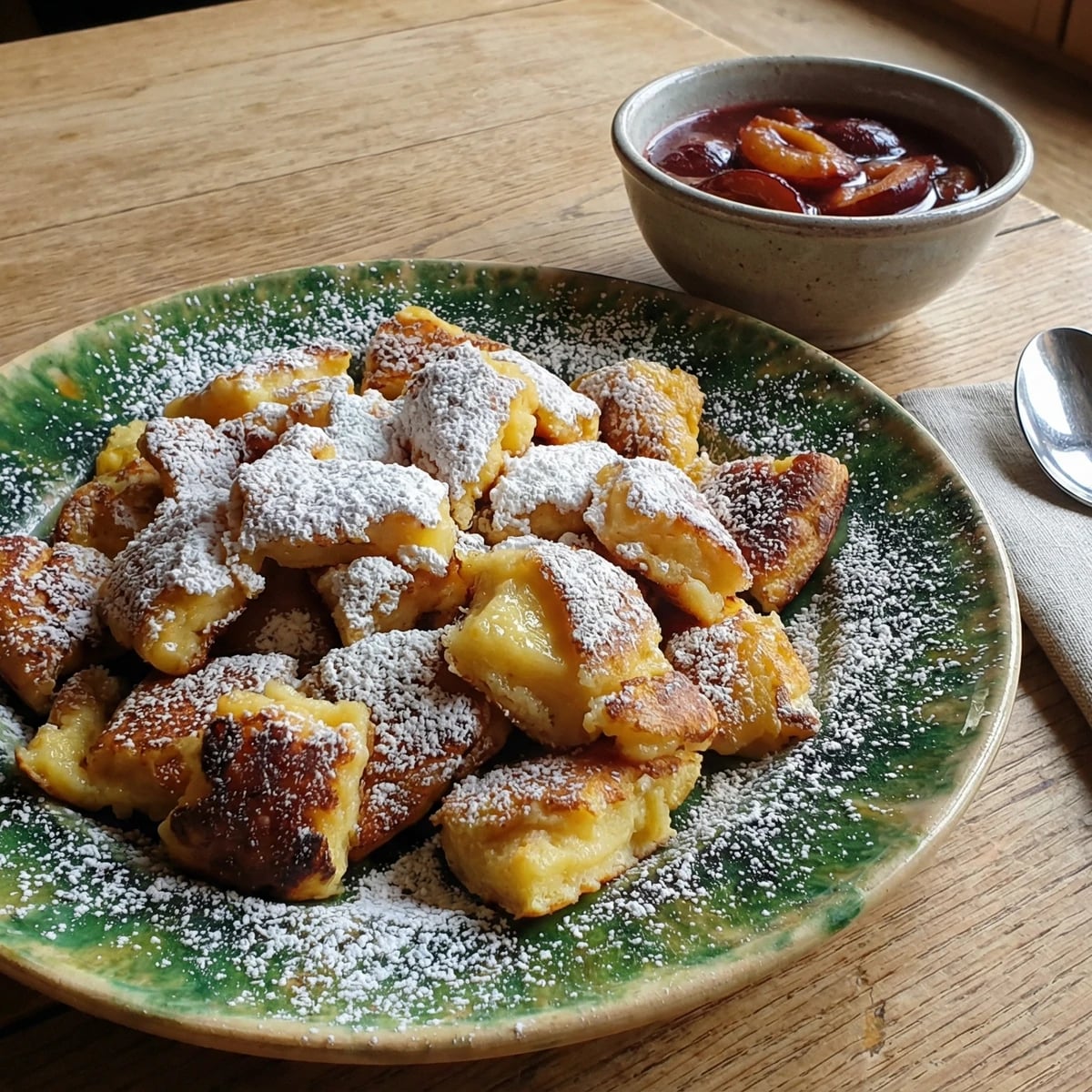
Grießschmarrn
Created by Chef Elsa
Austria's most humble Schmarrn, made from nothing more than semolina, milk, eggs, and good butter, torn apart in a hot pan until the edges go golden and the soft centers beg for a spoonful of warm compote.
Grießschmarrn is the dish nobody writes about, and that's exactly why I love it. Kaiserschmarrn gets the fame, the emperor's name, the Kaffeehaus menu placement. Grießschmarrn sits quietly in the farmhouse kitchen where it's been feeding families for centuries, asking nothing of you except a bag of semolina, some milk, a few eggs, and a generous hand with the butter.
In my grandmother Eva's kitchen, Gretel made this on ordinary Tuesday evenings. Not for a special occasion. Not because someone asked. Because it was cold outside, the pantry was thin, and this was the kind of cooking that turned simple ingredients into something that made you close your eyes and feel looked after. She'd cook the Grieß in vanilla milk until it pulled away from the sides of the pot, fold in beaten egg whites to lighten it, then tear the whole thing apart in sizzling butter. The kitchen smelled like caramel and warmth. She'd slide it onto a plate, dust it thick with powdered sugar, and set a bowl of stewed fruit next to it. That was supper.
The technique is forgiving. You cook a porridge, you let it set, you tear it up, you let butter and sugar do their work. There's no tricky batter, no flipping a massive pancake and hoping for the best. If Kaiserschmarrn is the emperor's dish, Grießschmarrn is the grandmother's. I know which one I reach for when I need comfort.
Ingredients
whole milk
Quantity
500ml
vanilla sugar (Vanillezucker)
Quantity
1 teaspoon
salt
Quantity
pinch
| Ingredient | Quantity |
|---|---|
| whole milk | 500ml |
| vanilla sugar (Vanillezucker) | 1 teaspoon |
| salt | pinch |