Culinary Advisor
A cooking platform built around craft, culture, and the stories behind what we eat.
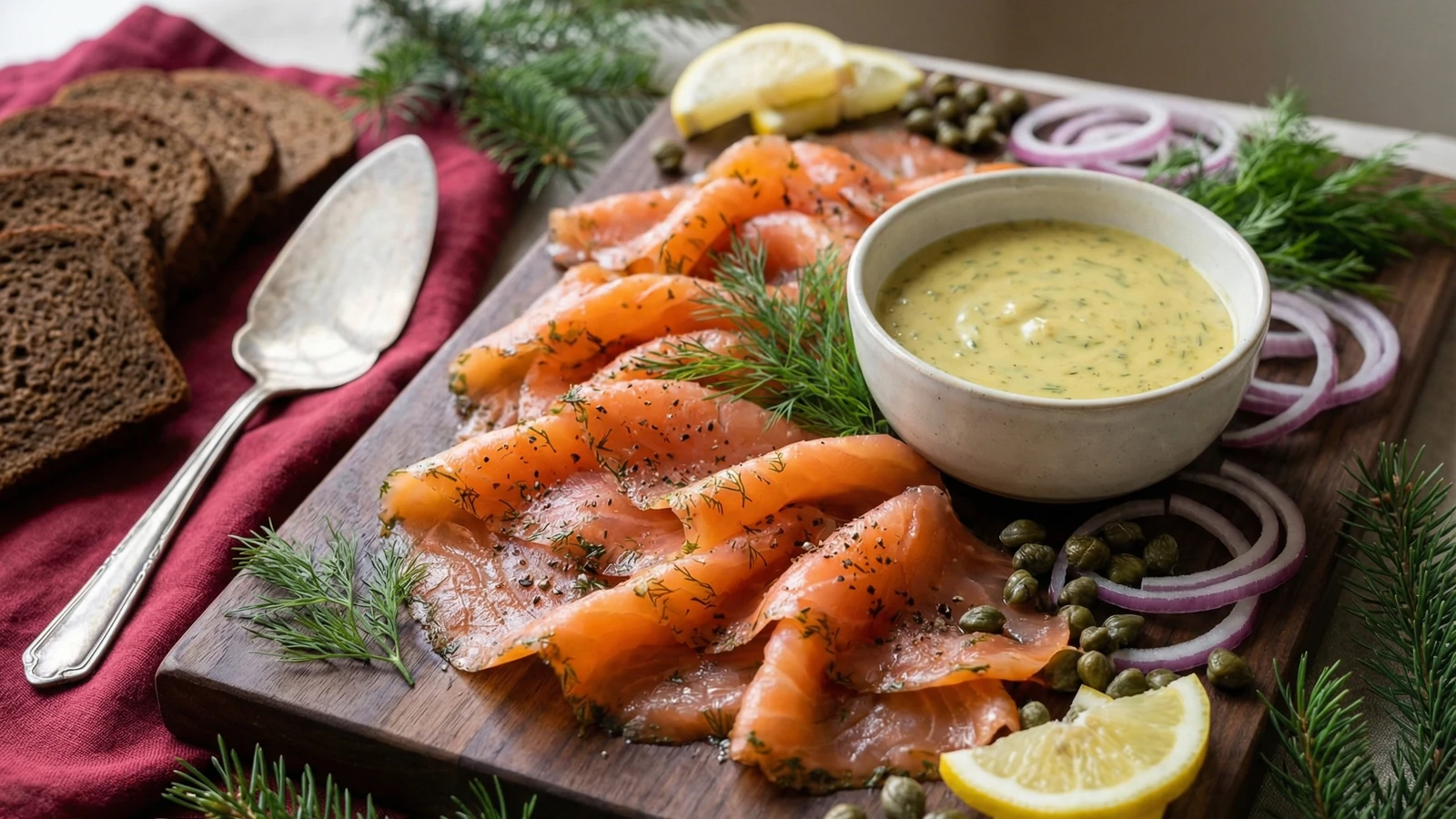
Gravlax with Mustard Dill Sauce
Created by
Silky, sugar-and-salt cured salmon draped in ribbons over dark bread, paired with a sweet-sharp mustard sauce that cuts through the richness. This is the centerpiece your holiday table deserves.
The Vikings preserved salmon this way a thousand years ago, burying it in sand above the tide line. The word gravlax literally means 'buried salmon.' Scandinavian fishermen perfected the technique through centuries of brutal winters when fresh fish was a memory and cured fish meant survival. Today we cure it in our refrigerators, but the principle remains unchanged: salt draws moisture, sugar adds depth, and time transforms raw fish into something transcendent.
I've served gravlax at Christmas gatherings for decades. It never fails to impress, yet it demands almost nothing from the cook. You mix a cure. You pack it around the salmon. You wait. That's it. No special equipment, no anxious temperature monitoring, no last-minute panic. The fish does the work while you attend to everything else on your holiday list.
The mustard dill sauce, called hovmästarsås in Swedish, is non-negotiable. Its sweetness and punch balance the salmon's richness. Make it the day you slice the fish. It takes five minutes and elevates the entire presentation from impressive to unforgettable.
This recipe feeds a crowd and keeps beautifully. Cure it three days before your party, slice it Christmas morning, and watch it disappear before the main course arrives.
The technique, the tradition, and the story behind every dish.
Discover Culinary AdvisorIngredients
salmon fillet, skin-on, center-cut
Quantity
2 lb
pin bones removed
kosher salt
Quantity
1/2 cup
granulated sugar
Quantity
1/2 cup
black pepper
Quantity
2 tablespoons
coarsely ground
white peppercorns
Quantity
1 teaspoon
crushed
fresh dill
Quantity
2 large bunches (about 4 oz)
aquavit or vodka
Quantity
2 tablespoons
lemon zest
Quantity
1 teaspoon
Dijon mustard
Quantity
1/4 cup
whole grain mustard
Quantity
2 tablespoons
honey
Quantity
3 tablespoons
white wine vinegar
Quantity
2 tablespoons
neutral oil (grapeseed or canola)
Quantity
1/2 cup
fresh dill
Quantity
1/4 cup
finely chopped
salt for sauce
Quantity
pinch
| Ingredient | Quantity |
|---|---|
| salmon fillet, skin-on, center-cutpin bones removed | 2 lb |
| kosher salt | 1/2 cup |
| granulated sugar | 1/2 cup |
| black peppercoarsely ground | 2 tablespoons |
| white peppercornscrushed | 1 teaspoon |
| fresh dill | 2 large bunches (about 4 oz) |
| aquavit or vodka | 2 tablespoons |
| lemon zest | 1 teaspoon |
| Dijon mustard | 1/4 cup |
| whole grain mustard | 2 tablespoons |
| honey | 3 tablespoons |
| white wine vinegar | 2 tablespoons |
| neutral oil (grapeseed or canola) | 1/2 cup |
| fresh dillfinely chopped | 1/4 cup |
| salt for sauce | pinch |
Equipment Needed
- •Glass or ceramic baking dish (9x13 inch)
- •Plastic wrap
- •Weights (canned goods, cast iron skillet, or similar)
- •Long, thin slicing knife or salmon knife
- •Fish tweezers or needle-nose pliers
Instructions
- 1
Select your salmon
Choose a center-cut fillet with even thickness from head to tail. This ensures uniform curing. Run your fingers against the grain to locate pin bones and pull them with needle-nose pliers or fish tweezers. The skin stays on, acting as a base that holds the fillet together during slicing.
Ask your fishmonger to remove pin bones. A good one will do this gladly and save you ten minutes of tedious work. - 2
Mix the cure
Combine the kosher salt, sugar, black pepper, and crushed white peppercorns in a bowl. The ratio matters: equal parts salt and sugar create the classic Swedish balance, slightly sweet with clean salinity. Stir in the lemon zest. The mixture should smell bright and peppery.
- 3
Prepare the curing vessel
Line a glass or ceramic baking dish with enough plastic wrap to eventually enclose the entire fillet. The dish should be just large enough to hold the salmon snugly. Spread one bunch of fresh dill across the bottom, stems and all. This bed of herbs will perfume the fish from below.
- 4
Apply the cure
Lay the salmon skin-side down on the dill bed. Drizzle the aquavit evenly over the flesh. The alcohol accelerates curing and adds a subtle caraway note. Now pack the cure mixture firmly over every exposed surface of the fish. Use all of it. The layer should be thick and even, about a quarter inch. Top with the remaining bunch of dill, pressing it into the cure.
- 5
Weight and refrigerate
Wrap the plastic tightly around the fish, pressing out air pockets. Place another baking dish or cutting board on top, then weight it with several cans or a cast iron skillet. This pressure forces the cure into the flesh and expels moisture. Refrigerate immediately.
The weight is not optional. Unweighted gravlax cures unevenly and lacks the dense, silky texture that makes this dish special. - 6
Flip and drain daily
Every twelve hours, unwrap the salmon, pour off the accumulated liquid, and flip the fillet. Baste the flesh with any remaining liquid before rewrapping and weighting again. The salmon will firm visibly over three days. The flesh will darken slightly and feel dense when pressed.
- 7
Test for doneness
After 72 hours, the gravlax is ready. The flesh should feel firm throughout, not squishy in the center. The color will have deepened to a burnished coral. Unwrap and scrape off the dill and cure with a knife. Do not rinse. Pat dry with paper towels.
For a lighter cure (softer texture, less salty), slice at 48 hours. For a firmer, more intensely flavored gravlax, cure up to 5 days. - 8
Make the mustard dill sauce
Whisk together both mustards, honey, and vinegar until smooth. Slowly drizzle in the oil while whisking constantly to emulsify, exactly as you would a vinaigrette. The sauce should be thick enough to coat a spoon. Fold in the chopped dill and season with a pinch of salt. Taste and adjust: it should balance sweet, sharp, and herbal.
- 9
Slice the gravlax
Using your sharpest knife, slice the salmon against the grain at a severe angle, almost parallel to the cutting board. Each slice should be paper-thin and translucent. Start from the tail end, holding your knife at about 20 degrees. The blade should glide through. Stop cutting when you hit the skin.
A long, flexible slicing knife or salmon knife makes this dramatically easier. Short blades require sawing, which tears the delicate flesh. - 10
Arrange and serve
Drape slices across a wooden board or platter in overlapping layers. Serve with the mustard dill sauce in a small bowl alongside. Offer dark rye bread, pumpernickel, or crisp crackers. Provide capers, thinly sliced red onion, and lemon wedges for guests who want traditional accompaniments.
Chef Tips
- •Salmon quality matters immensely. Buy the freshest fish available, ideally sushi-grade if your fishmonger offers it. Wild king salmon or sockeye produces superior gravlax, but farmed Atlantic salmon works respectably.
- •The plastic wrap must be food-safe and heavy-duty. Cheap wrap tears and lets air in, which compromises the cure. Double-wrap if you're uncertain.
- •Aquavit is traditional and adds authentic Scandinavian flavor. Vodka works if aquavit is unavailable, but the caraway and anise notes will be missed.
- •Leftover gravlax freezes beautifully. Slice it first, layer with parchment between slices, wrap tightly, and freeze up to two months. Thaw overnight in the refrigerator.
- •The mustard sauce also complements smoked salmon, cold roasted pork, or steamed new potatoes. Make extra and keep it on hand through the holidays.
Advance Preparation
- •The salmon must cure for a minimum of 48 hours and up to 5 days. Plan accordingly. Three days is ideal for balance of texture and flavor.
- •Once cured and scraped, the whole unsliced gravlax keeps refrigerated for up to one week, wrapped tightly in plastic.
- •Sliced gravlax holds well refrigerated for 3 to 4 days if kept covered.
- •The mustard dill sauce can be made up to 5 days ahead and refrigerated. Whisk before serving to re-emulsify.
- •For large gatherings, prepare two fillets simultaneously. They cure in the same time and double your yield without additional effort.
Frequently Asked Questions
Nutrition Information
1 serving (about 57g)
Where cooking meets culture.
Culinary mentorship, cultural storytelling, and the editorial depth that makes cooking meaningful.
Explore Culinary Advisor