Culinary Advisor
A cooking platform built around craft, culture, and the stories behind what we eat.
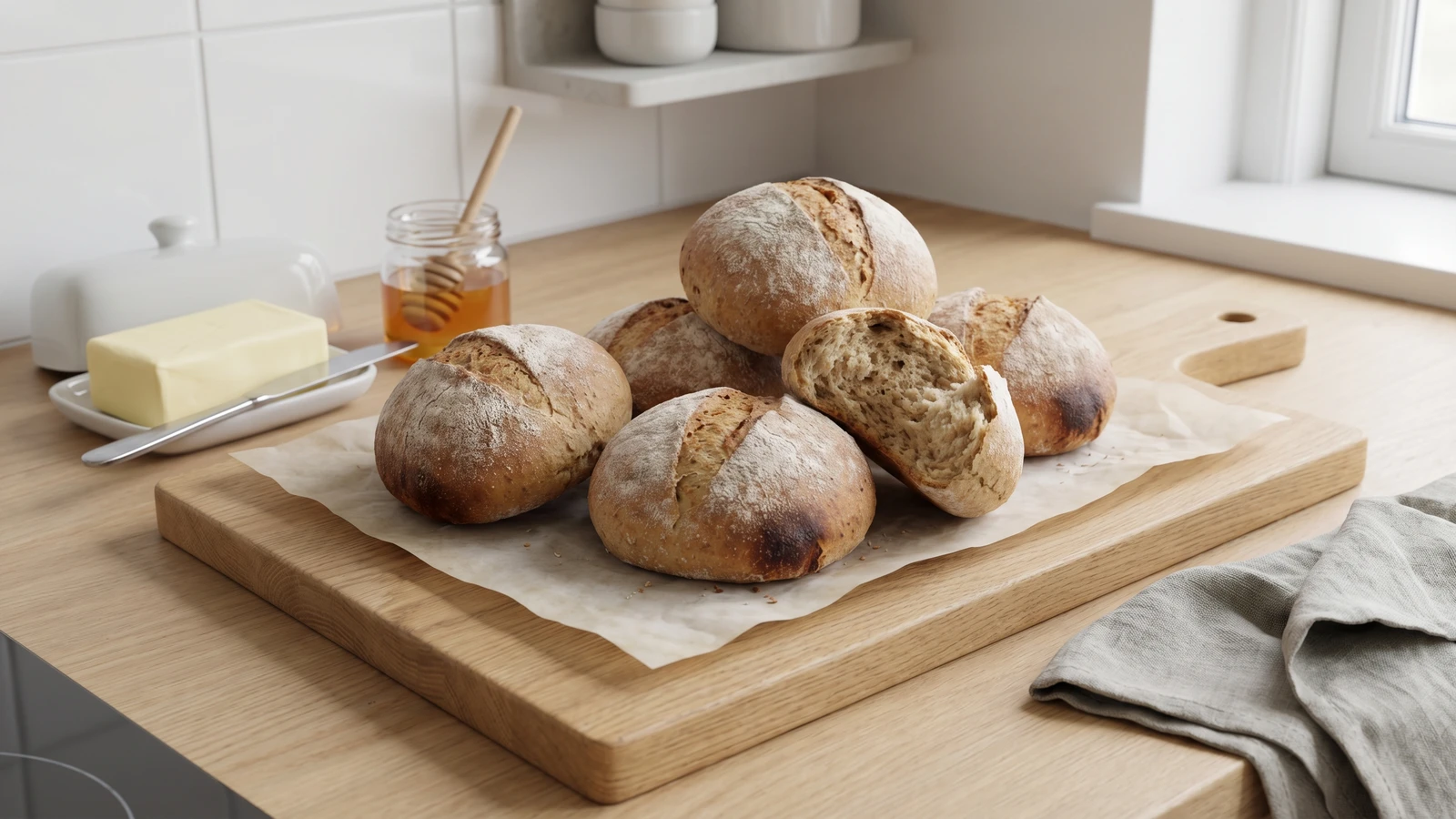
Grahamsboller
Created by Chef Freja
Danish whole wheat rolls made with grahamsmel, ready in just over an hour. The weekday bun that fills lunch boxes, sits beside soup, and smells like a kitchen where someone cares.
Monday morning. Six-thirty. The kitchen light is on before the rest of the house wakes up. This is when grahamsboller get made.
They're not weekend baking. They're not the kind of bread you spend a day on. Grahamsboller are the practical rolls, the ones Danish parents have been making on weekday mornings and Sunday evenings for decades because a child needs something in the madpakke, the packed lunch that goes to school every single day. A couple of these rolls, split and filled with cheese or leverpostej, wrapped in paper, tucked into a bag. That's the backbone of a Danish school lunch, and grahamsboller are the bread that carries it.
The technique is fast and forgiving. You mix a dough with grahamsmel, the coarse Danish whole wheat flour, shape it into rounds, let them rise once on the tray, and bake. No overnight ferment, no sourdough, no multiple rises. One hour from bowl to table. What matters is two things: don't overwork the dough, because whole wheat tears easily, and don't overproof the rolls, because the bran makes them heavier than white dough and they'll flatten if you push them too far. Get those two things right and you'll have rolls that are soft inside, lightly crusty outside, with the nutty, wholesome flavor that grahamsmel gives and white flour never can. You'll know when they're right because you'll tap the bottom and hear a hollow sound, like a small drum.
Grahamsmel takes its name from Sylvester Graham, the American temperance advocate who championed whole grain flour in the 1830s as part of a broader health reform movement. The flour arrived in Scandinavia by the late 19th century, where Danish millers began producing their own coarsely ground version. By the mid-20th century, grahamsboller had become the standard weekday roll in Danish homes, valued not for their history but for their speed and the simple fact that they were better for children than white bread. The madpakke tradition, where every child brings a packed lunch from home rather than buying one at school, made these rolls a quiet cornerstone of Danish daily life.
The technique, the tradition, and the story behind every dish.
Discover Culinary AdvisorIngredients
grahamsmel (coarse whole wheat flour)
Quantity
300g
strong white bread flour
Quantity
200g, plus extra for dusting
instant dry yeast
Quantity
7g
fine sea salt
Quantity
1½ teaspoons
runny honey
Quantity
2 tablespoons
lukewarm water
Quantity
300ml
whole milk
Quantity
100ml
lukewarm
unsalted butter
Quantity
30g
softened
grahamsmel
Quantity
for dusting the tops
| Ingredient | Quantity |
|---|---|
| grahamsmel (coarse whole wheat flour) | 300g |
| strong white bread flour | 200g, plus extra for dusting |
| instant dry yeast | 7g |
| fine sea salt | 1½ teaspoons |
| runny honey | 2 tablespoons |
| lukewarm water | 300ml |
| whole milklukewarm | 100ml |
| unsalted buttersoftened | 30g |
| grahamsmel | for dusting the tops |
Equipment Needed
- •Large mixing bowl
- •Baking sheet
- •Wire cooling rack
- •Parchment paper
Instructions
- 1
Combine wet and dry
Whisk together the grahamsmel, white flour, yeast, and salt in a large bowl. The yeast goes in with the dry ingredients because instant yeast doesn't need activating. In a jug, stir the honey into the lukewarm water and milk until dissolved. Pour the liquid into the flour and stir with a wooden spoon until a rough, shaggy dough comes together. It will look uneven. That's fine. You're not done yet.
Lukewarm means body temperature. Dip your finger in. If you can't feel anything, neither warm nor cool, you're exactly right. Too hot and you kill the yeast. Too cold and the rise takes twice as long. - 2
Knead the dough
Add the softened butter and work it in with your hands, then turn the dough out onto a lightly floured surface and knead for six to eight minutes. The dough starts rough and heavy because of the whole wheat flour, but it will smooth out as the gluten develops. You'll know it's ready when it feels elastic and springs back when you press it with a finger. It won't be as silky as a pure white dough. Grahamsmel has bran in it, and bran cuts through gluten strands, so the texture stays a little coarser. That's correct.
Don't add too much extra flour while kneading. A slightly sticky dough makes softer rolls. Use just enough to keep it from gluing itself to the counter, and trust your hands. - 3
Shape the rolls
Divide the dough into twelve equal pieces. The easiest way is to halve the dough, then halve each piece, then divide each quarter into three. Roll each piece into a smooth ball between your palms and the counter, tucking the edges underneath so the top is taut. Place them on a baking sheet lined with parchment, leaving about three centimeters between each one. They'll expand, and if they're too close they bake into each other and the sides stay pale and soft instead of developing their own crust.
- 4
Rise on the tray
Cover the rolls loosely with a clean, damp tea towel and leave them in a warm spot for twenty-five to thirty minutes. They won't double in size the way a white dough does. Whole wheat is heavier and the bran slows the rise. What you're looking for is rolls that have visibly puffed, feel lighter when you lift the tray, and hold a gentle dent when you press one softly with your fingertip. That's enough. Overproofing these makes them flat.
If your kitchen is cold, turn the oven on to 50C for two minutes, then switch it off and put the tray inside with the door slightly open. A warm, enclosed space is all the dough needs. - 5
Dust and bake
Heat the oven to 220C. Just before baking, dust the tops of the rolls generously with grahamsmel. This isn't decoration. The flour crust absorbs moisture from the surface as the rolls bake and gives them their characteristic dry, floury top that cracks slightly when you pull them apart. Bake for sixteen to eighteen minutes until the rolls are golden brown on top and sound hollow when you tap the bottom. If they sound dull, they need another two minutes.
Place a small oven-safe dish of water on the bottom of the oven before you turn it on. The steam keeps the crust from setting too early, which lets the rolls expand fully in the first few minutes of baking. Remove the dish halfway through. - 6
Cool on a rack
Transfer the rolls to a wire rack immediately. Don't leave them on the tray. A hot roll sitting on a hot tray steams from underneath and the bottom goes soggy. On a rack, the air circulates and the crust stays even all around. Let them cool for at least ten minutes before cutting. They're best still slightly warm, but they need those ten minutes for the crumb to set. Cut one too soon and the inside looks gummy, not because it's underbaked, but because the starch hasn't finished firming up.
Chef Tips
- •Use real grahamsmel, not fine whole wheat flour. Grahamsmel is coarser, with visible flecks of bran, and it gives the rolls their texture and character. If you can't find Danish grahamsmel, look for coarse stoneground whole wheat flour. The grind matters more than the brand.
- •The honey isn't just for sweetness. It feeds the yeast and helps the crust brown. Without it the rolls bake paler and take longer to color. Two tablespoons is the right amount. More than that and you're making a different roll.
- •These freeze beautifully. Cool them completely, then freeze in a bag with the air pressed out. Take one out the night before and it's ready for the madpakke by morning. Orsplit and toast from frozen. Five minutes in a hot oven brings them back to life.
- •If you want seeds on top, press sunflower seeds or rolled oats gently into the surface before the final rise. They'll adhere as the dough proofs. But the traditional grahamsbolle is plain, just the flour dust, and there's nothing wrong with that.
Advance Preparation
- •The dough can be mixed in the evening, shaped, and placed on the tray in the fridge overnight. In the morning, take it out, let the rolls come to room temperature for twenty minutes while the oven heats, and bake. Cold-proofed rolls develop a slightly deeper flavor from the slow fermentation.
- •Baked rolls keep in a bread bag at room temperature for two days. After that, split and toast them. They freeze for up to two months.
Frequently Asked Questions
Nutrition Information
1 serving (about 75g)
Where cooking meets culture.
Culinary mentorship, cultural storytelling, and the editorial depth that makes cooking meaningful.
Explore Culinary Advisor