Culinary Advisor
A cooking platform built around craft, culture, and the stories behind what we eat.
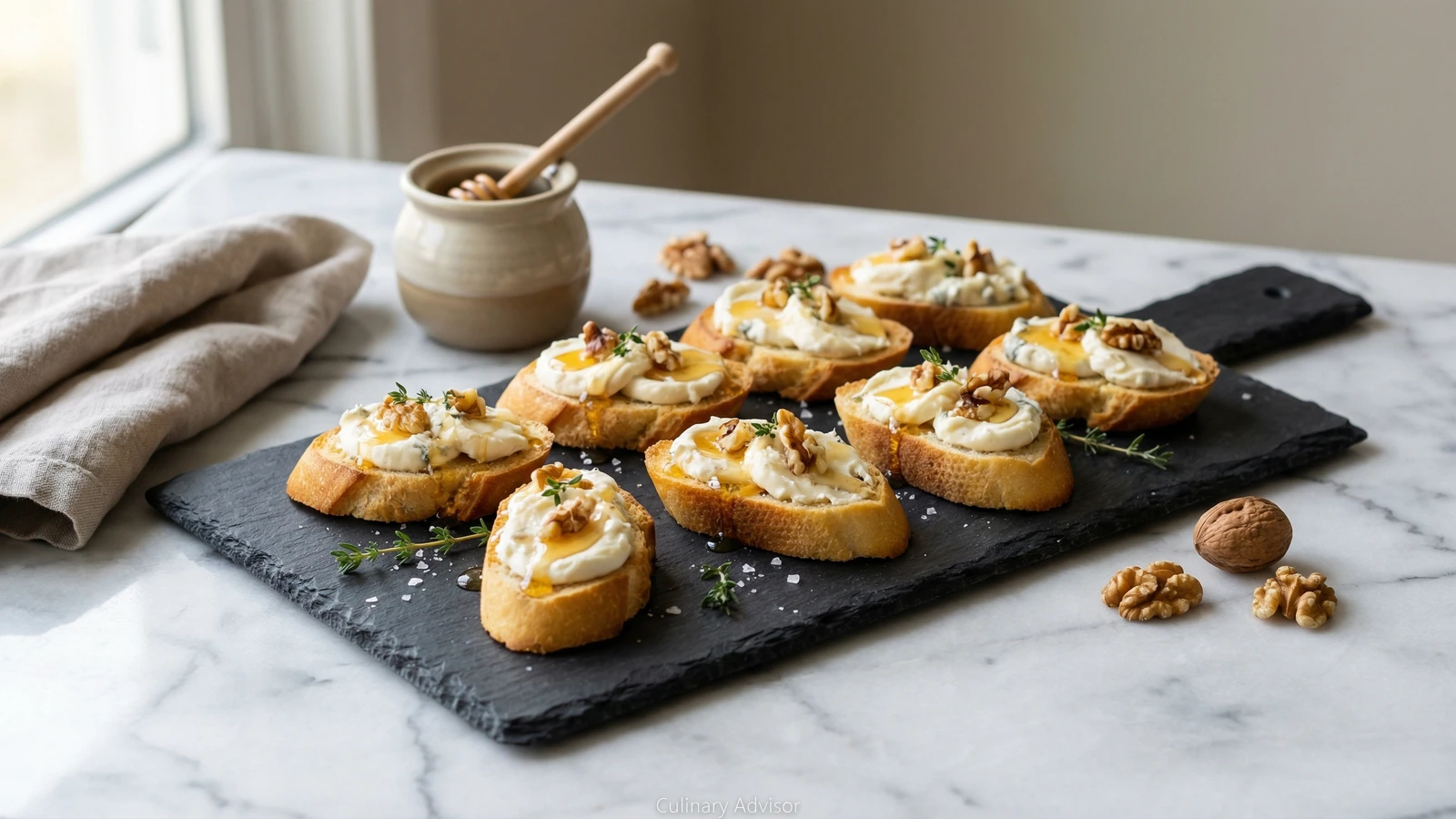
Gorgonzola and Honey Crostini
Created by
Crisp golden toasts crowned with creamy Gorgonzola and drizzled with warm honey, where the cheese's mineral sharpness surrenders to floral sweetness in every bite.
The Italians understood something essential about flavor: that which seems opposite often belongs together. Gorgonzola, that magnificently pungent blue cheese from Lombardy, finds its perfect partner in honey. The sweetness doesn't mask the cheese. It unlocks it, tempering the salt and amplifying the cream.
This is the appetizer I reach for when I want to impress without spending hours in the kitchen. The technique is simple. The impact is profound. Your guests will circle back to this platter while ignoring things that took you three times as long to prepare. Accept this truth and plan accordingly.
The crostini itself matters more than most recipes admit. A soggy base ruins everything. You want bread toasted until golden and structurally sound, brushed with good olive oil while still warm. It should shatter slightly when you bite through, then give way to the soft cheese above. That textural contrast is half the pleasure.
The technique, the tradition, and the story behind every dish.
Discover Culinary AdvisorIngredients
French baguette
Quantity
1 (about 24 inches)
sliced 1/2-inch thick on the bias
extra-virgin olive oil
Quantity
1/4 cup
Gorgonzola dolce
Quantity
8 ounces
at room temperature
quality honey
Quantity
1/3 cup
preferably wildflower or chestnut
walnuts
Quantity
1/4 cup
toasted and roughly chopped
fresh thyme leaves (optional)
Quantity
for garnish
flaky sea salt
Quantity
for finishing
black pepper
Quantity
to taste
freshly cracked
| Ingredient | Quantity |
|---|---|
| French baguettesliced 1/2-inch thick on the bias | 1 (about 24 inches) |
| extra-virgin olive oil | 1/4 cup |
| Gorgonzola dolceat room temperature | 8 ounces |
| quality honeypreferably wildflower or chestnut | 1/3 cup |
| walnutstoasted and roughly chopped | 1/4 cup |
| fresh thyme leaves (optional) | for garnish |
| flaky sea salt | for finishing |
| black pepperfreshly cracked | to taste |
Equipment Needed
- •Rimmed baking sheet
- •Pastry brush
- •Small saucepan
- •Wooden serving board or slate platter
Instructions
- 1
Toast the bread
Preheat your oven to 400°F. Arrange baguette slices in a single layer on a rimmed baking sheet. Brush both sides lightly with olive oil. Bake until golden and crisp at the edges but still slightly yielding in the center, 8 to 10 minutes, flipping halfway through. The color should be the amber of good beer, not the pale blond of undercommitment.
Day-old bread actually works better here. Fresh bread has too much moisture and won't crisp properly. - 2
Prepare the cheese
While the bread toasts, ensure your Gorgonzola has reached room temperature. Cold cheese won't spread and lacks the full aromatic punch you want. It should yield easily when pressed with a knife, almost spreadable but holding its shape. If it's still firm, cut it into smaller pieces and let it sit another ten minutes.
- 3
Toast the walnuts
Scatter walnuts on a small baking sheet or in a dry skillet over medium heat. Toast until fragrant and slightly darkened, 4 to 5 minutes, shaking occasionally. They'll continue cooking after you remove them, so pull them when they smell nutty and look golden. Roughly chop once cooled enough to handle.
Nuts go from toasted to burnt in seconds. Set a timer and stay close. Burned walnuts taste bitter and will ruin the whole affair. - 4
Warm the honey
Pour honey into a small saucepan and warm over low heat for two minutes, stirring occasionally. You're not trying to cook it, just thin it slightly so it drizzles beautifully. Warm honey flows in ribbons. Cold honey globs and refuses to cooperate. The difference in presentation is substantial.
- 5
Assemble the crostini
Spread each warm toast with a generous smear of Gorgonzola, about a tablespoon per slice. Don't be stingy. The cheese should form a thick layer, not a transparent scrape. Use the back of a spoon to create gentle peaks and valleys in the surface.
- 6
Finish and serve
Arrange assembled crostini on your serving board or platter. Drizzle warm honey over each in a lazy zigzag pattern, letting it pool in the cheese's crevices. Scatter toasted walnuts, then finish with thyme leaves, a few crystals of flaky salt, and freshly cracked pepper. Serve within twenty minutes while the toast retains its crunch.
The salt is not optional. A few flakes of Maldon or fleur de sel brighten the entire bite and prevent the sweetness from becoming cloying.
Chef Tips
- •Seek out Gorgonzola dolce, the younger and creamier version of this cheese. Gorgonzola piccante is firmer and sharper, better for crumbling over salads than spreading on toast. If dolce proves elusive, a good domestic blue like Point Reyes Original Blue works admirably.
- •For scaling: one baguette yields roughly 24 slices. Eight ounces of cheese covers 24 crostini generously. Double or triple the recipe in direct proportion. For a party of 20, plan on 3 baguettes and 24 ounces of cheese. People return to this platter.
- •The honey you choose shapes the final flavor. Wildflower honey offers floral complexity. Chestnut honey brings woodsy depth that pairs magnificently with the cheese's earthiness. Avoid overly processed honey, which tastes only of sweetness.
- •If Gorgonzola intimidates your guests, Cambozola offers a gentler introduction to blue cheese. It's creamier, milder, and no one will judge you for the substitution.
Advance Preparation
- •Crostini can be toasted up to 4 hours ahead and stored uncovered at room temperature. Recrisp in a 350°F oven for 2 minutes if they've softened.
- •Walnuts can be toasted up to a week ahead and stored in an airtight container at room temperature.
- •Do not assemble more than 20 minutes before serving. The honey will eventually soften the toast, and you'll lose that essential crunch.
- •For large parties, set up an assembly station: bowl of softened cheese, warm honey in a small pitcher, prep bowls of walnuts and thyme. Assemble in batches as guests arrive.
Frequently Asked Questions
Nutrition Information
1 crostini (about 60g)
Where cooking meets culture.
Culinary mentorship, cultural storytelling, and the editorial depth that makes cooking meaningful.
Explore Culinary Advisor