Culinary Advisor
A cooking platform built around craft, culture, and the stories behind what we eat.
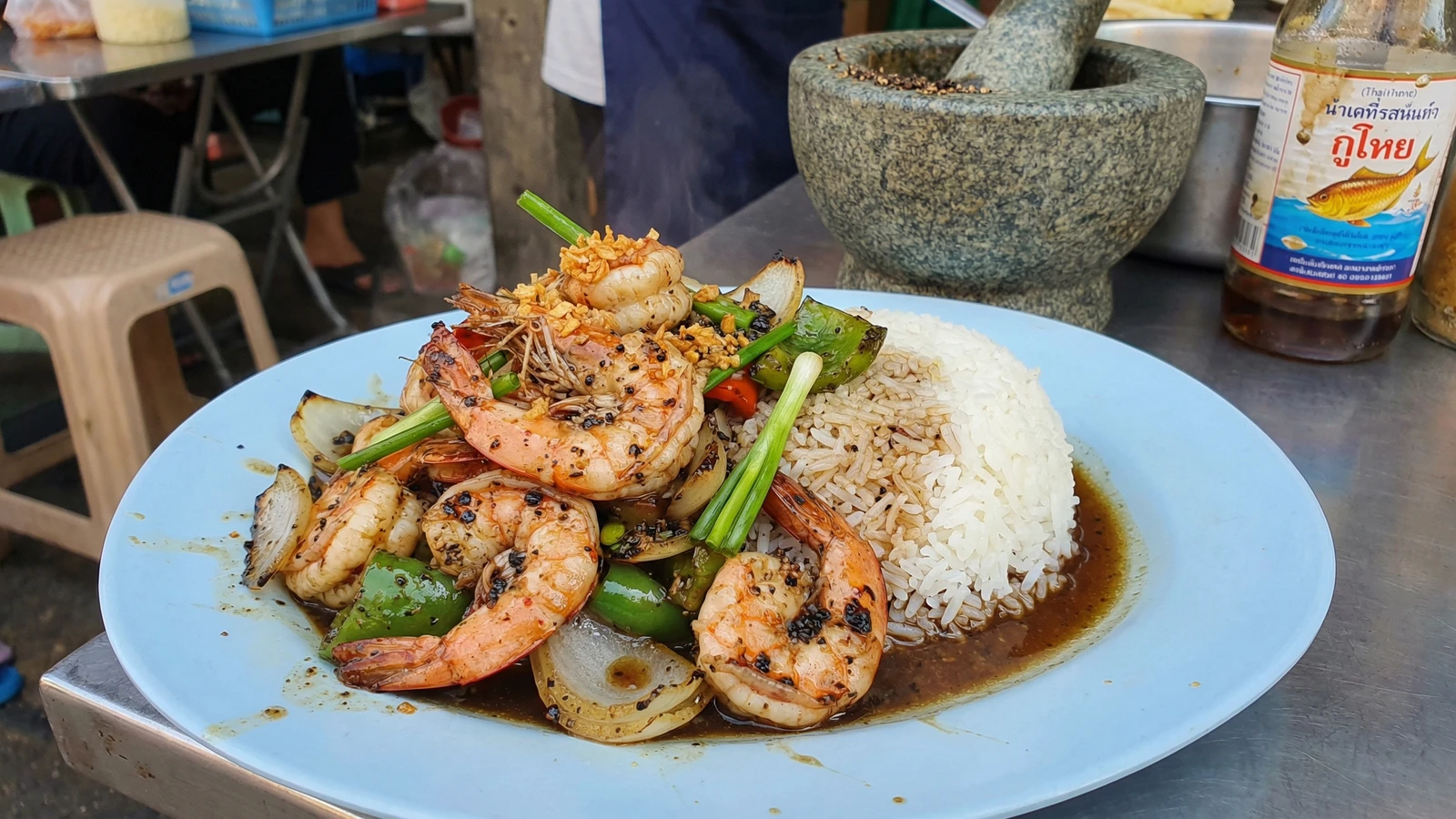
Black Pepper Shrimp Stir-Fry (Goong Pad Prik Thai Dam)
Created by
Cracked black peppercorns replace chili as the heat engine, garlic hits screaming oil first, shrimp sear in seconds. Central Thai wok cooking that proves the four pillars don't care which spice you use, only that the system holds.
Black pepper is the oldest spice in Thai cooking. Older than chili. Chili didn't arrive in Thailand until Portuguese traders brought it from the Americas in the 16th century. Before that, Thai food had heat. It came from prik thai (พริกไทย), black pepper, the original Thai spice. This dish remembers that.
Ajarn always said the four pillars are a system, not a checklist. Fish sauce for salt. Palm sugar for sweet. Tropical acids for sour. And spice for heat. He never said chili was the only source of heat. Prik thai dam (black peppercorns) deliver a completely different burn: slower, rounder, deeper. It builds at the back of the throat instead of hitting you on the tongue. When you understand the pillar as "spice" and not just "chili," the whole system opens up.
Goong pad prik thai dam is pure Central Thai wok technique. No paste. No kreung tam. This is one of those dishes where the wok does all the talking. Garlic hits the oil first, always. The shrimp sear hard and fast, thirty seconds per side, no more. Then fish sauce, oyster sauce, a whisper of palm sugar, and a violent amount of cracked black pepper. The pepper blooms in the hot oil and coats every shrimp like armor.
I learned this dish not from Ajarn but from a vendor near Hua Lamphong station who made it for railway workers at five in the morning. Head-on shrimp, wok so hot the oil caught fire every third order, pepper so aggressive you could smell it from the platform. She never used chili. She didn't need to. Prik thai dam was enough. That's when I understood what Ajarn meant about spice having range.
Black pepper (prik thai, พริกไทย) was the primary source of heat in Thai cooking for centuries before chili peppers arrived via Portuguese trade routes in the 1500s. The Thai word for chili, prik, is itself derived from the word for pepper, reflecting this lineage. Goong pad prik thai dam belongs to a family of Central Thai stir-fries that showcase pre-chili spice traditions, alongside dishes like neua pad prik thai (beef with black pepper) and moo pad prik thai on (soft green peppercorn stir-fry).
The technique, the tradition, and the story behind every dish.
Discover Culinary AdvisorIngredients
large shrimp (goong)
Quantity
400g (about 12)
peeled and deveined, tails left on
black peppercorns (prik thai dam)
Quantity
2 tablespoons
freshly cracked
garlic (kratiam)
Quantity
6 cloves
roughly smashed
cilantro roots (raak pak chee)
Quantity
3
scraped clean and bruised
fish sauce (nam pla)
Quantity
2 tablespoons
oyster sauce (nam man hoi)
Quantity
1 tablespoon
palm sugar (nam tan pip)
Quantity
1 teaspoon
Shaoxing wine or Chinese rice wine
Quantity
1 tablespoon
vegetable oil
Quantity
2 tablespoons
green bell pepper (prik yuak)
Quantity
1 large
cut into bite-sized pieces
onion
Quantity
1 small
cut into thick wedges
scallions (ton hom)
Quantity
2
cut into 2-inch lengths
steamed jasmine rice
Quantity
for serving
| Ingredient | Quantity |
|---|---|
| large shrimp (goong)peeled and deveined, tails left on | 400g (about 12) |
| black peppercorns (prik thai dam)freshly cracked | 2 tablespoons |
| garlic (kratiam)roughly smashed | 6 cloves |
| cilantro roots (raak pak chee)scraped clean and bruised | 3 |
| fish sauce (nam pla) | 2 tablespoons |
| oyster sauce (nam man hoi) | 1 tablespoon |
| palm sugar (nam tan pip) | 1 teaspoon |
| Shaoxing wine or Chinese rice wine | 1 tablespoon |
| vegetable oil | 2 tablespoons |
| green bell pepper (prik yuak)cut into bite-sized pieces | 1 large |
| onioncut into thick wedges | 1 small |
| scallions (ton hom)cut into 2-inch lengths | 2 |
| steamed jasmine rice | for serving |
Equipment Needed
- •Wok (carbon steel preferred, at least 14 inches)
- •Wok spatula
- •Granite mortar and pestle (krok) for cracking peppercorns
Instructions
- 1
Crack the peppercorns
Put the black peppercorns in a mortar and give them five or six hard strikes. You want them cracked, not ground. Coarse, jagged pieces. Some should be split in half, some in quarters. A few whole ones surviving is fine. Pre-ground pepper from a jar will not work here. The volatile oils in black pepper start dying the second the skin breaks. Fresh-cracked peppercorns in hot oil bloom with a fragrance that bottled powder cannot touch. This is the entire point of the dish.
If you don't have a mortar, put the peppercorns in a zip bag and smash them with the bottom of a heavy pan. Ugly but effective. The mortar is better. The mortar is always better. - 2
Prep and marinate shrimp
Pat the shrimp completely dry with paper towels. Wet shrimp steam. Dry shrimp sear. Toss them with half the cracked peppercorns, a splash of fish sauce (about a teaspoon from your measured amount), and the rice wine. Let them sit for five minutes while your wok heats. That's all the marinating this needs. The pepper adheres to the surface and will char against the wok. That char is flavor.
- 3
Heat the wok
Get your wok screaming hot over the highest flame you have. Not medium-high. The highest. Let it heat for two full minutes until you see the first wisp of smoke rising from the dry metal. Add the oil and swirl it up the sides. The oil should shimmer and smoke within three seconds. If it doesn't, your wok isn't ready. Walk away and wait.
- 4
Bloom garlic and cilantro root
Slam the smashed garlic and bruised cilantro roots into the oil. Garlic hits the oil first, always. That's the rule for every Central Thai stir-fry. The garlic should sizzle violently on contact. Stir once, two seconds, just until the edges turn gold. The cilantro root releases an earthy, savory fragrance that is the backbone of half the stir-fries in Bangkok. If you skip it, you lose a layer of depth nothing else can replace.
Cilantro root (raak pak chee) is not the same as cilantro stems. The root is thicker, tougher, and far more aromatic. Asian grocers sell cilantro with roots attached. If you can't find it, use the bottom two inches of the stems, but know it's a compromise. - 5
Sear the shrimp
Add the shrimp in a single layer. Do not touch them for thirty seconds. Let the wok do its job. The peppercorns on the shrimp surface should crackle and pop against the metal. Flip each shrimp and sear the other side for another thirty seconds. The shrimp should be pink with golden char spots where the pepper and garlic caught the heat. Pull them out of the wok and set them aside. They'll finish cooking in the sauce. If you leave them in for the next step, they'll overcook and turn to rubber.
If your wok isn't large enough to lay all the shrimp flat, do it in two batches. Crowding means steaming. Steaming means no char. No char means no wok hei. No wok hei means you made boiled shrimp with pepper on them. - 6
Cook the vegetables
In the same wok, still screaming hot, add the onion wedges and green bell pepper. Toss hard for sixty seconds. The onion should char at the edges but stay crunchy at the center. The bell pepper should blister slightly. These vegetables are structure, not filler. They provide sweetness and crunch against the pepper's burn and the shrimp's brine.
- 7
Build the sauce in the wok
Add the remaining fish sauce, oyster sauce, and palm sugar directly to the wok. The liquids will hit the hot metal and reduce almost instantly into a glossy, dark sauce. Toss the vegetables to coat. The oyster sauce gives body and sheen. The fish sauce gives depth. The palm sugar rounds the edges so the pepper doesn't bulldoze everything else. This is the four pillars doing their work: salt, sweet, and spice in balance. Add the remaining cracked peppercorns now. They'll bloom in the sauce and perfume the whole wok.
- 8
Return shrimp and finish
Return the shrimp to the wok. Toss everything together for fifteen seconds, no more. The residual heat finishes the shrimp. Add the scallion lengths and toss once. Kill the heat. The scallions should barely wilt, still bright green with a raw bite at the center. Plate immediately over jasmine rice. The sauce should pool around the rice just enough to soak in. Don't let this sit. Eat it now.
Chef Tips
- •Buy whole black peppercorns and crack them yourself. The aromatic compounds in black pepper, especially piperine, start degrading within hours of cracking. Pre-ground pepper is dead pepper. The mortar takes ten seconds. Use it.
- •This dish has no chili in it. That's intentional. Prik thai dam (black pepper) provides a completely different kind of heat: slower, warmer, building at the back of the throat instead of hitting the lips and tongue. Ajarn always said that the spice pillar doesn't mean chili. It means heat. Black pepper was providing that heat for centuries before chili arrived in Thailand. Respect the original.
- •Cilantro root is one of the nine essential ingredients Ajarn identifies as the base of Thai cooking. It's in almost every kreung tam, and in this dish it goes straight into the oil. If your Asian grocer sells cilantro with roots attached, buy it. If they don't, ask them to. The root is where the power is.
- •Oyster sauce quality varies wildly. The cheap ones are mostly sugar and cornstarch. Look for brands where oyster extract is the first or second ingredient. Megachef and Maekrua are solid. This matters because oyster sauce is providing the body and gloss of the entire dish. Bad oyster sauce makes a bad stir-fry.
Advance Preparation
- •Shrimp can be peeled, deveined, and dried a few hours ahead. Keep them on paper towels in the refrigerator, uncovered. The surface dries further, which means a better sear.
- •Crack the peppercorns no more than thirty minutes before cooking. The aromatic oils are volatile. Crack them, use them.
- •All vegetables should be cut and all sauces measured before the wok heats. Once you start, you have about three minutes from first oil to finished plate. There is no time to prep mid-cook.
Frequently Asked Questions
Nutrition Information
1 serving (about 280g)
Where cooking meets culture.
Culinary mentorship, cultural storytelling, and the editorial depth that makes cooking meaningful.
Explore Culinary Advisor