Culinary Advisor
A cooking platform built around craft, culture, and the stories behind what we eat.
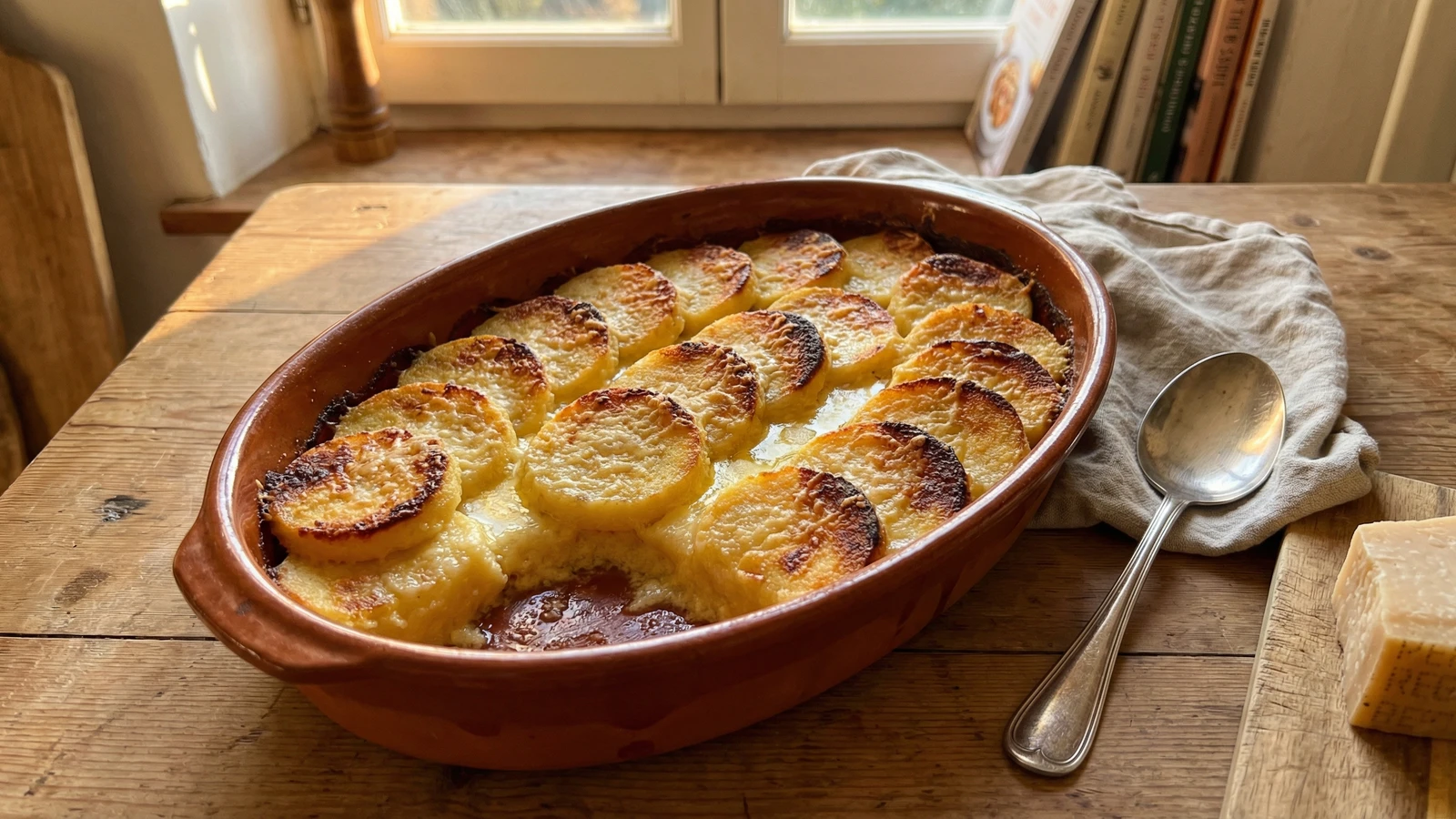
Gnocchi alla Romana
Created by Chef Graziella
Rome's answer to the potato gnocchi of the north: golden disks of semolina enriched with egg yolk, blanketed in butter and Parmigiano, baked until the edges crisp and the center stays creamy.
Americans hear 'gnocchi' and picture soft potato dumplings bobbing in sauce. Romans hear 'gnocchi' and think of this: golden rounds of semolina, overlapped like roof tiles, baked until the butter bubbles and the cheese forms a crust. These are the gnocchi of Rome, and they have nothing to do with potatoes.
The technique is simple but demands attention. You cook semolina in milk until it pulls away from the pot, enrich it with egg yolks and cheese while still hot, then spread it to cool. The cutting comes next: a drinking glass works as well as anything. You arrange the rounds in a buttered dish, shower them with more butter and Parmigiano, and bake until golden. That is all.
This is a contorno, a side dish meant to accompany braised meats or roasted chicken. It is also, I confess, perfectly satisfying eaten on its own with a green salad. Romans have known this for generations. What you keep out is as significant as what you put in: no cream, no garlic, no herbs. Just semolina, milk, butter, eggs, cheese, and the patience to let each element do its work.
Semolina porridge sustained Romans since antiquity, but gnocchi alla Romana as a baked gratin emerged in the trattorias of Rome by the 19th century. The tradition of eating gnocchi on Thursdays ('giovedì gnocchi') persists in Rome today, though home cooks now make this semolina version as often as the laborious potato kind.
The technique, the tradition, and the story behind every dish.
Discover Culinary AdvisorIngredients
whole milk
Quantity
4 cups
fine sea salt
Quantity
1 teaspoon
coarse semolina flour
Quantity
1 cup
unsalted butter
Quantity
4 tablespoons, plus more for the dish
large egg yolks
Quantity
2
Parmigiano-Reggiano
Quantity
1 cup, plus more for finishing
finely grated
nutmeg
Quantity
1/8 teaspoon
freshly grated
black pepper
Quantity
to taste
freshly ground
| Ingredient | Quantity |
|---|---|
| whole milk | 4 cups |
| fine sea salt | 1 teaspoon |
| coarse semolina flour | 1 cup |
| unsalted butter | 4 tablespoons, plus more for the dish |
| large egg yolks | 2 |
| Parmigiano-Reggianofinely grated | 1 cup, plus more for finishing |
| nutmegfreshly grated | 1/8 teaspoon |
| black pepperfreshly ground | to taste |
Equipment Needed
- •Heavy-bottomed 3-quart saucepan
- •Sturdy whisk
- •Rimmed baking sheet or marble surface for spreading
- •2-inch round cutter or drinking glass
- •9-by-13-inch baking dish or oval gratin dish
Instructions
- 1
Prepare your surface
Lightly oil a large rimmed baking sheet or marble surface. You will spread the hot semolina here, so have it ready before you begin. There is no pausing once the cooking starts.
- 2
Heat the milk
Pour the milk into a heavy-bottomed 3-quart saucepan. Add the salt. Bring to a simmer over medium heat, watching carefully. Milk scorches easily and boils over without warning. When small bubbles form around the edge and steam rises from the surface, reduce the heat to low.
Use whole milk. Reduced-fat milk produces a gummy, unpleasant texture. The fat is essential. - 3
Add the semolina
Pour the semolina into the hot milk in a slow, steady stream, whisking constantly as you pour. Do not dump it in all at once or you will have lumps. Continue whisking until the mixture thickens and begins to pull away from the sides of the pan, 8 to 10 minutes. The whisk will stand upright in the center. Your arm will tire. This is how you know you are working.
Coarse semolina gives the proper texture. The finely ground semolina rimacinata used for pasta is too powdery here and produces a pasty result. - 4
Enrich the mixture
Remove the pot from heat. Working quickly, stir in 2 tablespoons of the butter until melted, then the egg yolks one at a time, stirring vigorously after each. Add 3/4 cup of the Parmigiano and the nutmeg. Stir until everything is incorporated. The mixture should be smooth and thick, like soft polenta.
- 5
Spread and cool
Immediately scrape the semolina onto your prepared surface. Using a spatula dipped in cold water, spread it into an even layer about 1/2 inch thick. Work quickly; it firms as it cools. Let it rest until completely cool and set, at least 30 minutes at room temperature. You may refrigerate it for up to 24 hours at this point.
- 6
Cut the rounds
Heat the oven to 425°F. Using a 2-inch round cutter or the rim of a drinking glass, cut the semolina into rounds. A glass works perfectly well. Dip the cutter in cold water between cuts to prevent sticking. Gather the scraps, press them together gently, and cut more rounds. Every bit should be used.
- 7
Arrange in the dish
Butter a 9-by-13-inch baking dish or oval gratin dish generously. Arrange the semolina rounds in overlapping rows, like roof tiles or fallen dominoes. Each round should cover about half of the one before it. Scatter any small scraps between the rows. Melt the remaining 2 tablespoons butter and drizzle it evenly over the top. Shower with the remaining Parmigiano and a few grinds of black pepper.
The overlapping arrangement is not merely decorative. It creates layers of texture: crisp exposed edges, creamy centers where rounds meet. - 8
Bake until golden
Bake in the upper third of the oven until the top is deeply golden and the butter is bubbling around the edges, 20 to 25 minutes. The cheese should form a thin crust with spots of deeper brown. Let it rest for 5 minutes before serving. Serve it hot, directly from the dish.
Chef Tips
- •The semolina must be coarse, not finely ground. Look for packages labeled 'semolina' without qualifiers, or seek out Italian brands at specialty grocers. Finely milled semolina flour for pasta produces a gluey result.
- •Do not be tempted to add cream. Romans do not add cream to this dish, and neither should you. The butter provides all the richness required.
- •You may prepare the semolina through the cooling step up to a day ahead. Refrigerate it covered, then cut and bake when ready. The dish is ideal for entertaining.
- •Leftover gnocchi reheat well in a 375°F oven until heated through and crisp on top, about 15 minutes. They are nearly as good the second day.
Advance Preparation
- •The semolina can be cooked, spread, and cooled up to 24 hours ahead. Cover and refrigerate. Cut into rounds and bake directly from the refrigerator, adding 5 minutes to the baking time.
- •The assembled dish, unbaked, can wait in the refrigerator for up to 4 hours before baking.
- •Baked gnocchi are best served immediately but will keep, covered, for 2 days. Reheat uncovered at 375°F until hot and crisp.
Frequently Asked Questions
Nutrition Information
1 serving (about 210g)
Where cooking meets culture.
Culinary mentorship, cultural storytelling, and the editorial depth that makes cooking meaningful.
Explore Culinary Advisor