Culinary Advisor
A cooking platform built around craft, culture, and the stories behind what we eat.
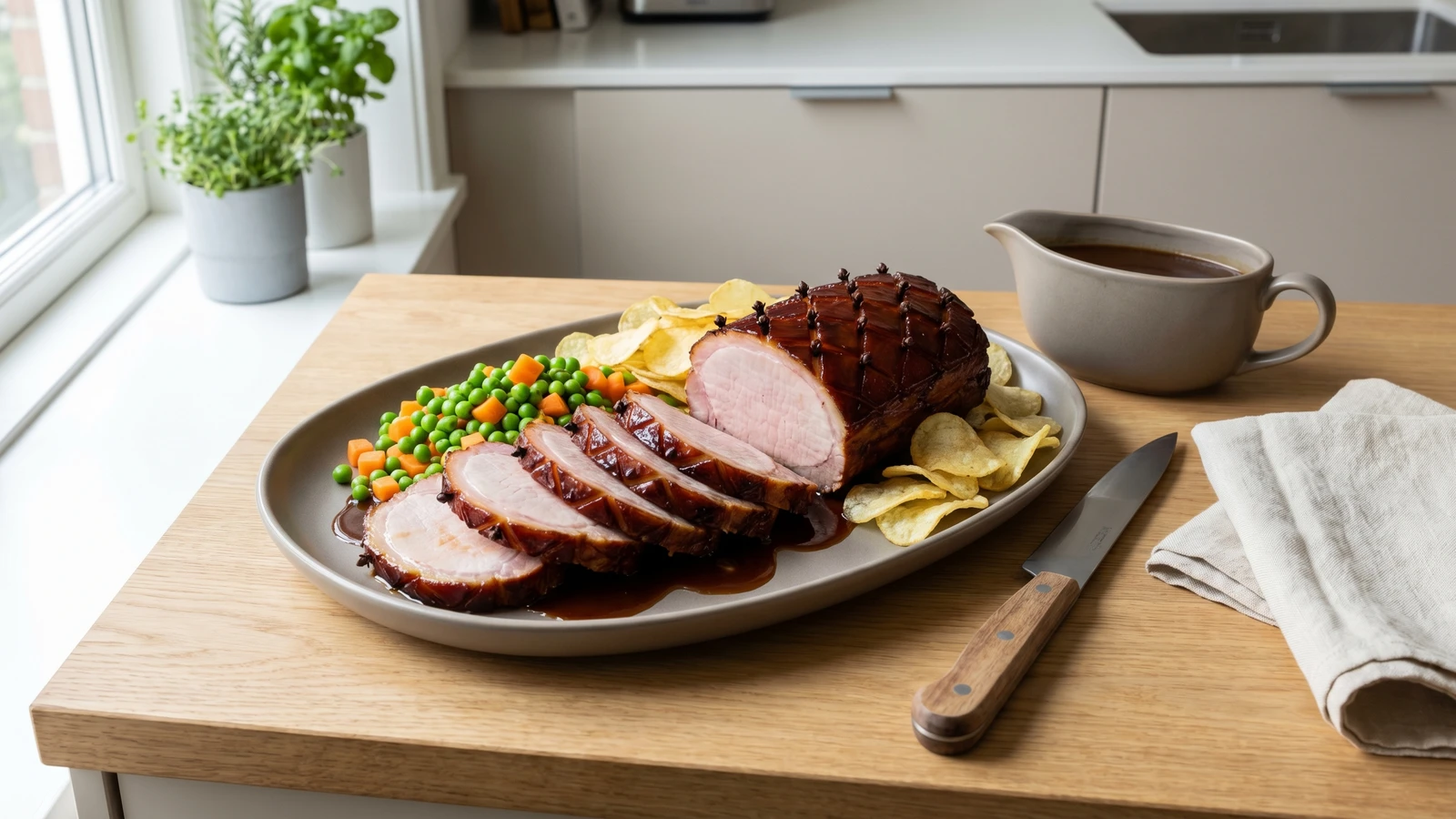
Glaseret Hamburgerryg med Madeirasauce
Created by Chef Freja
The konfirmation centerpiece: smoked pork loin simmered tender, scored and glazed with mustard and dark sugar until the surface turns lacquered mahogany, sliced over silky Madeira sauce with sweet peas, carrots, and a scatter of kartoffelchips.
Konfirmation in Denmark means one dish. Families argue about flowers, seating plans, whether the church service went on too long. Nobody argues about the food. It's hamburgerryg med madeirasauce, and it has been for as long as anyone at the table can remember. Spring light through the dining room windows, the good tablecloth, and this: a whole smoked pork loin, glazed until it shines, sliced over a dark sauce with bright peas and carrots alongside and kartoffelchips scattered across the plate.
Hamburgerryg is a salt-cured, cold-smoked pork loin, a cut that's been central to Danish celebrations for generations. You simmer it first, low and gentle, until the meat is tender through. Then you score the fat cap in diamonds, press whole cloves into the grooves, spread the surface with mustard and dark muscovado sugar, and roast it at high heat until the glaze turns glossy and almost burnt at the edges. The Madeirasauce comes from the cooking liquid itself, thickened with a roux and enriched with a generous pour of Madeira wine. It's a dish that looks like it took days. It doesn't. And it's a dish that feeds a crowd with grace, which is exactly what konfirmation asks of you.
Two things to watch for. Score the fat cap before glazing, cutting through the fat in a diamond pattern but never into the meat beneath. The diamonds let the glaze grip and caramelize into every groove. Without them, the sugar slides off the smooth surface and you get uneven color and wasted effort. And don't rush the simmer. If the water boils hard, the outside tightens before the center cooks through, and the slices go dry at the edges. A gentle simmer, with bubbles that barely break the surface, is what gives you pork that slices cleanly and stays moist. Everything else follows from these two moments, and I'll walk you through every step. You'll know when it's right.
Hamburgerryg takes its name from the city of Hamburg, where salt-curing and cold-smoking pork loin was refined during the centuries of trade along the North Sea and Baltic shipping routes. The cut became a fixture of the Danish celebration table by the mid-twentieth century, and its pairing with konfirmation, the spring church confirmation, is now so deeply rooted that the two are almost inseparable in the Danish imagination. The Madeirasauce is a holdover from the eighteenth-century Danish appetite for fortified wines from the Portuguese islands, a pairing that elevates cured pork into something genuinely ceremonial.
The technique, the tradition, and the story behind every dish.
Discover Culinary AdvisorIngredients
hamburgerryg (Danish smoked pork loin)
Quantity
1.5 kg
yellow onion
Quantity
1
halved
bay leaves
Quantity
2
whole black peppercorns
Quantity
10
Dijon mustard
Quantity
2 tablespoons
dark muscovado sugar
Quantity
3 tablespoons
whole cloves
Quantity
8
unsalted butter (for the sauce)
Quantity
40g
plain flour
Quantity
3 tablespoons
Madeira wine
Quantity
150ml
madkulor or dark soy sauce
Quantity
1 teaspoon
fine sea salt
Quantity
to taste
white pepper
Quantity
to taste
carrots
Quantity
300g
peeled, cut into small dice
small garden peas
Quantity
250g
unsalted butter (for the vegetables)
Quantity
20g
sugar
Quantity
1 pinch
kartoffelchips (thin potato crisps)
Quantity
to serve
| Ingredient | Quantity |
|---|---|
| hamburgerryg (Danish smoked pork loin) | 1.5 kg |
| yellow onionhalved | 1 |
| bay leaves | 2 |
| whole black peppercorns | 10 |
| Dijon mustard | 2 tablespoons |
| dark muscovado sugar | 3 tablespoons |
| whole cloves | 8 |
| unsalted butter (for the sauce) | 40g |
| plain flour | 3 tablespoons |
| Madeira wine | 150ml |
| madkulor or dark soy sauce | 1 teaspoon |
| fine sea salt | to taste |
| white pepper | to taste |
| carrotspeeled, cut into small dice | 300g |
| small garden peas | 250g |
| unsalted butter (for the vegetables) | 20g |
| sugar | 1 pinch |
| kartoffelchips (thin potato crisps) | to serve |
Equipment Needed
- •Large pot for simmering, 6 litre
- •Roasting tin
- •Sharp carving knife
- •Heavy saucepan for the sauce
- •Whisk
- •Meat thermometer (optional)
Instructions
- 1
Simmer the hamburgerryg
Place the hamburgerryg in a large pot and cover with cold water. Add the halved onion, bay leaves, and peppercorns. Set it over medium heat and bring to a gentle simmer. The moment you see small bubbles breaking the surface, turn the heat to low. You want the water barely moving, not rolling. A hard boil tightens the outside of the meat before the center has time to cook through, and you end up with dry, grey edges around a still-firm middle. Simmer gently for about one hour, until the meat feels yielding when you press it firmly with a finger but still holds its shape. If you have a meat thermometer, 65°C at the center is what you're looking for.
Don't salt the water. The hamburgerryg is already cured and smoked. Adding more salt draws moisture from the meat and makes the cooking liquid too salty for the sauce you'll build from it. - 2
Score and apply the glaze
Lift the pork from the liquid and set it on a board. Strain and reserve the cooking liquid for the sauce. Heat the oven to 220°C. With a sharp knife, score the fat cap in a diamond pattern, making cuts about 2cm apart. Cut through the fat but stop before you reach the meat. This is the step that makes the glaze work. The diamonds create channels where mustard and sugar can grip and caramelize, and without them the glaze slides off the smooth surface and pools in the bottom of the pan. Press a whole clove into each intersection of the diamond cuts. Spread the Dijon mustard evenly across the scored surface, then pat the muscovado sugar over the mustard in a thick, even layer.
Use the back of a spoon to press the sugar firmly into the mustard. Loose sugar falls off in the oven heat. You want it stuck to the surface so it melts in place and forms that lacquered crust. - 3
Roast until glazed
Place the hamburgerryg fat side up in a roasting tin and set it on the top shelf of the oven. Roast for twenty to twenty-five minutes, watching carefully in the last few minutes. The sugar should melt and darken to a deep mahogany with a glossy, almost lacquered surface. Some edges will go very dark, nearly black. That's right. That's where the flavor concentrates. If anything starts to blacken too fast, move the tin down a shelf. The scent of caramelizing sugar and smoked pork filling the kitchen is how you know you're close. Remove from the oven and let the meat rest on the board for fifteen minutes before slicing. The rest lets the juices redistribute through the meat. Cut too soon and they run onto the board instead of staying where they belong.
- 4
Build the Madeirasauce
While the pork glazes in the oven, make the sauce. Melt the butter in a heavy saucepan over medium heat. Add the flour and stir constantly for two minutes, until the roux turns a light gold and smells biscuity. Cooking the flour properly here removes the raw, pasty taste that ruins a sauce. Gradually pour in 500ml of the strained cooking liquid, whisking steadily as you go to keep it smooth. Add the Madeira wine and the madkulor or soy sauce. The madkulor gives the sauce its traditional deep brown color, the shade Danish families expect when they see brun sovs on the table. Dark soy sauce does the same job with an extra touch of depth. Bring to a gentle simmer and cook for ten to fifteen minutes, stirring now and then, until the sauce coats the back of a spoon. Season with salt and white pepper. The sauce should be glossy and just thick enough to pool on the plate without running to the edges.
Dip a spoon in the sauce and draw your finger across the back. If the line holds clean without the sauce running back together, it's ready. If it's too thick, add a splash more cooking liquid. If too thin, simmer a few minutes longer. - 5
Cook the peas and carrots
Bring a pot of lightly salted water to the boil. Add the diced carrots and cook for five to six minutes, until they're just tender but still have a gentle bite at the center. Add the peas and cook for two minutes more. Drain well. Return the vegetables to the warm pot with the butter and the pinch of sugar. Toss gently until the butter melts and coats everything in a light gloss. The sugar isn't sweetness. It's balance: just enough to bring out the natural flavor of the peas and the sweetness already in the carrots. Season with a little salt.
- 6
Slice and serve
Slice the glazed hamburgerryg into generous pieces, about 1cm thick, using a sharp carving knife. The slices should show a pale, rosy center with the dark, glossy glaze on top and the cloves still pressed into the fat. Arrange the slices on a warm serving platter, overlapping slightly. Pour some of the Madeirasauce around and beneath the meat and serve the rest in a warm sauceboat at the table. Pile the peas and carrots alongside and scatter kartoffelchips over or beside the sliced pork. Bring the platter to the table whole. This is how it arrives at a konfirmation: generous, abundant, the kind of dish that makes a table feel like a celebration. Cooked with love. Tak for mad.
Chef Tips
- •Ask your butcher for a good hamburgerryg with an even fat cap. The fat protects the meat during simmering and carries the glaze in the oven. A trimmed-down loin with no fat is not the same dish, and you'll miss the contrast between the caramelized crust and the soft, smoky meat beneath it.
- •Use a proper Madeira wine, not cooking wine. A medium-dry Verdelho or Malmsey is what you want. You don't need an expensive bottle, but the wine should taste good enough to drink on its own, because you'll taste every corner cut in the finished sauce.
- •Madkulor, Danish browning, is what gives the sauce its deep, dark color. Most Danish households keep a bottle in the cupboard. If you can't find it, dark soy sauce does a similar job: a teaspoon adds color and a quiet depth without pulling the sauce in an unfamiliar direction.
- •Kartoffelchips are traditionally served alongside as a crisp counterpoint to the soft meat and silky sauce. Store-bought are perfectly fine and what most Danish families use at konfirmation. If you want to make your own, slice firm potatoes paper-thin on a mandoline and fry in clean oil at 170°C until golden. Drain on kitchen paper and salt immediately.
Advance Preparation
- •The hamburgerryg can be simmered up to a day ahead. Cool it in its cooking liquid, then refrigerate both separately. Bring the meat to room temperature before scoring, glazing, and roasting. The cold fat actually scores more cleanly than warm.
- •The Madeirasauce can be made a day in advance and reheated gently. It thickens as it cools; thin it with a splash of reserved cooking liquid when reheating and whisk until smooth.
- •Score and glaze the pork just before roasting. The sugar needs to go onto a dry, room-temperature surface to caramelize properly. If the meat is cold and wet from the fridge, the glaze won't set.
Frequently Asked Questions
Nutrition Information
1 serving (about 360g)
Where cooking meets culture.
Culinary mentorship, cultural storytelling, and the editorial depth that makes cooking meaningful.
Explore Culinary Advisor