Culinary Advisor
A cooking platform built around craft, culture, and the stories behind what we eat.
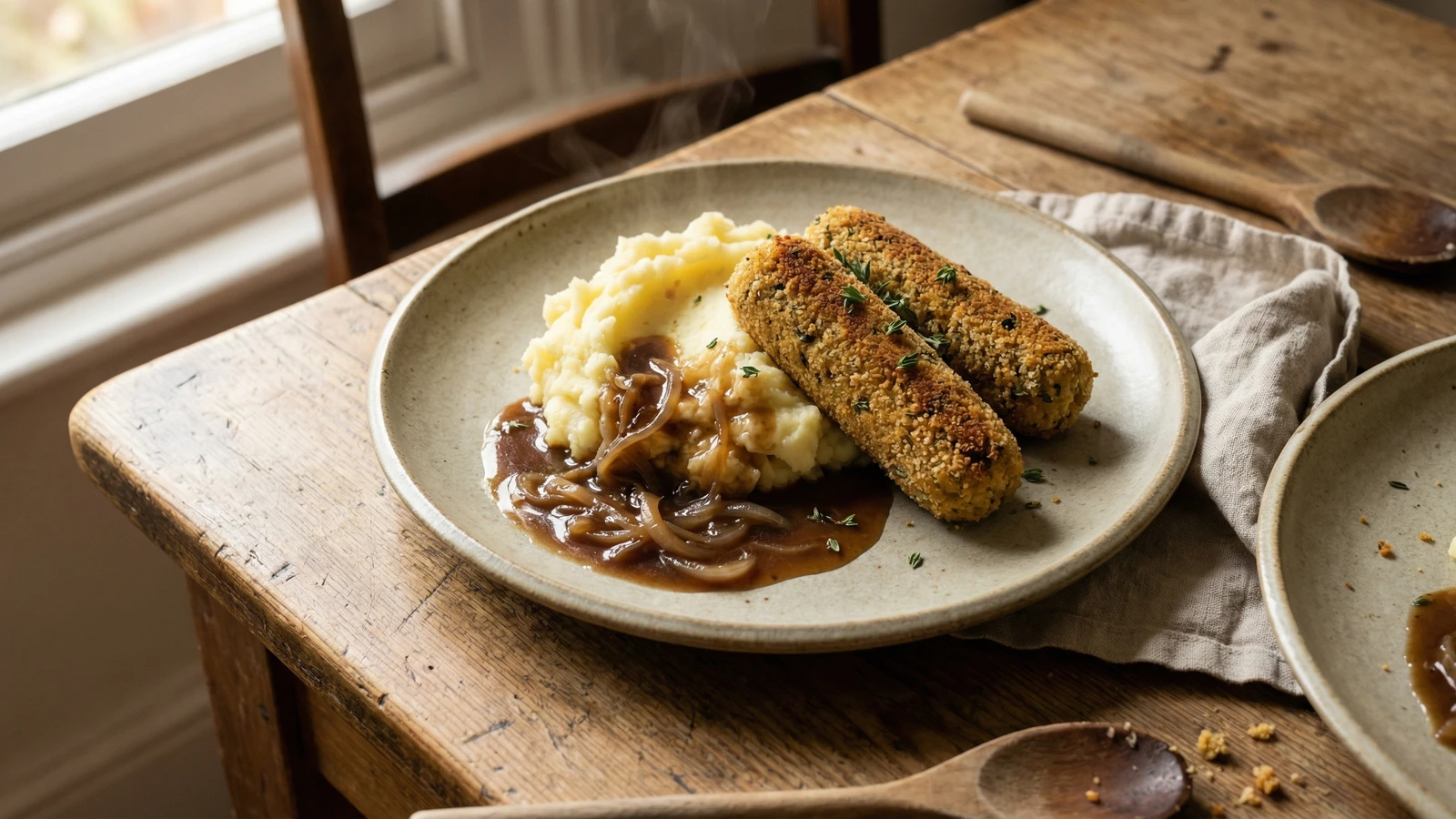
Glamorgan Sausages with Mash and Onion Gravy
Created by Chef Thomas
Crisp, golden Welsh sausages of cheese and leeks and breadcrumbs, no meat needed, with buttery mash and a dark, slow onion gravy that makes the whole plate worth sitting down to.
There's a kind of November evening, dark by half past four, rain finding the kitchen window, when what you want is something golden and crisp on a warm plate with a pile of mash and a gravy that has taken its time. This is that supper.
Glamorgan sausages have nothing to do with meat. They're Welsh, and older than rationing, though it was wartime thrift that brought them back to kitchen tables across the country. Cheese, leeks, breadcrumbs, a smear of mustard, shaped into fat little sausages and fried until the outside goes crisp and the inside stays soft and yielding. Caerphilly is the proper cheese. Its crumble and sharp tang are the character of the thing. If you can't find it, a good Lancashire or crumbly Cheshire will stand in honestly.
The mash wants to be plain and generous: real butter, warm milk, enough salt. The onion gravy is the quiet centre of the plate. Three or four onions, cooked so slowly they go from sharp and pale to sweet, dark, and sticky, then loosened with stock into a proper gravy. The whole thing comes together in about an hour, and most of that time is the onions doing their work without you.
I wrote it down in the notebook once: leek sausages, mash, gravy, rain. That was enough to bring the whole evening back.
The technique, the tradition, and the story behind every dish.
Discover Culinary AdvisorIngredients
Caerphilly cheese
Quantity
150g
crumbled
fresh white breadcrumbs
Quantity
150g, plus 50g extra for coating
medium leeks
Quantity
2
finely sliced
unsalted butter (for the leeks)
Quantity
a knob
fresh flat-leaf parsley
Quantity
1 tablespoon
finely chopped
fresh thyme
Quantity
leaves from 2 sprigs
English mustard
Quantity
1 teaspoon
large eggs
Quantity
2
separated
fine sea salt and black pepper
Quantity
to taste
plain flour
Quantity
for dusting
butter and vegetable oil
Quantity
for frying
floury potatoes (Maris Piper or King Edward)
Quantity
1kg
peeled and cut into chunks
unsalted butter (for the mash)
Quantity
50g
whole milk
Quantity
a good splash
warmed
fine sea salt (for the mash)
Quantity
to taste
medium onions
Quantity
4
thinly sliced
unsalted butter (for the gravy)
Quantity
30g
plain flour (for the gravy)
Quantity
1 tablespoon
vegetable stock
Quantity
500ml
fresh thyme (for the gravy)
Quantity
a few sprigs
red wine vinegar or cider vinegar
Quantity
1 teaspoon
fine sea salt and black pepper (for the gravy)
Quantity
to taste
| Ingredient | Quantity |
|---|---|
| Caerphilly cheesecrumbled | 150g |
| fresh white breadcrumbs | 150g, plus 50g extra for coating |
| medium leeksfinely sliced | 2 |
| unsalted butter (for the leeks) | a knob |
| fresh flat-leaf parsleyfinely chopped | 1 tablespoon |
| fresh thyme | leaves from 2 sprigs |
| English mustard | 1 teaspoon |
| large eggsseparated | 2 |
| fine sea salt and black pepper | to taste |
| plain flour | for dusting |
| butter and vegetable oil | for frying |
| floury potatoes (Maris Piper or King Edward)peeled and cut into chunks | 1kg |
| unsalted butter (for the mash) | 50g |
| whole milkwarmed | a good splash |
| fine sea salt (for the mash) | to taste |
| medium onionsthinly sliced | 4 |
| unsalted butter (for the gravy) | 30g |
| plain flour (for the gravy) | 1 tablespoon |
| vegetable stock | 500ml |
| fresh thyme (for the gravy) | a few sprigs |
| red wine vinegar or cider vinegar | 1 teaspoon |
| fine sea salt and black pepper (for the gravy) | to taste |
Equipment Needed
- •Large non-stick frying pan for the sausages
- •Wide, heavy-bottomed pan for the onion gravy
- •Large saucepan for boiling potatoes
- •Potato masher
Instructions
- 1
Start the onion gravy
Melt the butter in a wide, heavy pan over a low heat. Add all the sliced onions and a generous pinch of salt. Stir them through the butter, then leave them alone. This isn't quick cooking. You want the onions to go from sharp and white to soft and translucent, then slowly on to deep golden and sticky. Stir every few minutes, scraping up anything that catches on the bottom. It takes a good twenty-five to thirty minutes. Don't rush them. The sweetness only comes with patience, and that sweetness is the whole gravy.
If the onions start to catch or colour too fast, add a splash of water and lower the heat. You're coaxing, not searing. - 2
Soften the leeks
While the onions do their slow work, melt a knob of butter in a smaller pan. Add the sliced leeks and a pinch of salt. Cook them gently for five or six minutes until they're soft and silky, with no colour. They should smell sweet and grassy. Take them off the heat and let them cool for a few minutes. Warm leeks in the mix are fine. Hot leeks will melt the cheese before you want it to.
- 3
Mix and shape the sausages
In a large bowl, combine the breadcrumbs, crumbled cheese, softened leeks, parsley, thyme leaves, and mustard. Season with salt and pepper. Add the egg yolks and work everything together with your hands until it holds when you squeeze it. It should feel like damp sand that just about sticks. If it's too dry, add a splash of milk. If too wet, a handful more breadcrumbs. Divide the mixture into eight and roll each into a fat sausage shape. Put the flour on one plate, the lightly beaten egg whites on another, and the extra breadcrumbs on a third. Roll each sausage in flour, then egg white, then breadcrumbs. Set them on a board. They'll firm up while you deal with the potatoes.
If you have time, put the shaped sausages in the fridge for twenty minutes. They hold together better when they hit the hot pan cold. - 4
Boil the potatoes
Put the potato chunks in a large pan of cold, well-salted water. Bring to the boil, then simmer for fifteen to twenty minutes until a knife slides through without resistance. Don't let them fall apart. Drain well and leave them in the colander for a minute or two so the steam escapes. Wet potatoes make gluey mash.
- 5
Finish the gravy
By now the onions should be deep amber and sweet. Strip the thyme leaves from their sprigs and stir them in. Sprinkle over the flour, stir it through, and cook for a minute until the raw flour smell has gone. Pour in the stock gradually, stirring as you go, and bring to a gentle simmer. Let it cook for ten minutes until it thickens into a proper gravy, not thick like paste, but with enough body to pool on the plate and stay there. Add the vinegar. Season and taste. The vinegar sharpens the sweetness and stops it being one-note. Keep it warm on a low heat with a lid ajar.
- 6
Fry the sausages
Heat a knob of butter and a splash of oil in a large frying pan over a medium heat. When the butter foams and starts to calm down, lay the sausages in. Don't crowd them. Give them space to colour properly. Fry for eight to ten minutes, turning them gently every couple of minutes, until they're golden and crisp all over. The breadcrumb coating should be deep gold and feel firm when you press it. Lift them onto a warm plate.
Use a mix of butter and oil. The butter gives flavour; the oil stops it burning. If the pan gets too hot and the butter darkens, pull it off the heat for a moment. - 7
Mash and serve
Return the drained potatoes to their warm pan. Add the butter, let it melt into them, then mash until smooth. Add the warm milk a little at a time, working it in until the mash is soft and giving but not sloppy. Season with salt. Taste it. Mash that needs salt is just hot potato; mash with enough salt is comfort. Spoon a generous pile of mash onto each warm plate. Lean two sausages against it. Ladle the onion gravy alongside, letting it pool around the base. There are few better feelings than putting a plate like this in front of someone on a cold evening.
Chef Tips
- •Caerphilly is the right cheese here. It crumbles rather than melts, which is what you want: pockets of sharp, salty cheese inside the sausage, not a uniform paste. If you can't find it, use Lancashire or a young, crumbly Cheshire. Avoid anything that stretches when it melts. Cheddar is too smooth for this.
- •The coating is worth doing properly: flour, then egg white, then breadcrumbs. Each layer has a job. The flour dries the surface. The egg white gives the crumbs something to grip. The crumbs give you the crisp. Skip a step and the sausages fall apart in the pan.
- •Your onion gravy will only be as good as your patience with the onions. Low heat, plenty of time, and resist the urge to turn it up. The difference between onions cooked for fifteen minutes and onions cooked for thirty is the difference between a sauce and a gravy worth mopping up with bread.
- •This is a good budget supper. Leeks, cheese, breadcrumbs, onions, potatoes. None of it is expensive. All of it, treated well, adds up to something that feels generous and complete. A recipe is a conversation, not a contract. If you've got sage instead of thyme, use sage. If the leeks are enormous, use one. Your kitchen, your rules.
Advance Preparation
- •The sausages can be shaped, coated, and refrigerated up to a day ahead. They actually fry better from cold, holding their shape more confidently in the hot pan.
- •The onion gravy improves overnight. Make it the day before if you have the foresight, and reheat gently. The flavours settle and deepen.
- •The mash is best made fresh. Cold mash reheated is a different, lesser thing.
Frequently Asked Questions
Nutrition Information
1 serving (about 550g)
Where cooking meets culture.
Culinary mentorship, cultural storytelling, and the editorial depth that makes cooking meaningful.
Explore Culinary Advisor