Culinary Advisor
A cooking platform built around craft, culture, and the stories behind what we eat.
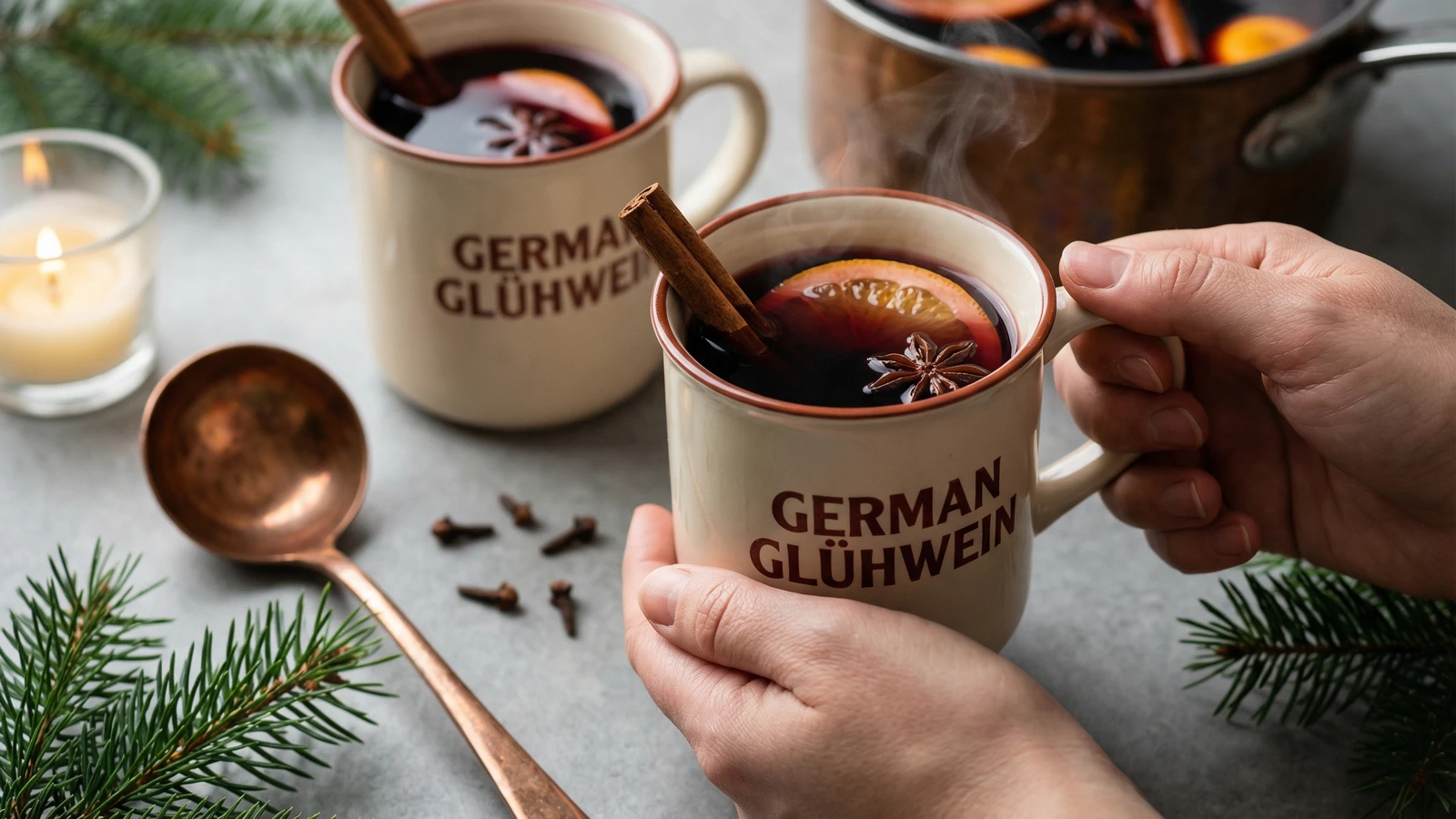
German Glühwein
Created by
Fragrant mulled wine steeped with whole spices and citrus, served steaming hot in the tradition of German Christmas markets where families have gathered for generations.
Walk through any German Christmas market in December and you'll find Glühwein at the heart of everything. The scent reaches you first: cinnamon and cloves mingling with orange peel, rising on steam from copper kettles. Then you see the crowds gathered around the stands, hands wrapped around ceramic mugs, faces flushed from warmth and good company. This is not a drink. It is a ritual.
The tradition stretches back centuries. German winemakers faced a practical problem: what to do with wine that hadn't aged well or came from a difficult vintage. They discovered that gentle heating with sugar and spices transformed mediocre wine into something worth drinking. By the 1800s, Glühwein had become inseparable from the Weihnachtsmärkte that define German holiday culture.
Making Glühwein at home requires one essential understanding: you are not cooking the wine. You are warming it. The moment it approaches a simmer, you've driven off alcohol and created something harsh and thin. Keep your flame low. Let the spices steep gently. Your patience will be rewarded with a drink that tastes like the holidays should feel.
This recipe scales beautifully for crowds. I've made it for eight people gathered around a kitchen island and for sixty at a neighborhood party. The method stays the same. Only the pot size changes.
The technique, the tradition, and the story behind every dish.
Discover Culinary AdvisorIngredients
dry red wine
Quantity
2 bottles (1.5 liters)
large orange
Quantity
1
lemon
Quantity
1
granulated sugar
Quantity
3/4 cup
cinnamon sticks
Quantity
4
whole cloves
Quantity
8
whole star anise
Quantity
4
green cardamom pods
Quantity
6
lightly crushed
vanilla bean (optional)
Quantity
1
split lengthwise
brandy or dark rum (optional)
Quantity
1/4 cup
| Ingredient | Quantity |
|---|---|
| dry red wine | 2 bottles (1.5 liters) |
| large orange | 1 |
| lemon | 1 |
| granulated sugar | 3/4 cup |
| cinnamon sticks | 4 |
| whole cloves | 8 |
| whole star anise | 4 |
| green cardamom podslightly crushed | 6 |
| vanilla bean (optional)split lengthwise | 1 |
| brandy or dark rum (optional) | 1/4 cup |
Equipment Needed
- •Large Dutch oven or heavy-bottomed pot (4-quart minimum)
- •Vegetable peeler
- •Fine-mesh strainer
- •Ladle
- •Instant-read thermometer (optional but recommended)
- •Heatproof mugs or glasses
Instructions
- 1
Prepare the citrus
Using a vegetable peeler, remove wide strips of zest from the orange and lemon, working in long ribbons and avoiding the bitter white pith beneath. You want only the colored outer layer where the aromatic oils live. Slice the orange into rounds about a quarter inch thick. Reserve a few lemon slices for garnishing if you wish.
A Y-shaped vegetable peeler gives you better control than a traditional swivel peeler for this task. - 2
Toast the spices
Place the cinnamon sticks, cloves, star anise, and crushed cardamom pods in a large Dutch oven or heavy-bottomed pot over medium-low heat. Toast for 60 to 90 seconds, shaking the pot occasionally, until the spices become fragrant and release their essential oils. You'll know they're ready when the kitchen fills with their aroma. Do not let them smoke or darken.
Toasting whole spices before steeping intensifies their flavor significantly. This step separates homemade Glühwein from the bottled versions. - 3
Add wine and aromatics
Pour the wine into the pot with the toasted spices. Add the citrus zest strips, orange slices, sugar, and vanilla bean if using. Stir gently to begin dissolving the sugar. Do not turn up the heat.
- 4
Warm gently
Heat the wine over low to medium-low heat, stirring occasionally to dissolve the sugar completely. This is the critical stage. You want the wine to reach between 160 and 170 degrees Fahrenheit, hot enough that steam rises lazily from the surface but nowhere near a simmer. If you see bubbles forming at the edge of the pot, you've gone too far. Reduce the heat immediately. The gentle warming should take 15 to 20 minutes.
An instant-read thermometer removes all guesswork. If you don't have one, the wine is ready when it's too hot to comfortably hold your finger in but not agitated or moving. - 5
Steep and infuse
Once the wine reaches proper temperature, reduce heat to the lowest setting and let it steep for 10 to 15 minutes. The spices will continue releasing their flavors into the warm wine. Taste after 10 minutes. The sweetness should balance the tannins without cloying, and you should taste cinnamon and citrus as the forward notes with clove and cardamom supporting from behind.
- 6
Adjust and finish
Taste again and adjust as needed. If too tart, add sugar a tablespoon at a time, stirring until dissolved. If you want more warmth and depth, add the brandy or rum now, which Germans call 'mit Schuss.' The alcohol will integrate into the warm wine within a minute or two.
- 7
Serve hot
Ladle the Glühwein through a fine-mesh strainer into warmed mugs or heatproof glasses, leaving the spices and citrus in the pot. Garnish each serving with a fresh cinnamon stick and an orange slice if desired. Serve immediately while steam still rises from the surface.
Traditional German Christmas markets serve Glühwein in commemorative ceramic mugs that guests either return for a deposit refund or keep as souvenirs. Consider collecting festive mugs each year for your own tradition.
Chef Tips
- •Choose an inexpensive but drinkable dry red wine. German tradition calls for Dornfelder or Spätburgunder, but any medium-bodied red works beautifully. Merlot, Côtes du Rhône, or Garnacha are excellent choices. Spend eight to twelve dollars a bottle. The spices do most of the work.
- •Never boil Glühwein. Temperatures above 170°F drive off alcohol and create a harsh, bitter taste. Low and slow is the only way.
- •For a white wine version called Weißer Glühwein, substitute a dry Riesling or Pinot Grigio and reduce the sugar slightly. White mulled wine is lighter and lets the citrus shine more brightly.
- •In Germany, vendors often add a shot of rum or Amaretto to the mug for an extra charge. This is called 'mit Schuss' and makes the drink considerably more warming.
- •The spiced wine pairs beautifully with traditional Christmas market foods: roasted almonds, Lebkuchen (gingerbread), bratwurst, and Stollen. Build a spread around it for an authentic German Christmas gathering.
Advance Preparation
- •The spice blend can be assembled up to two weeks ahead and stored in an airtight container at room temperature.
- •Glühwein can be made up to 3 days ahead and stored refrigerated. Reheat very gently over low heat, never exceeding 170°F. The flavors actually deepen and meld with time.
- •For large gatherings, prepare the Glühwein in advance and keep it warm in a slow cooker set to the lowest setting. Stir occasionally and monitor that it stays below 170°F.
- •Citrus zest can be peeled and refrigerated in an airtight container up to 24 hours ahead. Add to the wine when ready to heat.
- •To serve a crowd, double or triple the recipe in a large stockpot. The method remains identical. Just ensure your pot is heavy enough to distribute heat evenly.
Frequently Asked Questions
Nutrition Information
1 serving (about 190g)
Where cooking meets culture.
Culinary mentorship, cultural storytelling, and the editorial depth that makes cooking meaningful.
Explore Culinary Advisor