Culinary Advisor
A cooking platform built around craft, culture, and the stories behind what we eat.
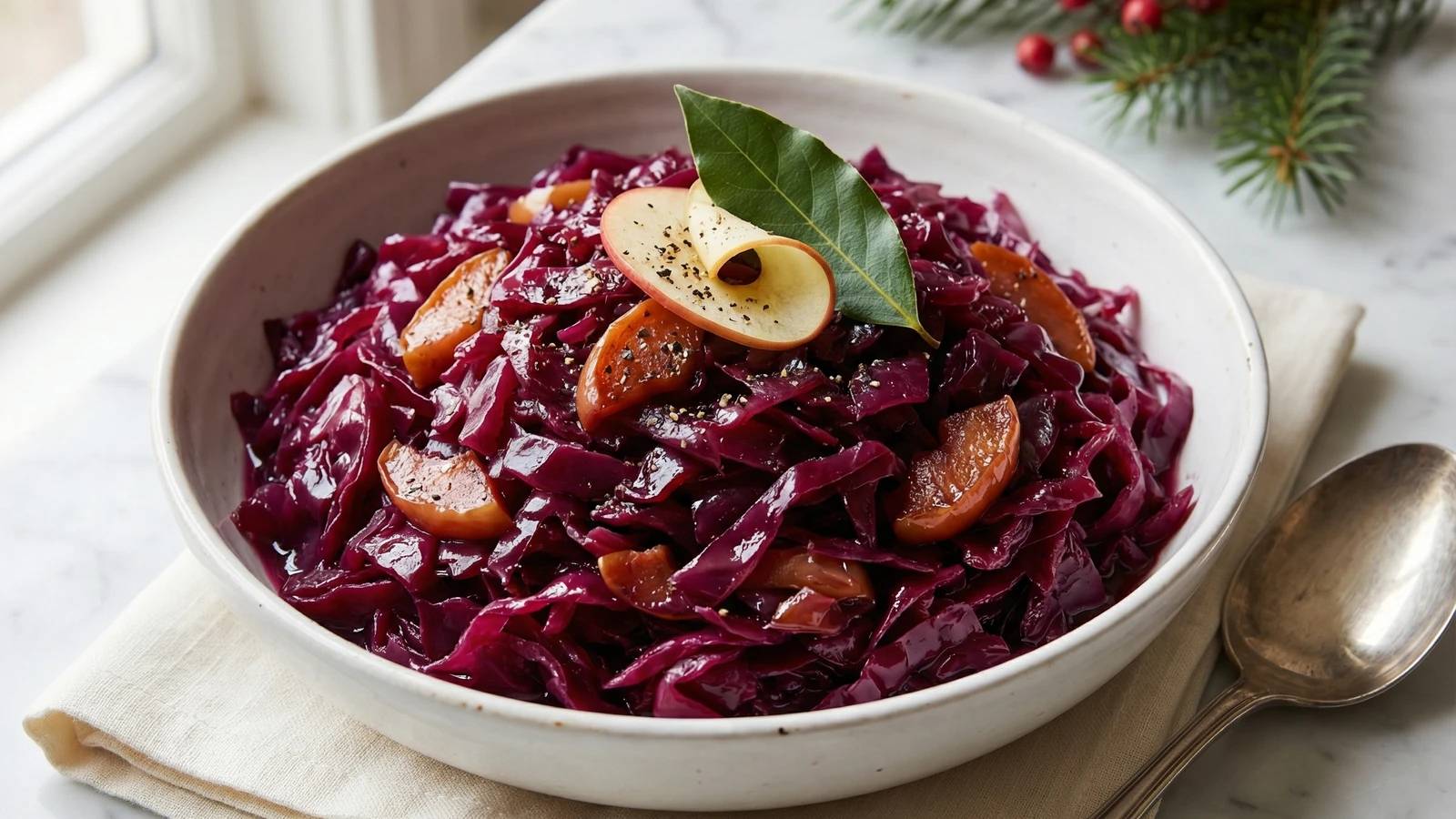
German Braised Red Cabbage
Created by
Silky ribbons of red cabbage braised with tart apples, warm spices, and a splash of vinegar until they surrender into a glossy, sweet-sour masterpiece worthy of any holiday table.
The Germans call it Rotkohl in the north and Blaukraut in the south, and they've been arguing about the name for centuries. What they agree on is this: no Christmas goose, no roast pork, no sauerbraten is complete without a generous mound of this braised cabbage beside it. The dish predates refrigeration, born from the need to preserve autumn's harvest through winter. Those frugal cooks discovered something wonderful. Time transforms tough cabbage into silk.
I first encountered proper Rotkohl in a farmhouse kitchen outside Munich, where the grandmother had been making the same recipe since before the war. She used goose fat rendered from last year's Christmas bird, apples from trees her grandfather planted, and red wine vinegar she'd been topping off for decades. The cabbage had been cooking since morning. By dinner, it had turned the color of garnets and tasted like autumn itself: sweet from the apples, sharp from the vinegar, warm from cloves and bay.
This is peasant food at its finest. The technique couldn't be simpler: slice, season, add liquid, and let time do the heavy lifting. The magic happens between hours two and three, when the cabbage breaks down completely and the flavors marry into something greater than their parts. Make it a day ahead. Two days is even better. The flavors deepen, the texture improves, and your Christmas morning becomes blissfully simple.
I've adapted this recipe for American kitchens while keeping its soul intact. Bacon replaces the traditional goose fat for accessibility. A Granny Smith stands in for German cooking apples. The technique remains unchanged because it needs no improvement. Your grandmother would recognize this dish, whether she came from Hamburg or Helena.
The technique, the tradition, and the story behind every dish.
Discover Culinary AdvisorIngredients
red cabbage
Quantity
1 medium head (about 2 pounds)
thick-cut bacon
Quantity
4 slices
diced
yellow onion
Quantity
1 medium
thinly sliced
Granny Smith apples
Quantity
2
peeled, cored, and thinly sliced
red wine vinegar
Quantity
1/3 cup
brown sugar
Quantity
1/4 cup
packed
dry red wine
Quantity
1 cup
chicken or beef stock
Quantity
1 cup
bay leaves
Quantity
2
whole cloves
Quantity
4
ground allspice
Quantity
1/2 teaspoon
cinnamon stick
Quantity
1
kosher salt
Quantity
1 teaspoon
freshly ground black pepper
Quantity
1/2 teaspoon
unsalted butter
Quantity
2 tablespoons
cold
red currant jelly (optional)
Quantity
1 tablespoon
| Ingredient | Quantity |
|---|---|
| red cabbage | 1 medium head (about 2 pounds) |
| thick-cut bacondiced | 4 slices |
| yellow onionthinly sliced | 1 medium |
| Granny Smith applespeeled, cored, and thinly sliced | 2 |
| red wine vinegar | 1/3 cup |
| brown sugarpacked | 1/4 cup |
| dry red wine | 1 cup |
| chicken or beef stock | 1 cup |
| bay leaves | 2 |
| whole cloves | 4 |
| ground allspice | 1/2 teaspoon |
| cinnamon stick | 1 |
| kosher salt | 1 teaspoon |
| freshly ground black pepper | 1/2 teaspoon |
| unsalted buttercold | 2 tablespoons |
| red currant jelly (optional) | 1 tablespoon |
Equipment Needed
- •5 to 6-quart Dutch oven or heavy-bottomed pot with lid
- •Sharp chef's knife or mandoline
- •Wooden spoon
Instructions
- 1
Prepare the cabbage
Quarter the cabbage through the core. Cut out the tough white core from each quarter, then slice the cabbage into thin ribbons, about 1/4-inch wide. You'll have a small mountain of purple shreds. Don't worry about uniformity here. Some pieces thicker, some thinner. They'll all melt together in the pot.
A mandoline makes quick work of slicing, but a sharp chef's knife does fine. The cabbage will shrink by half during cooking, so don't be alarmed by the volume. - 2
Render the bacon
Set a Dutch oven or heavy-bottomed pot over medium heat. Add the diced bacon and cook, stirring occasionally, until the fat has rendered and the pieces turn golden and slightly crisp. This takes 6 to 8 minutes. Listen for the sizzle to soften as the fat releases. The kitchen will smell of smoke and salt.
- 3
Build the aromatics
Add the sliced onion to the bacon fat. Stir to coat and cook until softened and beginning to turn golden at the edges, about 5 minutes. The onion should be translucent but not brown. Add the apple slices and cook for another 2 minutes, just until they begin to soften and release their fragrance.
- 4
Add cabbage and seasonings
Pile in the sliced cabbage. Yes, all of it. It will seem like far too much. Trust the process. Add the vinegar and brown sugar, then pour in the wine and stock. Tuck the bay leaves, cloves, cinnamon stick, and allspice into the cabbage. Season with salt and pepper. Stir everything together as best you can.
The vinegar does more than add flavor. Its acid helps the cabbage retain that gorgeous ruby color. Without it, the cabbage turns an unappealing blue-gray during cooking. - 5
Braise low and slow
Bring the liquid to a gentle simmer. Cover the pot with a tight-fitting lid and reduce heat to low. The cabbage needs to cook at the barest simmer, with only occasional bubbles breaking the surface. Braise for 1 hour and 30 minutes to 2 hours, stirring every 30 minutes. The cabbage is done when it's completely tender and the liquid has reduced to a glossy coating.
- 6
Finish and adjust
Remove the bay leaves, cinnamon stick, and whole cloves. Taste the cabbage. This is where you make it your own. Add more vinegar if it needs brightness, more sugar if too sharp. Stir in the cold butter and the red currant jelly if using. The butter adds richness and body. The jelly adds a subtle fruity depth that makes people ask what your secret is.
- 7
Rest and serve
Transfer to a warmed serving dish or serve directly from the pot. The cabbage can be served immediately, but it reaches its peak after resting overnight in the refrigerator. Reheat gently over low heat with a splash of water if the cabbage seems dry. Serve warm alongside roast pork, goose, duck, or any robust meat that deserves a worthy companion.
Chef Tips
- •For a richer, more traditional flavor, substitute 3 tablespoons of rendered duck fat or goose fat for the bacon. Skip the bacon pieces entirely or cook them separately and add at the end for texture.
- •Red cabbage varies in acidity. Start with the vinegar amount listed, then adjust at the end. The balance between sweet and sour should be harmonious, with neither dominating.
- •Freeze leftover cabbage in portions. It keeps beautifully for up to 3 months and reheats without losing quality. I keep some in my freezer year-round for weeknight pork chops.
- •For large gatherings, double the recipe in a roasting pan covered with foil. The oven does the work at 300°F while you tend to the main course.
Advance Preparation
- •The cabbage improves dramatically after 24 to 48 hours refrigerated. Make it 2 to 3 days before serving for the best flavor.
- •Store in an airtight container in the refrigerator for up to 1 week.
- •Reheat gently over low heat, adding a splash of water or stock if the cabbage seems dry.
- •Can be frozen for up to 3 months. Thaw overnight in the refrigerator before reheating.
Frequently Asked Questions
Nutrition Information
1 serving (about 285g)
Where cooking meets culture.
Culinary mentorship, cultural storytelling, and the editorial depth that makes cooking meaningful.
Explore Culinary Advisor