Culinary Advisor
A cooking platform built around craft, culture, and the stories behind what we eat.
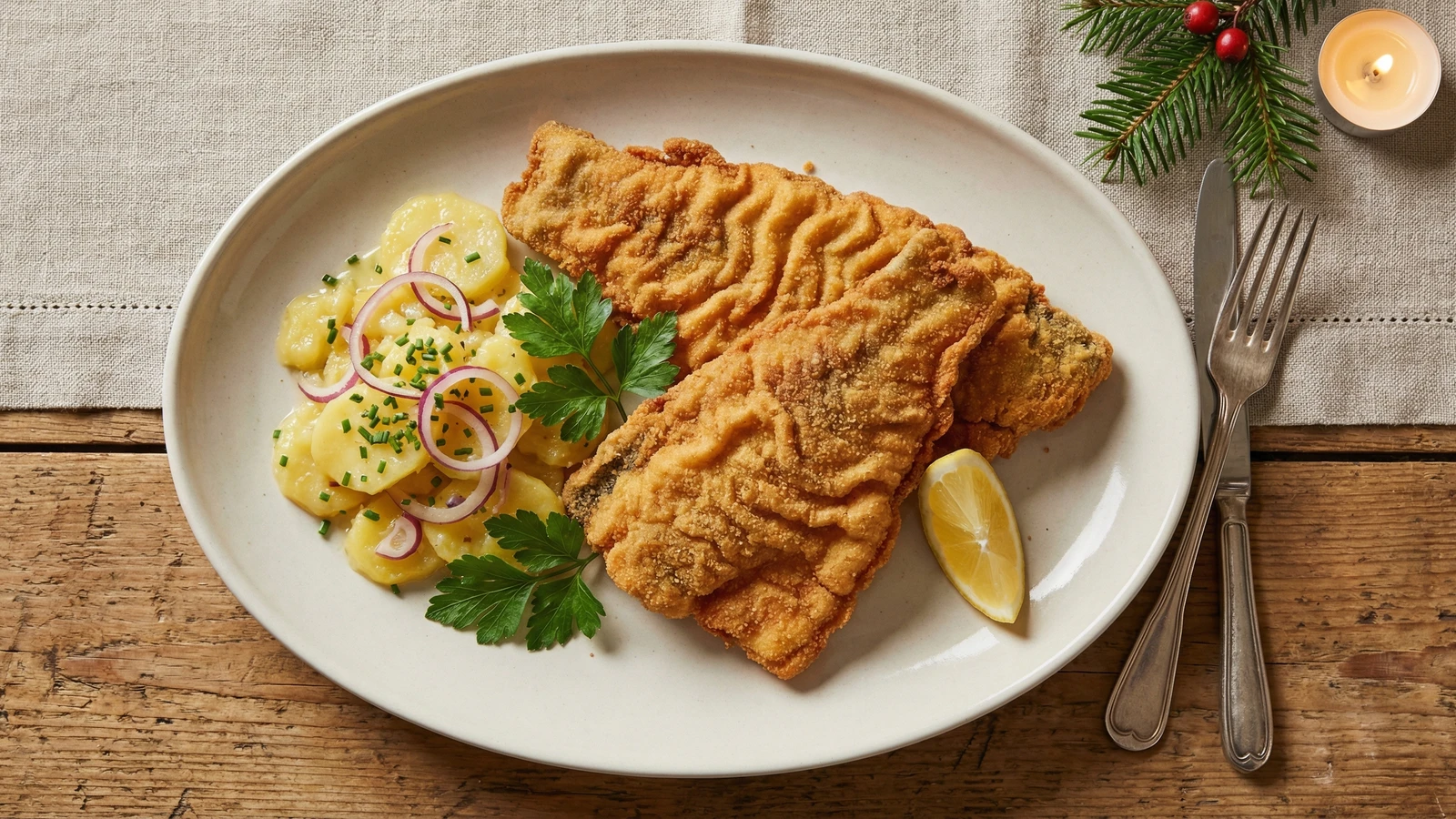
Gebackener Karpfen
Created by Chef Elsa
Waldviertel carp fillets breaded in fine Semmelbrösel and fried golden in clarified butter, served with lemon wedges and warm Erdäpfelsalat on Christmas Eve, the way Austrian families have done it for generations.
On Christmas Eve in Austria, the table is set and the whole house smells of hot butter and breadcrumbs. That's the Karpfen. Gebackener Karpfen, breaded and fried carp, is the dish that marks Heiliger Abend for millions of Austrians the way turkey marks Thanksgiving for Americans. You don't question it. You don't substitute it. You eat carp on the 24th of December and you put a fish scale in your wallet for luck in the new year.
I grew up hearing about this from Gretel and my grandmother Eva before I ever tasted it properly in Austria. In Kent, we didn't have Waldviertel carp, but Gretel would describe those Christmas Eve tables so vividly I could almost smell the frying. The carp comes from the ponds of the Waldviertel, the wooded quarter of Lower Austria, where fish farmers have raised them for centuries in shallow, cold-water ponds. By December, the fish are fat and firm from a season of feeding. Your fishmonger pulls them from the ponds in the weeks before Christmas and the whole region revolves around this one fish for one night.
The technique is close to Wiener Schnitzel, and that's not a coincidence. Austrians perfected the art of breading and frying long before anyone thought to write it down. Flour, egg, fine breadcrumbs, hot fat, one flip. The crust puffs and turns golden. The flesh inside stays moist and sweet. You serve it with Erdäpfelsalat, Viennese potato salad dressed warm with broth and vinegar, and a wedge of lemon. Nothing else. The simplicity is the point. On this night, the food is tradition made visible, and every family at every table is eating the same thing.
The Catholic tradition of fasting from meat on Christmas Eve established fish as the centerpiece of the Austrian Heiliger Abend meal centuries ago. Carp farming in the Waldviertel dates to medieval monastic fish ponds, where monks raised carp as a permitted protein during Lent and Advent fasts. By the 18th century, Gebackener Karpfen had become the dominant Christmas Eve dish across Austria, and the Waldviertel's shallow ponds, some of which have been in continuous operation for over 500 years, remain the primary source. The custom of keeping a carp scale in your wallet for prosperity in the new year persists across Austria and much of Central Europe.
The technique, the tradition, and the story behind every dish.
Discover Culinary AdvisorIngredients
carp fillets
Quantity
4 (about 180g each)
skin-on, pin-boned
salt
Quantity
to season
lemon
Quantity
1
juiced
plain flour
Quantity
100g
eggs
Quantity
2 large
beaten
fine dry breadcrumbs (Semmelbrösel)
Quantity
150g
clarified butter or lard
Quantity
enough to fill pan 2-3cm deep
for frying
lemon wedges
Quantity
for serving
fresh parsley
Quantity
sprigs
for serving
| Ingredient | Quantity |
|---|---|
| carp filletsskin-on, pin-boned | 4 (about 180g each) |
| salt | to season |
| lemonjuiced | 1 |
| plain flour | 100g |
| eggsbeaten | 2 large |
| fine dry breadcrumbs (Semmelbrösel) | 150g |
| clarified butter or lardfor frying | enough to fill pan 2-3cm deep |
| lemon wedges | for serving |
| fresh parsleyfor serving | sprigs |
Equipment Needed
- •Wide heavy-bottomed pan or deep skillet (30cm)
- •Kitchen thermometer (helpful but not essential)
- •Fish tweezers or clean needle-nose pliers for pin bones
- •Slotted spoon or fish spatula
Instructions
- 1
Season the fillets
Lay the carp fillets on a clean board and run your fingertip along the flesh side, feeling for pin bones. Pull out any you find with tweezers or clean pliers. Season both sides with salt and squeeze lemon juice over the flesh. Let them sit for ten minutes. The lemon does two things: it firms the protein slightly, giving you a better surface for the breading, and it softens the earthy, pond-floor taste that puts people off carp. Don't skip this.
If your fishmonger hasn't already done it, score the skin side with three shallow cuts about two centimeters apart. This keeps the fillets from curling in the hot fat. - 2
Set up the breading station
Line up three wide, shallow dishes: flour in the first, beaten eggs in the second, Semmelbrösel in the third. Semmelbrösel are fine dry breadcrumbs made from stale Semmeln, the white rolls you find at every Austrian bakery. If you can't find them, blitz day-old white bread in a food processor and spread the crumbs on a tray to dry out in a low oven. Pre-made Japanese panko is not a substitute here. The crumb needs to be fine and even so it fries into a smooth golden shell, not a craggy, spiky coat.
- 3
Bread the fillets
Pat the fillets dry with kitchen paper. Dip each one first into the flour, coating both sides, then shake off the excess. A thick flour layer makes the breading fall off in sheets, so be thorough about shaking. Next, pass the fillet through the beaten egg, letting the excess drip away. Finally, press it gently into the breadcrumbs on both sides. Don't pack the crumbs tight. You want them to sit lightly so they puff and separate in the fat. Lay the breaded fillets on a rack and let them rest for five minutes before frying.
Use one hand for the dry steps (flour, breadcrumbs) and the other for the wet step (egg). Gretel always called this the 'clean hand, dirty hand' rule. It keeps you from ending up with breaded fingers instead of breaded fish. - 4
Heat the fat
Pour clarified butter or lard into a wide, heavy pan to a depth of two to three centimeters. Heat it over medium-high until a breadcrumb dropped in sizzles immediately and floats to the surface. The temperature should be around 170 to 175 degrees Celsius. If you don't have a thermometer, the breadcrumb test is reliable. If the crumb sits at the bottom and does nothing, the fat isn't ready. If it turns dark in two seconds, the fat is too hot. Patience here saves the whole dish.
Lard is what Austrian grandmothers used and it gives the best flavor. Clarified butter is beautiful too. Regular butter will burn. Vegetable oil works in a pinch but you lose that rich, golden taste that makes Gebackener Karpfen taste like Christmas. - 5
Fry the carp
Slide the fillets into the hot fat, skin side down, no more than two at a time. Overcrowding drops the temperature and you'll get soggy, greasy breading instead of the crisp golden shell you're after. The fillets should float or nearly float. Spoon hot fat over the top as they cook. This is the same technique you use for Wiener Schnitzel, and the principle is identical: hot fat above and below makes the breading puff and separate from the flesh, creating that wavy, airy crust. Fry for about three to four minutes per side, until the coating is deep gold and completely dry to the eye. Flip once. Once.
You'll know it's ready when the sizzle quiets to a gentle murmur and the crust looks dry and wavy, not wet and flat. Trust your ears as much as your eyes. - 6
Drain and serve
Lift the fillets out with a slotted spoon or spatula and rest them on kitchen paper for half a minute to drain. Transfer to a warm plate. Serve immediately with lemon wedges and parsley on the plate, and a bowl of Erdäpfelsalat (Viennese potato salad, dressed warm with beef broth and vinegar) alongside. No sauce on the fish. The breading and the lemon are enough. The potato salad provides the cool, tangy contrast. This is how it's served on Heiliger Abend, Christmas Eve, in every Austrian home that keeps the tradition. Mahlzeit!
Chef Tips
- •Buy your carp from a fishmonger who can tell you where it came from. Farmed carp from clean, cold ponds tastes sweet and mild. Carp from warm, muddy water tastes like warm, muddy water. The source matters more than any technique I can teach you.
- •If carp is impossible to find where you live, use a firm-fleshed freshwater fish like trout or pike-perch (Zander). The breading technique is the same. It won't be Gebackener Karpfen, but it will be good Austrian home cooking and nobody at the table will complain.
- •Soak the carp fillets in cold milk for an hour before seasoning if you're worried about any muddy taste. This is an old Waldviertel trick. The milk proteins bind to the compounds that cause that earthy flavor and pull them right out.
- •Erdäpfelsalat must be dressed while the potatoes are still warm. Warm potatoes absorb the broth and vinegar. Cold potatoes just sit there in a puddle. Slice them, dress them, let them rest for twenty minutes, then taste and adjust. The salad should be tangy, not sour, and the potatoes should glisten.
Advance Preparation
- •The Erdäpfelsalat should be made two to three hours ahead so the potatoes have time to absorb the dressing and come to room temperature. It's better rested than fresh.
- •The carp fillets can be pin-boned and portioned several hours ahead, covered and refrigerated. Bread them just before frying. Breaded fish that sits in the fridge dries out and the coating goes soggy.
- •If you're soaking the fillets in milk, do this first thing. One hour is enough. Longer won't hurt.
Frequently Asked Questions
Nutrition Information
1 serving (about 250g)
Where cooking meets culture.
Culinary mentorship, cultural storytelling, and the editorial depth that makes cooking meaningful.
Explore Culinary Advisor