Culinary Advisor
A cooking platform built around craft, culture, and the stories behind what we eat.
Gebackene Mäuse
Created by Chef Elsa
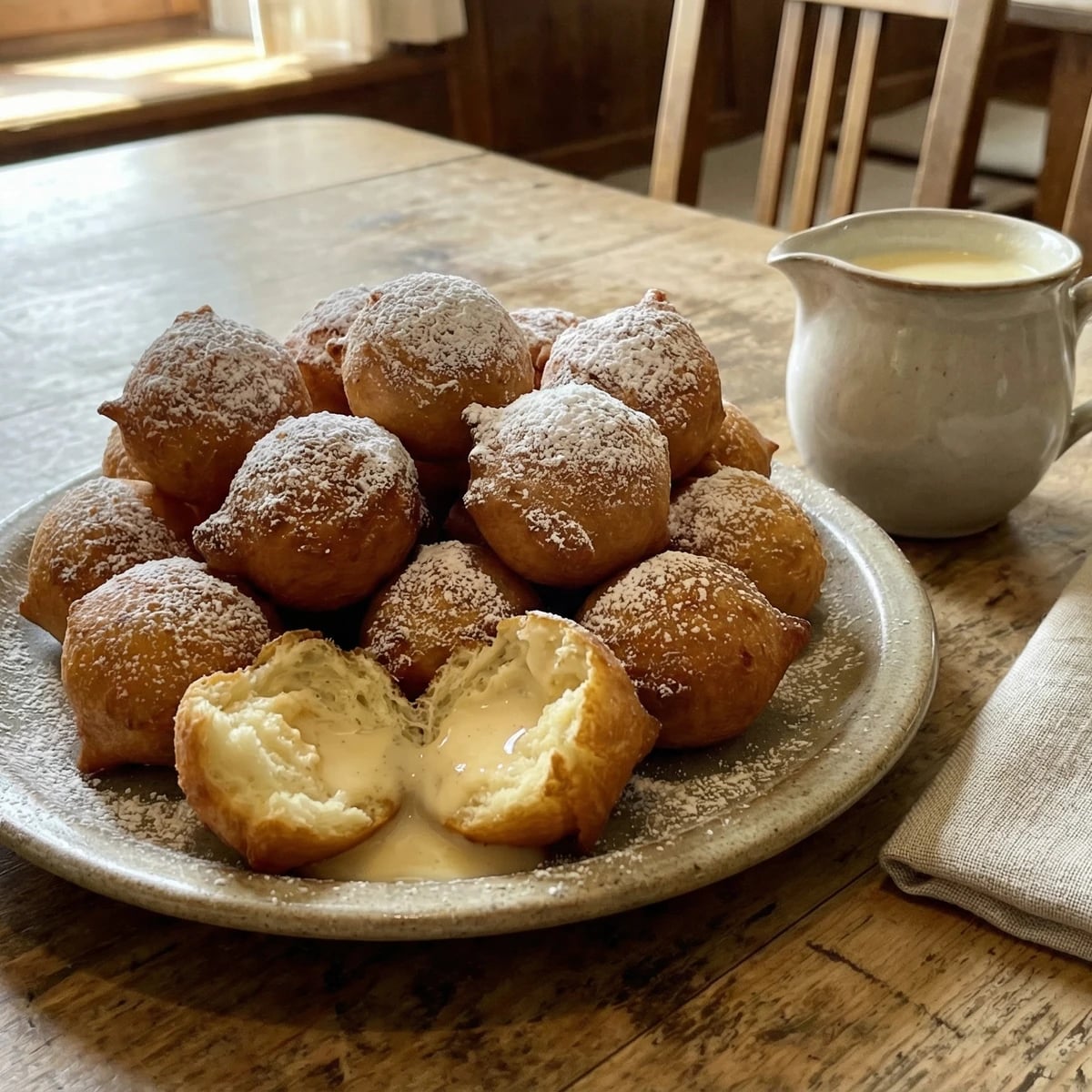
Little yeast puffs fried golden and craggy, dusted in powdered sugar, torn open and flooded with warm Vanillesauce. The Viennese called them mice. You'll call them gone.
Gebackene Mäuse look like they crawled out of a fairy tale. Small, golden, bumpy, irregular, dusted in powdered sugar, piled on a plate in a warm heap. The name means 'baked mice,' which is one of those Viennese jokes that makes you smile every time you say it. They don't look much like mice, honestly. They look like little golden clouds with crispy shells. But the Viennese have always named their Mehlspeisen with more personality than precision, and once you've watched a batch of these bob and puff in hot oil, turning themselves over with a life of their own, you understand the impulse to give them a creature's name.
I first made these with Gretel in my grandmother Eva's kitchen on a grey February afternoon. Fasching, carnival season, when Austrian kitchens fill with the smell of frying dough. Gretel dropped spoonfuls of batter into the pot with a confidence I found terrifying at the time. The oil was hot. The dough was sticky. She didn't measure the spoonfuls. 'They should all be different,' she told me. 'That's what makes them Mäuse and not factory doughnuts.' She was right. The irregular shapes fry unevenly in the best possible way: some edges turn deeply golden and crisp while the crevices stay soft and pale. You tear them open and pour warm vanilla sauce into the crack. It pools inside. That first bite is the whole reason this recipe has survived centuries.
The dough is a simple yeast batter, softer than bread dough, richer with egg yolks and butter. You beat it hard with a wooden spoon until it goes glossy and elastic, then let it rise until it doubles and fills the bowl with that sweet, yeasty smell that means something good is about to happen. The frying takes courage the first time but it's not difficult. Keep the oil at the right temperature, don't crowd the pot, and trust the dough to do its work. These are Mehlspeisen at their most generous and joyful: simple ingredients, honest technique, and a result that makes people close their eyes when they take the first bite.
Ingredients
plain flour
Quantity
300g
fresh yeast
Quantity
20g
whole milk (for dough)
Quantity
150ml
lukewarm
| Ingredient | Quantity |
|---|---|
| plain flour | 300g |
| fresh yeast | 20g |
| whole milk (for dough)lukewarm | 150ml |