Culinary Advisor
A cooking platform built around craft, culture, and the stories behind what we eat.
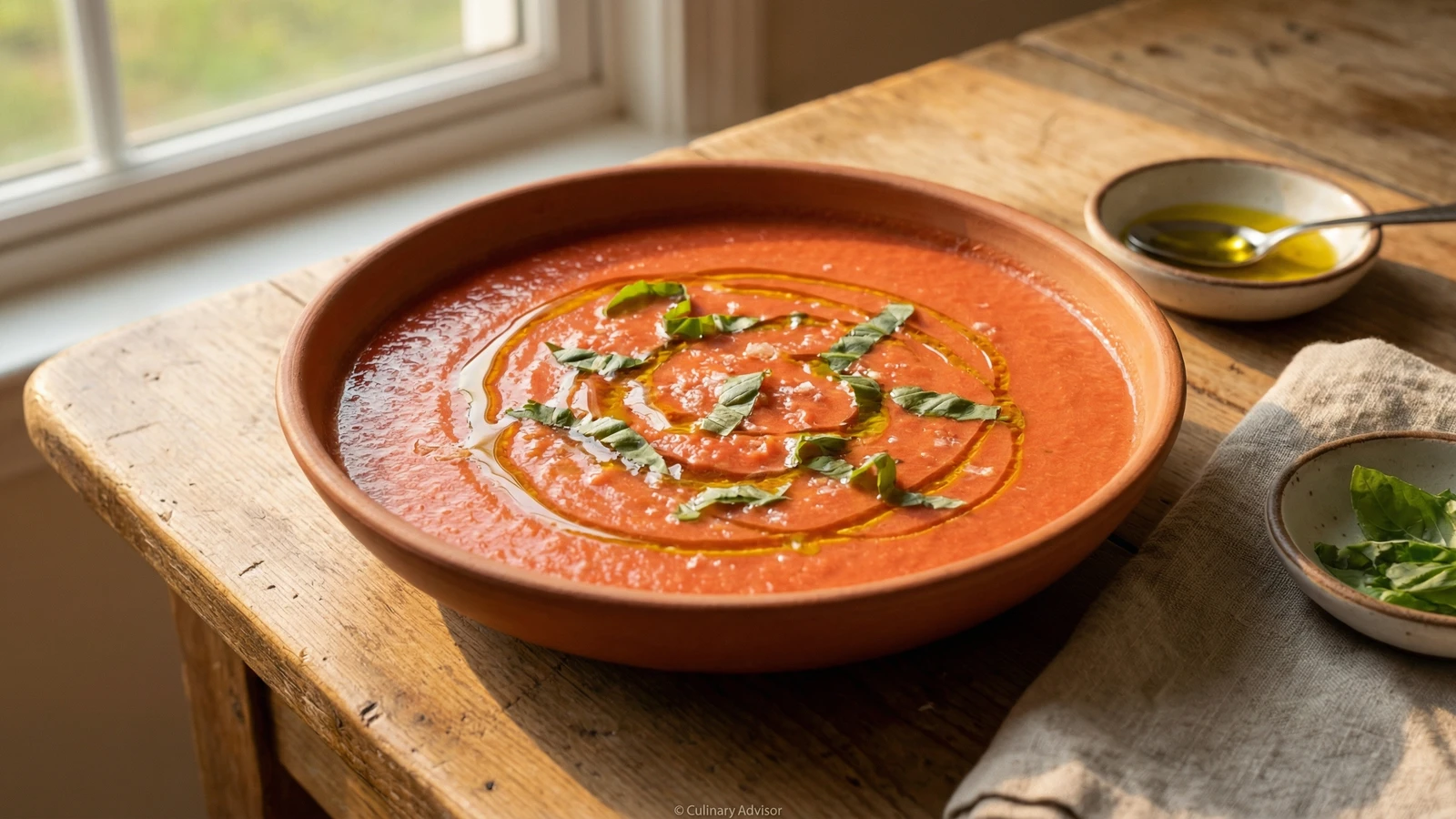
Gazpacho with Peak Summer Tomatoes
Created by Chef Ally
Ripe summer tomatoes blended into liquid velvet with cucumber, pepper, and good olive oil, then chilled until the flavors settle into something greater than any of them alone.
This is not a recipe you make in February. Put it away until August, when local tomatoes are so ripe they threaten to split on the drive home from the market. Perfect ripeness is the whole point. Without it, you are making something else entirely.
Gazpacho asks almost nothing of you as a cook. You are not transforming ingredients through heat or technique. You are getting out of the way. The tomatoes do the work. The cucumber adds cool green freshness. The pepper brings sweetness. The sherry vinegar sharpens everything into focus. Good olive oil ties it together. That is all.
I learned to make gazpacho from a farmer in the Central Valley who grew tomatoes so flavorful they needed nothing but salt. She blended them with ice water and drank the soup from a jar while working the fields. No cucumber, no pepper, nothing but tomatoes and time. Every summer I think of her when the first real tomatoes appear, still warm from the sun, perfumed before I even slice them.
Your choices shape the food system. Buy these tomatoes from someone who grows them with care, who waits for ripeness rather than picking green for transport. The soup will taste better, and you will have supported work worth supporting.
The technique, the tradition, and the story behind every dish.
Discover Culinary AdvisorIngredients
ripe summer tomatoes
Quantity
2 1/2 pounds
cored and roughly chopped
cucumber
Quantity
1 medium
peeled, seeded, and roughly chopped
red bell pepper
Quantity
1 small
seeded and roughly chopped
shallot
Quantity
1 small
roughly chopped
garlic
Quantity
2 cloves
smashed
sherry vinegar
Quantity
3 tablespoons, plus more to taste
extra-virgin olive oil
Quantity
1/2 cup, plus more for drizzling
fine sea salt
Quantity
1 teaspoon, plus more to taste
black pepper
Quantity
1/4 teaspoon
freshly ground
cold water
Quantity
1 cup
as needed
fresh basil leaves (optional)
Quantity
small handful
for finishing
flaky sea salt (optional)
Quantity
for finishing
| Ingredient | Quantity |
|---|---|
| ripe summer tomatoescored and roughly chopped | 2 1/2 pounds |
| cucumberpeeled, seeded, and roughly chopped | 1 medium |
| red bell pepperseeded and roughly chopped | 1 small |
| shallotroughly chopped | 1 small |
| garlicsmashed | 2 cloves |
| sherry vinegar | 3 tablespoons, plus more to taste |
| extra-virgin olive oil | 1/2 cup, plus more for drizzling |
| fine sea salt | 1 teaspoon, plus more to taste |
| black pepperfreshly ground | 1/4 teaspoon |
| cold wateras needed | 1 cup |
| fresh basil leaves (optional)for finishing | small handful |
| flaky sea salt (optional) | for finishing |
Equipment Needed
- •High-powered blender
- •Fine-mesh strainer
- •Large mixing bowl
- •Ladle
Instructions
- 1
Select and taste your tomatoes
Start with the tomatoes. They should be heavy in your hand, fragrant before you slice them, and warm from sitting on your counter. Taste one. If it does not taste like summer distilled, wait for better fruit or find a different farmer. The entire soup depends on this moment.
Heirloom varieties with deep color and imperfect shapes often have the best flavor. Ask your farmer which ones they would eat standing at the sink. - 2
Combine vegetables with seasonings
Place the chopped tomatoes, cucumber, bell pepper, shallot, and garlic in a large bowl. Add the sherry vinegar, olive oil, salt, and pepper. Toss everything gently to combine. The vegetables should glisten with oil and begin releasing their juices.
- 3
Let the flavors marry
Cover the bowl and let it rest at room temperature for thirty minutes to an hour. This is not optional. The salt draws moisture from the vegetables, the vinegar softens their edges, and the oil carries flavor. You are building depth without cooking.
If your kitchen is very warm, refrigerate after fifteen minutes. The maceration still happens, just more slowly. - 4
Blend until smooth
Transfer the mixture to a blender, working in batches if necessary. Blend on high for two to three minutes until completely smooth and slightly aerated. The color should be vibrant, somewhere between coral and deep red depending on your tomatoes. Add cold water gradually if the consistency is too thick. You want it to pour easily but still coat a spoon.
- 5
Strain for silk
Pass the gazpacho through a fine-mesh strainer into a clean bowl, pressing on the solids with a ladle to extract every drop of liquid. Discard the pulp. This step takes patience, but the result is a soup with the texture of cold silk rather than salsa.
Some cooks skip straining and prefer a rustic texture. Both are valid. Know which version you want before you begin. - 6
Chill thoroughly
Cover and refrigerate for at least three hours, preferably overnight. Cold deepens the flavors and allows them to settle into each other. Gazpacho that has rested tastes entirely different from gazpacho that has not.
- 7
Taste and adjust
Before serving, taste the soup. Cold dulls seasoning, so you will likely need more salt and perhaps another splash of vinegar to brighten things. Adjust until the tomato flavor sings clearly, balanced by the subtle heat of garlic and the grassy note of olive oil.
- 8
Serve cold with intention
Ladle the gazpacho into chilled bowls. Drizzle each portion with your best olive oil, letting it pool on the surface in golden streaks. Tear a few basil leaves over the top and finish with a pinch of flaky salt. Serve immediately. This soup does not wait.
Chef Tips
- •Seek tomatoes from a farmer you trust, someone who can tell you the variety name and when they were picked. Supermarket tomatoes, bred for shipping rather than flavor, will disappoint you here.
- •The quality of your olive oil matters as much as the tomatoes. Use something you would happily eat on bread. The finishing drizzle should be your very best.
- •Sherry vinegar is traditional and worth seeking out. Its nutty depth complements tomatoes better than red wine vinegar, though that works in a pinch.
- •If you cannot find ripe local tomatoes, do not make this recipe. Make something else and wait for the season. Anticipation is part of eating well.
- •Leftover gazpacho keeps for three days refrigerated. Stir before serving, as it separates slightly. The flavor often improves on day two.
Advance Preparation
- •Gazpacho must be made at least three hours ahead to chill properly. Overnight is better.
- •The soup can be prepared up to three days in advance and stored refrigerated. Taste and adjust seasoning before serving, as cold dulls flavors over time.
- •Chill your serving bowls in the refrigerator for thirty minutes before ladling the soup. Cold bowls keep the gazpacho at the right temperature through the meal.
Frequently Asked Questions
Nutrition Information
1 serving (about 315g)
Where cooking meets culture.
Culinary mentorship, cultural storytelling, and the editorial depth that makes cooking meaningful.
Explore Culinary Advisor