Culinary Advisor
A cooking platform built around craft, culture, and the stories behind what we eat.
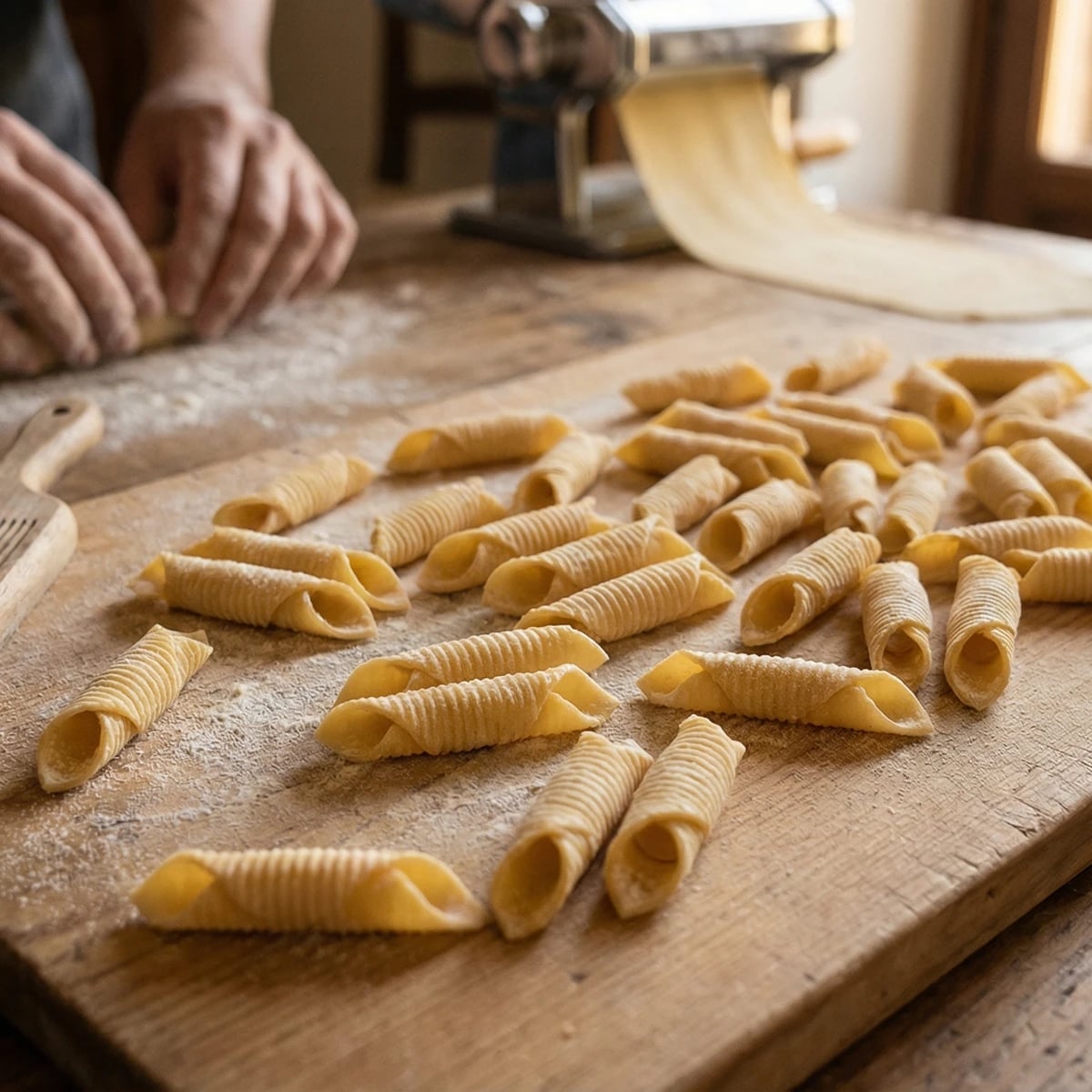
Garganelli
Created by Chef Graziella
Ridged tubes from Emilia-Romagna, made by rolling fresh egg pasta squares over a comb with a wooden stick. The grooves grip sauce like nothing else. Hand-made, never extruded.
Garganelli exist because of a mistake. At least, that is the story they tell in Imola. A cook in a noble household had prepared sfoglia for cappelletti, but the cat ate the filling. Faced with guests arriving and sheets of pasta going dry, she cut the pasta into squares, rolled them over her butter paddle, and served tubes instead of filled pasta. Whether the story is true matters less than what it reveals: garganelli are an act of transformation, turning flat pasta into something that holds sauce in its ridged embrace.
The technique requires a pettine, the ridged board that gives garganelli their distinctive texture. A wooden stick rolls the pasta over the comb, pressing the grooves into the surface while forming the tube. The motion becomes rhythmic once you understand it, but understanding comes only through repetition. Your first dozen will look like they were made by a drunk. Your second dozen will improve. By your fifth batch, your hands will know what your mind is still learning.
These ridges serve a purpose beyond beauty. They catch sauce. A garganello dressed with cream and prosciutto holds that sauce in every groove, releasing it with each bite. This is why extruded pasta cannot replicate what hand-shaped garganelli achieve. The texture is different. The way it eats is different.
Ingredients
tipo 00 flour
Quantity
300g
plus more for dusting
large eggs
Quantity
3
extra virgin olive oil
Quantity
1 tablespoon
| Ingredient | Quantity |
|---|---|
| tipo 00 flourplus more for dusting | 300g |
| large eggs | 3 |
| extra virgin olive oil | 1 tablespoon |