Culinary Advisor
A cooking platform built around craft, culture, and the stories behind what we eat.
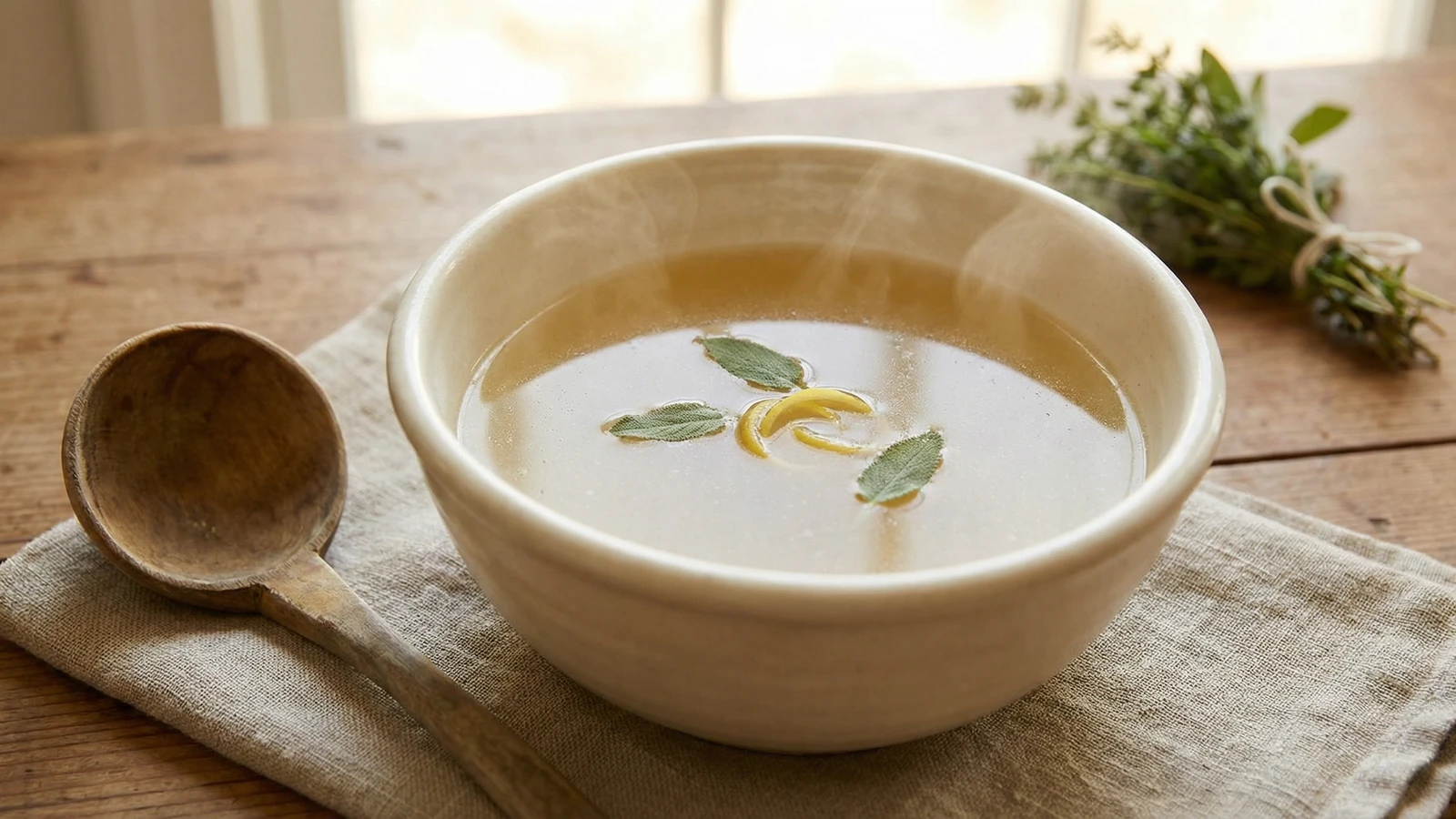
Garden Herb Broth
Created by Chef Ally
A clear, fragrant broth built from whatever tender herbs the garden or farmers market offers, steeped rather than simmered, bright with the aliveness of the season.
Start with the herbs. They should be freshly cut, still holding their morning moisture, smelling like the places they grew. Perfect herbs need almost nothing done to them. A gentle simmer of aromatics, a brief steep off the heat, and you have a broth that tastes like the garden itself.
This is not stock in the classical sense. There are no bones, no hours of extraction. The technique is closer to tea: you build a fragrant base with leeks and fennel, then steep the tender herbs just long enough for their oils to release without turning bitter or dull. The result is light, alive, and endlessly useful.
I make this broth when the herb garden is overflowing or when the farmers market has bundles of parsley, dill, and tarragon that deserve more than a supporting role. Every meal is a meaningful choice. Using what grows abundantly in your region, right now, connects you to the season in ways no supermarket herb packet can.
The technique, the tradition, and the story behind every dish.
Discover Culinary AdvisorIngredients
cold water
Quantity
2 1/2 quarts
leek
Quantity
1 large
white and pale green parts, halved lengthwise and rinsed
celery stalks with leaves
Quantity
2
cut into 3-inch pieces
fennel bulb
Quantity
1 small
quartered, fronds reserved
shallot
Quantity
1 large
halved
garlic cloves
Quantity
4
smashed
whole black peppercorns
Quantity
1 teaspoon
fine sea salt
Quantity
1 teaspoon, plus more to taste
mixed tender herbs
Quantity
2 cups loosely packed
parsley, chervil, tarragon, dill, chives, basil
bay leaf
Quantity
1
lemon zest
Quantity
from 1 lemon
removed in wide strips
| Ingredient | Quantity |
|---|---|
| cold water | 2 1/2 quarts |
| leekwhite and pale green parts, halved lengthwise and rinsed | 1 large |
| celery stalks with leavescut into 3-inch pieces | 2 |
| fennel bulbquartered, fronds reserved | 1 small |
| shallothalved | 1 large |
| garlic clovessmashed | 4 |
| whole black peppercorns | 1 teaspoon |
| fine sea salt | 1 teaspoon, plus more to taste |
| mixed tender herbsparsley, chervil, tarragon, dill, chives, basil | 2 cups loosely packed |
| bay leaf | 1 |
| lemon zestremoved in wide strips | from 1 lemon |
Equipment Needed
- •Large pot (4-quart minimum)
- •Fine-mesh strainer
- •Wooden spoon
Instructions
- 1
Build the aromatic base
Place the cold water in a large pot. Add the leek, celery, fennel, shallot, garlic, peppercorns, salt, and bay leaf. Cold water draws flavor gently from vegetables without shocking them. Set the pot over medium heat and bring slowly to a bare simmer. You want lazy bubbles, nothing more.
Use whatever tender herbs the season gives you. Spring might offer chervil and chives. Summer brings basil and tarragon. The broth shifts with the garden. - 2
Simmer until fragrant
Let the vegetables simmer gently for twenty minutes. The kitchen will smell like a garden after rain. The broth should turn pale gold, almost straw-colored, with a clean, sweet aroma from the fennel and leek. Do not rush this. The vegetables need time to release their essence.
- 3
Add the herbs
Remove the pot from heat. Add the tender herbs, reserved fennel fronds, and lemon zest strips. Push them gently beneath the surface with a wooden spoon. Cover the pot and let everything steep for five minutes. This is where the broth comes alive. Boiling would destroy what the herbs have to offer.
Think of this step like making tea. The herbs infuse, they do not cook. Their aliveness transfers to the liquid. - 4
Strain and season
Set a fine-mesh strainer over a large bowl or clean pot. Pour the broth through, pressing gently on the solids to extract the last bit of flavor without making the liquid cloudy. Taste. Add more salt if needed. The broth should taste bright and herbaceous, like drinking the best parts of spring.
- 5
Serve or store
Serve the broth warm in simple cups or bowls, perhaps with a few fresh herb leaves floated on top. Or let it cool completely before storing. The broth is a foundation now: for poaching fish, cooking grains, or starting a quick soup when you need something gentle.
Chef Tips
- •Buy herbs from a farmer who cut them that morning. Look for bright color, firm stems, and a perfume you can smell before you lean in. If the leaves are wilted or blackened at the edges, they are tired.
- •Use what the season offers. Spring calls for chervil, chives, and tender parsley. Summer brings basil and tarragon. Autumn might offer sage and thyme, though these sturdier herbs want a slightly longer steep.
- •Save the strained vegetables for compost. They have given everything to the broth and have nothing left to offer.
- •A splash of good white wine added with the aromatics gives the broth a subtle depth. Use something you would drink yourself.
Advance Preparation
- •The broth keeps refrigerated for up to five days. Unlike meat stocks, it does not gel when cold, so do not expect that.
- •Freeze in one-cup portions for up to three months. Having homemade broth in the freezer transforms weeknight cooking.
- •The aromatic base (everything but the tender herbs) can simmer for up to an hour if you want a more concentrated foundation. Add fresh herbs after straining and reheating.
Frequently Asked Questions
Nutrition Information
1 serving (about 240g)
Where cooking meets culture.
Culinary mentorship, cultural storytelling, and the editorial depth that makes cooking meaningful.
Explore Culinary Advisor