Culinary Advisor
A cooking platform built around craft, culture, and the stories behind what we eat.
Gambas ao Alho
Created by
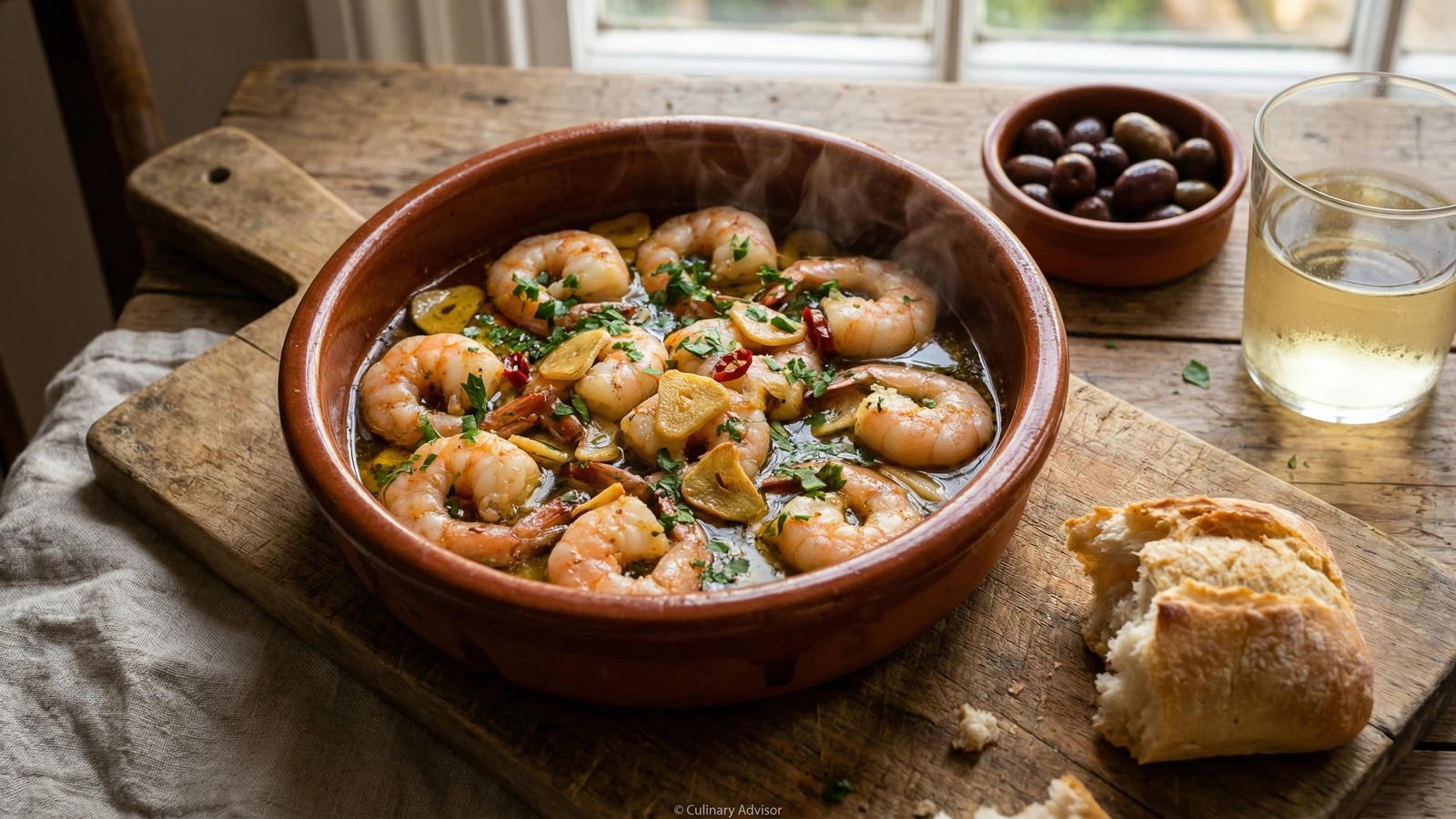
Prawns swimming in hot azeite and enough garlic to ward off vampires. This is tasca cooking at its finest: simple, bold, meant to be shared with bread and wine and people you want to stay longer.
There's a moment in every tasca when the gambas arrive. You hear them before you see them: that sizzle, that pop of oil, that garlic hitting your nose from across the room. The terracotta dish lands on the table still bubbling, and everyone reaches for bread at once.
This is the dish that taught me what petiscos are supposed to be. Not fussy appetizers. Not delicate little bites. Real food, shared food, the kind of cooking that makes people lean in and fight for the last prawn and mop up every drop of that garlicky oil with torn pieces of bread.
Avó Leonor didn't make gambas often. She was from the interior, from Alentejo, where the sea felt far away. But when she did, she was generous with the garlic. "Se não cheira a alho, não presta," she'd say. If it doesn't smell like garlic, it's no good. She'd add a splash of white wine at the end, let it hiss and steam, and bring the whole dish to the table still screaming.
The secret isn't complicated. Fresh prawns. Good azeite. More garlic than feels reasonable. A little heat from malagueta or piri-piri. And the confidence to serve it while it's still alive with heat. This isn't a dish that waits. The bread is already torn. The wine is already poured. Eat.
Gambas ao alho has roots in the coastal tascas of Lisbon and Setúbal, where fresh prawns from the Atlantic met the Portuguese love of garlic and olive oil. The dish shares DNA with Spanish gambas al ajillo but distinguishes itself through the use of piri-piri or malagueta pepper, a legacy of Portugal's spice trade with Africa. It became a petisco staple in the 20th century as tasca culture spread.
The technique, the tradition, and the story behind every dish.
Discover Culinary AdvisorIngredients
large prawns (gambas)
Quantity
500g
shell-on or peeled
extra virgin olive oil (azeite)
Quantity
1/2 cup
garlic cloves
Quantity
8
thinly sliced
dried malagueta or piri-piri pepper
Quantity
1 small
crumbled
dry white wine
Quantity
1/4 cup
fresh flat-leaf parsley (salsa)
Quantity
1 tablespoon
chopped
flaky sea salt
Quantity
to taste
crusty bread
Quantity
for serving
| Ingredient | Quantity |
|---|---|
| large prawns (gambas)shell-on or peeled | 500g |
| extra virgin olive oil (azeite) | 1/2 cup |
| garlic clovesthinly sliced | 8 |
| dried malagueta or piri-piri peppercrumbled | 1 small |
| dry white wine | 1/4 cup |
| fresh flat-leaf parsley (salsa)chopped | 1 tablespoon |
| flaky sea salt | to taste |
| crusty bread | for serving |
Equipment Needed
- •Small terracotta dish or 8-inch cast iron skillet
- •Wooden board or trivet for serving
Instructions
- 1
Prepare the prawns
Pat the prawns completely dry with paper towels. This matters. Wet prawns will steam instead of sizzle, and you want that sizzle. If using shell-on prawns, split them down the back with scissors and devein, leaving the shells attached. Season lightly with salt.
Shell-on prawns give more flavor to the oil. Peeled prawns are easier to eat. Both are correct. At my Mesa da Avó dinners, I serve shell-on and let people get their hands dirty. - 2
Heat the oil and garlic
Place a terracotta dish or small heavy skillet over medium heat. Add the olive oil and let it warm for a minute. Add the sliced garlic and the crumbled malagueta. Cook, stirring, until the garlic turns pale gold and fragrant, about 2 minutes. Watch it carefully. The line between golden and burnt is thin, and burnt garlic will ruin everything.
- 3
Cook the prawns
Increase heat to high. Add the prawns in a single layer and let them sizzle without moving for 1 minute. The oil should be hot enough to make them sing when they hit the pan. Flip each prawn and cook another minute until pink and curled. Don't overcook. The moment they curl and turn pink, they're done.
Overcook the prawns and they turn rubbery. They continue cooking in the hot oil after you stop, so pull them just before you think they're ready. - 4
Finish with wine
Pour the white wine into the pan. It will hiss and steam dramatically. Let it bubble for 30 seconds, shaking the pan to combine. Remove from heat immediately.
- 5
Serve bubbling hot
Scatter the parsley over the prawns. Bring the dish to the table immediately, while the oil is still bubbling. Place it on a wooden board or trivet. Serve with torn crusty bread for mopping up every last drop of that garlicky oil. This dish waits for no one. The bread should already be on the table.
Chef Tips
- •The oil should be hot but not smoking when the garlic goes in. If the garlic browns too fast, start over. Bitter burnt garlic cannot be saved.
- •Use the best olive oil you have. You're going to taste it directly, soaked into bread. This is not the place for cheap oil.
- •If you can't find malagueta or piri-piri, use a pinch of crushed red pepper flakes. Not the same, but it works. What doesn't work is leaving the heat out entirely.
- •A traditional terracotta dish holds heat and keeps the gambas sizzling at the table. If you don't have one, a small cast iron skillet works. Avoid thin pans that cool too fast.
Advance Preparation
- •Slice the garlic and prep the prawns up to 2 hours ahead. Keep refrigerated.
- •This dish cannot be made ahead. It must be cooked and served immediately. The magic is in the sizzle.
Frequently Asked Questions
Nutrition Information
1 serving (about 160g)
Where cooking meets culture.
Culinary mentorship, cultural storytelling, and the editorial depth that makes cooking meaningful.
Explore Culinary Advisor