Culinary Advisor
A cooking platform built around craft, culture, and the stories behind what we eat.
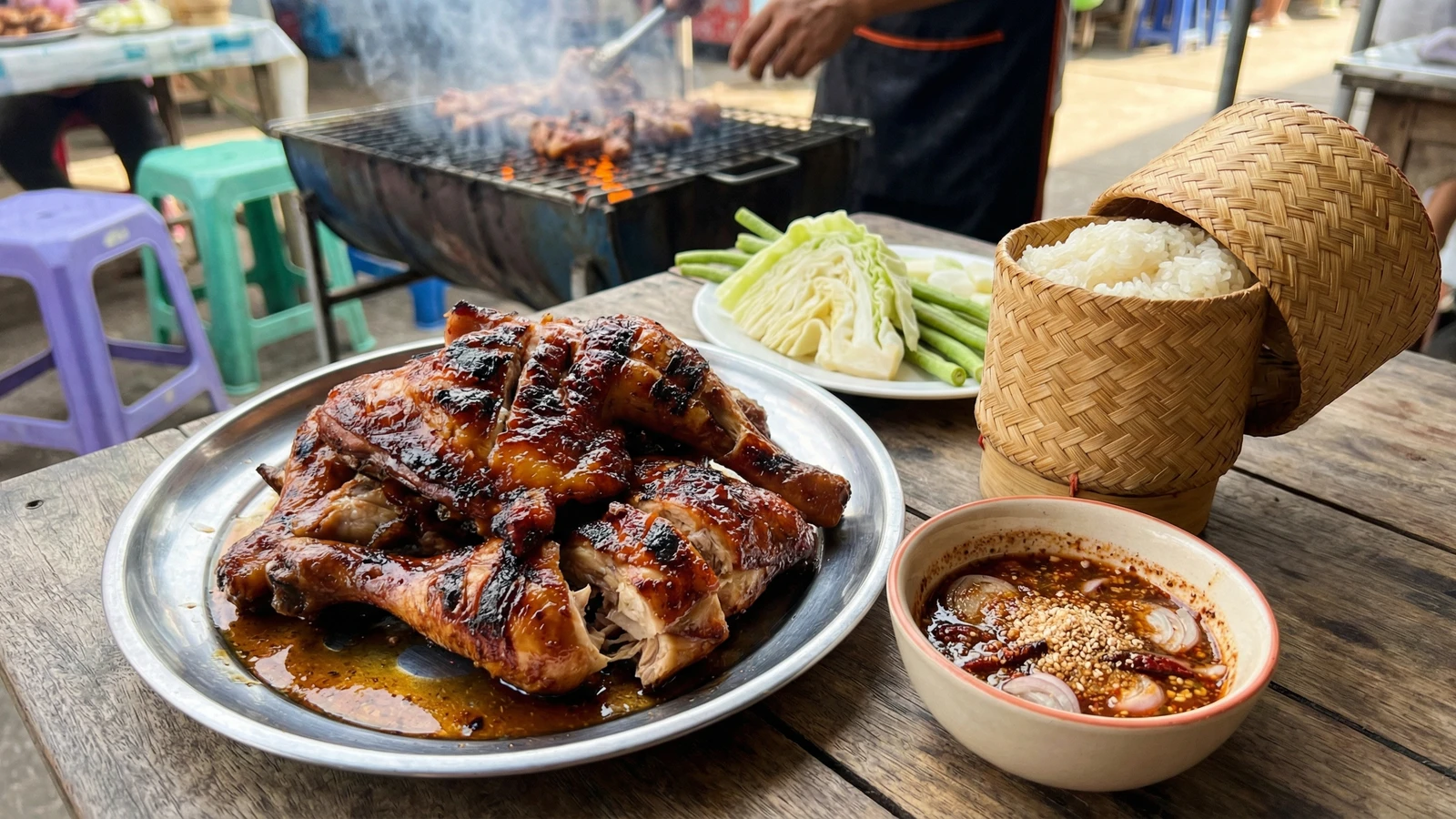
Isan Grilled Chicken (Gai Yang)
Created by
The Isan grill paste is four ingredients: garlic, cilantro root, white pepper, nam pla. That's the formula for every grilled meat on the Isan highway. Charcoal is the only heat source. Jaew is not optional. Sticky rice or nothing.
Every highway rest stop in Isan runs on the same formula. Four ingredients. Garlic. Cilantro root. White pepper. Fish sauce. That's the Isan grill paste. Simpler than a Central Thai kreung tam, but just as principled. You pound those four together, rub them into chicken, and let time and fire do the rest.
Ajarn always said the kreung tam is the foundation of Thai cooking. Gai yang proves that the principle scales down. You don't need nine ingredients to build depth. You need the right four, pounded properly, applied with intention. The garlic provides pungency. The cilantro root (rak pak chi) gives an earthy, celery-like base note that cilantro leaves can't replicate. White pepper delivers heat that's warm and round, not sharp like chili. And fish sauce does what it always does: salinity plus umami from protein fermentation. That's the law.
Here's what separates gai yang from every other grilled chicken on the planet: charcoal. Not gas. Not an oven broiler. Charcoal. The smoke from hardwood charcoal doesn't just add flavor, it transforms the marinade. The sugars in the fish sauce and the oils from the cilantro root caramelize and char in ways that only direct radiant heat from coals can achieve. Gas grills burn clean. That's the problem. You want dirty heat. You want smoke clinging to skin. Every gai yang vendor on Highway 2 from Saraburi to Khon Kaen knows this without thinking about it. The grill is chest-high, the coals are white-hot, and the chickens are butterflied flat so every surface gets equal exposure.
The chicken arrives at the table with jaew (แจ่ว), the roasted chili dipping sauce that accompanies every grilled dish in Isan. Jaew is structural. It's not a condiment you can skip. It provides the sour (lime juice, tamarind), the salt (fish sauce), the heat (roasted dried chilies), and the toasty depth (khao khua, toasted rice powder). Without jaew, gai yang is incomplete. With it, the four pillars are fully expressed across the plate: the chicken carries the salt and the aromatics, the jaew carries the sour, the sweet, and the fire. Sticky rice ties everything together. That's the Isan table. That's the system.
Gai yang is believed to have originated in Laos and migrated into Thailand's Isan region, where it became the defining roadside food of the northeast. The dish rose to national prominence with the expansion of Thailand's highway system in the 1960s and 70s, as Isan vendors set up charcoal grills at rest stops along routes connecting Bangkok to the northeast plateau. The Isan grilling tradition uses a distinctive marinade base of garlic, cilantro root, white pepper, and fish sauce rather than the more complex curry pastes of Central Thai cuisine, reflecting the Isan preference for direct, unadorned flavors built from fermentation and fire.
The technique, the tradition, and the story behind every dish.
Discover Culinary AdvisorIngredients
whole chicken
Quantity
1 (about 1.5 kg)
butterflied, backbone removed
garlic
Quantity
1 head (about 10 cloves)
peeled
cilantro roots (rak pak chi)
Quantity
5
scraped clean
white peppercorns (prik thai khao)
Quantity
1 tablespoon
fish sauce (nam pla)
Quantity
3 tablespoons
palm sugar (nam tan pip)
Quantity
1 tablespoon
oyster sauce
Quantity
1 tablespoon
hardwood lump charcoal
Quantity
as needed
dried Thai chilies (prik haeng)
Quantity
5
dry-roasted until fragrant
fish sauce (nam pla)
Quantity
2 tablespoons
lime juice (nam manao)
Quantity
2 tablespoons (about 2 limes)
palm sugar (nam tan pip)
Quantity
1 teaspoon
toasted rice powder (khao khua)
Quantity
1 tablespoon
shallots
Quantity
2
sliced thin
cilantro leaves
Quantity
1 tablespoon
chopped
green onion
Quantity
1
sliced thin
sticky rice (khao niew)
Quantity
for serving
raw cabbage wedges
Quantity
for serving
raw long beans
Quantity
for serving
| Ingredient | Quantity |
|---|---|
| whole chickenbutterflied, backbone removed | 1 (about 1.5 kg) |
| garlicpeeled | 1 head (about 10 cloves) |
| cilantro roots (rak pak chi)scraped clean | 5 |
| white peppercorns (prik thai khao) | 1 tablespoon |
| fish sauce (nam pla) | 3 tablespoons |
| palm sugar (nam tan pip) | 1 tablespoon |
| oyster sauce | 1 tablespoon |
| hardwood lump charcoal | as needed |
| dried Thai chilies (prik haeng)dry-roasted until fragrant | 5 |
| fish sauce (nam pla) | 2 tablespoons |
| lime juice (nam manao) | 2 tablespoons (about 2 limes) |
| palm sugar (nam tan pip) | 1 teaspoon |
| toasted rice powder (khao khua) | 1 tablespoon |
| shallotssliced thin | 2 |
| cilantro leaveschopped | 1 tablespoon |
| green onionsliced thin | 1 |
| sticky rice (khao niew) | for serving |
| raw cabbage wedges | for serving |
| raw long beans | for serving |
Equipment Needed
- •Heavy granite mortar and pestle (krok hin)
- •Charcoal grill (not gas)
- •Heavy kitchen shears for spatchcocking
- •Kratip (sticky rice basket) for serving
Instructions
- 1
Pound the Isan grill paste
In your granite mortar (krok hin), start with the white peppercorns. Pound them to a coarse powder. Add the garlic cloves and cilantro roots. Pound until you have a rough, wet paste. Not smooth. You want texture. The cilantro roots should be broken down but still fibrous, releasing that earthy green aroma that smells like celery and parsley had a more interesting cousin. This is the Isan grill paste: four ingredients, centuries of roadside cooking encoded in a single preparation.
Cilantro roots are non-negotiable. Cilantro stems are not the same thing. The roots have a deep, earthy pungency that the stems and leaves don't carry. Asian grocers sell cilantro with roots attached. Buy those. If you truly cannot find them, use the bottom two inches of cilantro stems with a pinch of coriander seed, but know you're compromising. - 2
Build the marinade
Add the fish sauce, palm sugar, and oyster sauce to the pounded paste. Stir with the pestle until the sugar dissolves and everything combines. Taste it. It should be aggressively seasoned: salty, peppery, with that deep garlic-cilantro root funk. Remember, this marinade has to penetrate a whole chicken. Timid seasoning gives you timid gai yang.
- 3
Marinate the chicken
Lay the butterflied chicken skin-side down on a tray. Score the thickest parts of the thighs and breasts with deep cuts, almost to the bone. Rub the marinade everywhere. Into the cuts. Under the skin. Into every fold and crevice. Flip it over and do the skin side too. Cover and refrigerate for at least four hours. Overnight is better. The fish sauce needs time to work its way into the protein. This isn't a quick brine. It's a slow transformation.
Butterflying the chicken (removing the backbone and pressing flat) is essential. It creates a uniform thickness so the breast and thigh cook at the same rate over the coals. Every gai yang vendor does this. If you've never spatchcocked a chicken, use heavy kitchen shears to cut along both sides of the backbone, then press the bird flat with your palms until the breastbone cracks. - 4
Light the charcoal
Build a two-zone charcoal fire: hot coals banked on one side, empty on the other. Use hardwood lump charcoal, not briquettes. Briquettes contain binders and fillers that produce acrid smoke. Lump charcoal burns clean and hot with the right smoke flavor. Wait until the coals are covered in white ash and glowing orange. No black spots. No flames. If you see flames, you're not ready. Flames char the skin before the meat cooks. Radiant heat from white coals is what you want.
Charcoal is the only acceptable heat source. Gas grills produce clean, moisture-heavy heat that gives you roasted chicken, not gai yang. The difference is the smoke. Charcoal smoke contains volatile compounds that interact with the fat dripping off the skin, creating the specific flavor profile that defines Isan grilling. This isn't snobbery. It's chemistry. - 5
Grill the chicken
Place the chicken skin-side up over the hot zone first. You want to sear the bone side for about 10 minutes until you see grill marks and the meat starts to firm. Then flip it skin-side down over the cooler zone. This is where patience matters. The skin needs to render slowly, crisping without burning. Move the chicken between zones as needed. Total grilling time is 35 to 45 minutes depending on the size of the bird. The skin should be deep mahogany brown, almost lacquered. The juices should run clear when you pierce the thickest part of the thigh. If there's pink, keep going.
- 6
Rest the chicken
Pull the chicken off the grill and let it rest on a cutting board for 10 minutes. The juices redistribute. The carryover heat finishes the last degree of cooking. Cut it into pieces or hack it with a cleaver the way the vendors do: straight through the bone into rough, uneven chunks. Nobody in Isan is carving gai yang with surgical precision. It's road food. Hack and eat.
- 7
Make the jaew
While the chicken grills, make the jaew. Dry-roast the dried chilies in a pan over medium heat until they darken slightly and smell smoky. Crumble them into a bowl. Add the fish sauce, lime juice, and palm sugar. Stir to dissolve the sugar. Add the toasted rice powder (khao khua), sliced shallots, cilantro, and green onion. Stir once. Taste. It should be salty, sour, spicy, with that toasty crunch of the rice powder. The jaew is the condiment that completes every grilled dish on the Isan table. Don't skip it.
Khao khua (toasted rice powder) is the signature of Isan condiments and salads. Toast raw sticky rice in a dry pan until golden brown and fragrant, then grind it in a mortar. The powder adds smoky nuttiness and a subtle crunch. It appears in jaew, larb, nam tok. It's as essential to Isan food as fish sauce is to Thai food in general. - 8
Serve with sticky rice
Pile the hacked chicken on a plate. Jaew in a small bowl alongside. Sticky rice in a kratip basket. Raw cabbage and long beans on the side for crunch and freshness between bites. You tear off a pinch of sticky rice, grab a piece of chicken, dip into the jaew. That's a bite. The marinade carried the salt and aromatics. The jaew brings the sour, the heat, the khao khua crunch. The sticky rice ties it together. The system is complete.
Chef Tips
- •The Isan grill paste (garlic, cilantro root, white pepper, fish sauce) is a governing formula, not just a gai yang marinade. This same paste is used for kor moo yang (grilled pork neck), grilled fish, and virtually every protein that goes over charcoal in the northeast. Learn this paste and you can grill anything the Isan way. Principles, not recipes.
- •Cilantro roots (rak pak chi) are the ingredient most people outside Thailand don't know about and can't easily find. They are critical. The root has a concentrated, earthy depth that's nothing like the leaf. In Bangkok, every bunch of cilantro comes with roots attached. If your grocer sells cilantro with the roots trimmed, find a better grocer. Asian markets are your best bet.
- •White pepper, not black pepper. White peppercorns (prik thai khao) deliver a sharper, cleaner heat with less of the fruity complexity of black pepper. In the Isan grill paste, white pepper works with the garlic and cilantro root to create a warm, pungent base. Black pepper would muddy the flavor. This distinction matters.
- •The charcoal question is serious. I get asked about gas grills at every workshop. My answer is always the same: if you use gas, you'll make good grilled chicken. But you won't make gai yang. The volatile compounds in charcoal smoke interact with the rendering chicken fat to create specific flavor molecules that gas cannot produce. If you only have gas, get as close as you can and accept the difference. But if you can get charcoal, get charcoal.
- •Jaew is not a dipping sauce in the way Westerners think of dipping sauces. It's structural. It completes the flavor profile of the grilled meat. Without jaew, you're eating a marinated chicken. With jaew, you're eating gai yang. The distinction is the entire Isan grilling tradition.
Advance Preparation
- •The marinade paste can be pounded and the chicken marinated up to 24 hours ahead. Longer marination means deeper penetration of the fish sauce and aromatics. Overnight is ideal.
- •Khao khua (toasted rice powder) can be made in bulk and stored in an airtight jar for weeks. Toast a cup of sticky rice, grind it, keep it on hand. You'll use it for jaew, larb, nam tok, and half the Isan repertoire.
- •Jaew should be made fresh. The lime juice and herbs lose brightness quickly. Mix it while the chicken grills so it's ready when the bird comes off the fire.
- •Sticky rice must be soaked for at least 4 hours (overnight is best) before steaming. Don't skip the soak. Unsoaked sticky rice will be hard and unevenly cooked. Steam it in a traditional bamboo steamer (huad) over a tall pot (mo nueng) if you have one.
Frequently Asked Questions
Nutrition Information
1 serving (about 450g)
Where cooking meets culture.
Culinary mentorship, cultural storytelling, and the editorial depth that makes cooking meaningful.
Explore Culinary Advisor