Culinary Advisor
A cooking platform built around craft, culture, and the stories behind what we eat.
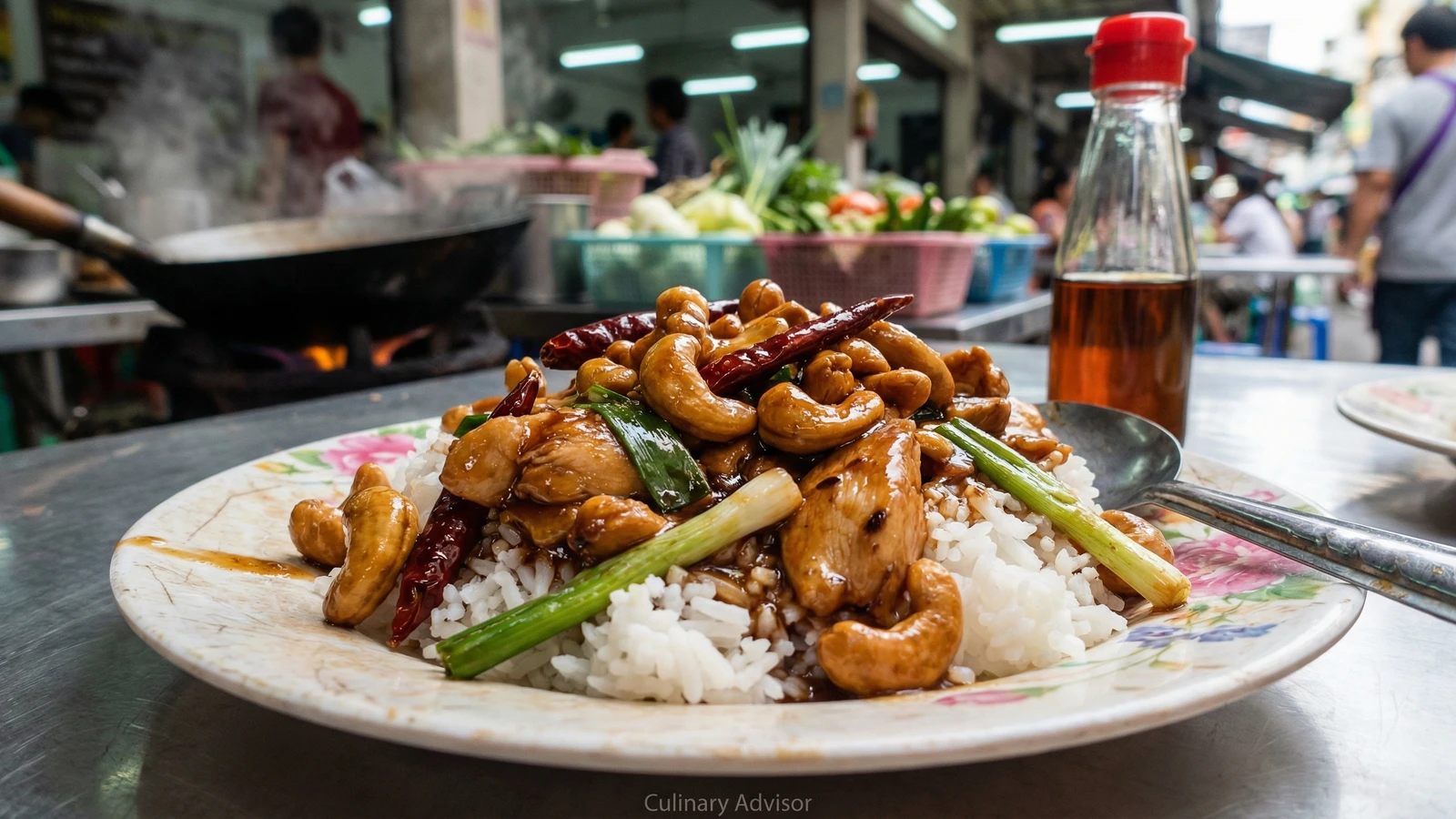
Cashew Chicken Stir-Fry (Gai Pad Med Mamuang)
Created by
Thai-Chinese wok tradition at its sharpest: roasted chili jam builds the backbone, fish sauce holds the salt, dried chilies bring slow heat, and cashews go in last so they stay crunchy. The wok does the rest.
This dish is proof that Thai food absorbs from other traditions without abandoning its own principles. Gai pad med mamuang is Thai-Chinese wok cooking. The technique is Chinese: high heat, fast toss, protein seared before sauce enters. But the flavor architecture? That's Thai. Fish sauce for salt. Nam prik pao (roasted chili jam) for depth and sweetness. Dried chilies for heat that builds slowly instead of hitting all at once. The four pillars are all here, just wearing a different coat.
Ajarn always said that Thai-Chinese food is not Chinese food cooked in Thailand. It's food that passed through the Thai flavor system and came out transformed. A Chinese cashew chicken uses soy sauce, Shaoxing wine, and Sichuan peppercorns. The Thai version strips all that out and rebuilds with nam pla, nam prik pao, and oyster sauce. Same wok, completely different soul.
The nam prik pao is the key to this dish. It's not just a condiment you spoon onto tom yam. It's a concentrated paste of roasted dried chilies, shallots, garlic, shrimp paste, and palm sugar. When it hits a screaming-hot wok, it blooms. The sugars caramelize, the oils release, and the sauce builds itself around it. If your gai pad med mamuang tastes flat, your nam prik pao is the problem, either low quality or not enough of it.
Two rules I drill into every Fai Thai workshop when we make this dish. One: the cashews go in at the very end. They're already roasted. If you cook them in the wok for more than ten seconds, they go from crunchy to chewy. Two: don't crowd the wok. If you dump a mountain of chicken into a lukewarm wok, you get steamed chicken in sauce. You need char. You need contact with the metal. You need wok hei. Cook in batches if you have to. The breath of the wok is not optional.
Gai pad med mamuang emerged from Thailand's Thai-Chinese (Sino-Thai) culinary tradition, which developed over centuries as Teochew and Hokkien immigrants adapted Chinese wok techniques to Thai ingredients and flavor principles. Cashew nuts (med mamuang himaphan) are themselves a relatively modern addition to Thai cooking, introduced via Portuguese traders in the Ayutthaya period and cultivated extensively in southern Thailand. The dish as we know it today became a restaurant and street food staple in Bangkok in the latter half of the 20th century, distinctly separate from its Chinese cousin kung pao chicken thanks to its reliance on nam prik pao and fish sauce rather than soy sauce and Sichuan peppercorns.
The technique, the tradition, and the story behind every dish.
Discover Culinary AdvisorIngredients
chicken thigh (boneless, skinless)
Quantity
300g
cut into bite-sized pieces
roasted cashew nuts (med mamuang himaphan)
Quantity
3/4 cup
dried red chilies (prik haeng)
Quantity
6
cut into 1-inch pieces, seeds shaken out
garlic
Quantity
4 cloves
roughly chopped
onion
Quantity
1 small
cut into wedges
green bell pepper
Quantity
1 small
cut into bite-sized pieces
spring onions (ton hom)
Quantity
2
cut into 1-inch lengths
roasted chili jam (nam prik pao)
Quantity
2 tablespoons
fish sauce (nam pla)
Quantity
1 tablespoon
oyster sauce
Quantity
1 tablespoon
palm sugar (nam tan pip)
Quantity
1 teaspoon
dark soy sauce (si ew dam)
Quantity
1/2 teaspoon
water
Quantity
1 tablespoon
vegetable oil
Quantity
2 tablespoons
steamed jasmine rice
Quantity
for serving
| Ingredient | Quantity |
|---|---|
| chicken thigh (boneless, skinless)cut into bite-sized pieces | 300g |
| roasted cashew nuts (med mamuang himaphan) | 3/4 cup |
| dried red chilies (prik haeng)cut into 1-inch pieces, seeds shaken out | 6 |
| garlicroughly chopped | 4 cloves |
| onioncut into wedges | 1 small |
| green bell peppercut into bite-sized pieces | 1 small |
| spring onions (ton hom)cut into 1-inch lengths | 2 |
| roasted chili jam (nam prik pao) | 2 tablespoons |
| fish sauce (nam pla) | 1 tablespoon |
| oyster sauce | 1 tablespoon |
| palm sugar (nam tan pip) | 1 teaspoon |
| dark soy sauce (si ew dam) | 1/2 teaspoon |
| water | 1 tablespoon |
| vegetable oil | 2 tablespoons |
| steamed jasmine rice | for serving |
Equipment Needed
- •Wok (carbon steel preferred, at least 14 inches)
- •Wok spatula
Instructions
- 1
Mix the sauce
Combine the nam prik pao, fish sauce, oyster sauce, palm sugar, dark soy sauce, and water in a small bowl. Stir until the sugar dissolves. This is your sauce, built before the wok gets hot. Once the fire starts, you won't have time to measure anything. Every second counts at wok temperature. Have this ready, have your garlic chopped, your vegetables cut, your dried chilies prepped. Mise en place isn't a French concept. Every som tam vendor in Khlong Toei does the same thing. She just doesn't call it that.
Taste the sauce before it goes in the wok. It should be savory, slightly sweet, with a roasted chili backbone. If it tastes flat, add another half tablespoon of nam prik pao. The chili jam is the engine of this dish. - 2
Heat the wok
Get your wok screaming hot over the highest flame your stove can produce. Add the oil. It should shimmer and start to smoke within seconds. If it sits there quietly, your wok isn't hot enough. Walk away and wait. Wok hei only happens at temperatures that feel dangerous. That's the point.
- 3
Bloom garlic and chilies
Drop the garlic and dried chilies into the hot oil. Stir immediately. The garlic should sizzle on contact and turn golden at the edges within five seconds. The dried chilies will darken slightly and release a smoky, toasted aroma that hits the back of your throat. If the garlic blackens, your oil was too hot. Toss it and start over. Burnt garlic is bitter and it poisons the whole dish. This is a three-to-five second step. Garlic always hits the oil first. Always.
Dried chilies (prik haeng) give slow, smoky heat, not the sharp punch of fresh bird's eye chilies. That's intentional. This dish is warm, not aggressive. The dried chili is toasted in oil to release its capsaicin gradually. - 4
Sear the chicken
Add the chicken pieces in a single layer. Do not touch them for thirty seconds. Let the wok do the work. The chicken needs contact with the hot metal to get color, to get char, to get wok hei. After thirty seconds, flip and toss. Cook for another minute until the pieces are golden on the outside and just cooked through. If you're cooking for four, do this in two batches. Crowding the wok drops the temperature and you get boiled chicken. Nobody wants boiled chicken.
- 5
Add the vegetables
Toss in the onion wedges and bell pepper. Stir-fry for forty-five seconds. The onion should soften at the edges but keep its structure. The bell pepper should be bright and barely tender. You want crunch. Overcooked vegetables are not Thai stir-fry. They're sad.
- 6
Pour in the sauce
Push everything to the side of the wok and pour the sauce mixture into the center, directly onto the hot metal. It will bubble and caramelize instantly. That's the nam prik pao sugars hitting the heat. Toss everything together so every piece of chicken and every vegetable is coated. The sauce should glaze, not pool. If there's liquid sitting at the bottom, your heat was too low. Thirty seconds of tossing and it's done.
Pouring the sauce onto the bare wok surface instead of over the food lets the sugars in the nam prik pao caramelize directly. That's where the depth comes from. Don't skip this step. - 7
Finish with cashews and spring onion
Kill the heat. Add the roasted cashews and spring onion lengths. Toss twice, no more. The cashews are already roasted. They need ten seconds in the wok to warm through and absorb a little sauce. Any longer and they go from crunchy to chewy to ruined. The spring onions wilt from residual heat alone. Plate immediately over jasmine rice. Don't let it sit. A stir-fry that rests in the wok is a stir-fry that overcooks.
Chef Tips
- •The nam prik pao (roasted chili jam) is the backbone of this dish. It's not a minor seasoning. It's the primary flavor builder: roasted dried chilies, shallots, garlic, shrimp paste, palm sugar, all cooked down into a concentrated paste. Buy a quality Thai brand (Maesri or Pantai are solid) or make your own. If it tastes like sugar with food coloring, find a different jar. The good stuff smells like smoke and shrimp and has visible chili seeds.
- •Cashews must be roasted before they go into the wok. Buy them pre-roasted, or dry-roast raw cashews in a pan over medium heat, shaking constantly, until they're golden and fragrant. About three to four minutes. Watch them like a hawk. They go from golden to burnt in the time it takes to check your phone. And they go in at the end. The very end. Treat them like holy basil: a last-second addition that should stay crunchy on the plate.
- •This dish uses dried chilies (prik haeng), not fresh ones. The difference matters. Dried chilies give a warm, smoky, slow-building heat. Fresh bird's eye chilies give a sharp, immediate burn. Gai pad med mamuang is supposed to be warm, not fiery. If you want more kick, add a sliced fresh chili at the table. Don't mess with the balance in the wok.
- •Chicken thigh is better than breast here. Thigh has more fat, more flavor, and it doesn't dry out in a screaming-hot wok the way breast does. Cut it into consistent bite-sized pieces so everything cooks at the same rate. Inconsistent cuts mean some pieces are charred while others are raw in the center.
Advance Preparation
- •Cashews can be dry-roasted up to a week ahead and stored in an airtight container at room temperature. They'll stay crunchy.
- •The sauce can be mixed in a bowl up to a few hours ahead and kept at room temperature. Stir before using.
- •Cut the chicken and vegetables up to a few hours ahead and keep them refrigerated, covered. Bring the chicken to room temperature for ten minutes before cooking so it doesn't drop the wok temperature.
Frequently Asked Questions
Nutrition Information
1 serving (about 500g)
Where cooking meets culture.
Culinary mentorship, cultural storytelling, and the editorial depth that makes cooking meaningful.
Explore Culinary Advisor