Culinary Advisor
A cooking platform built around craft, culture, and the stories behind what we eat.
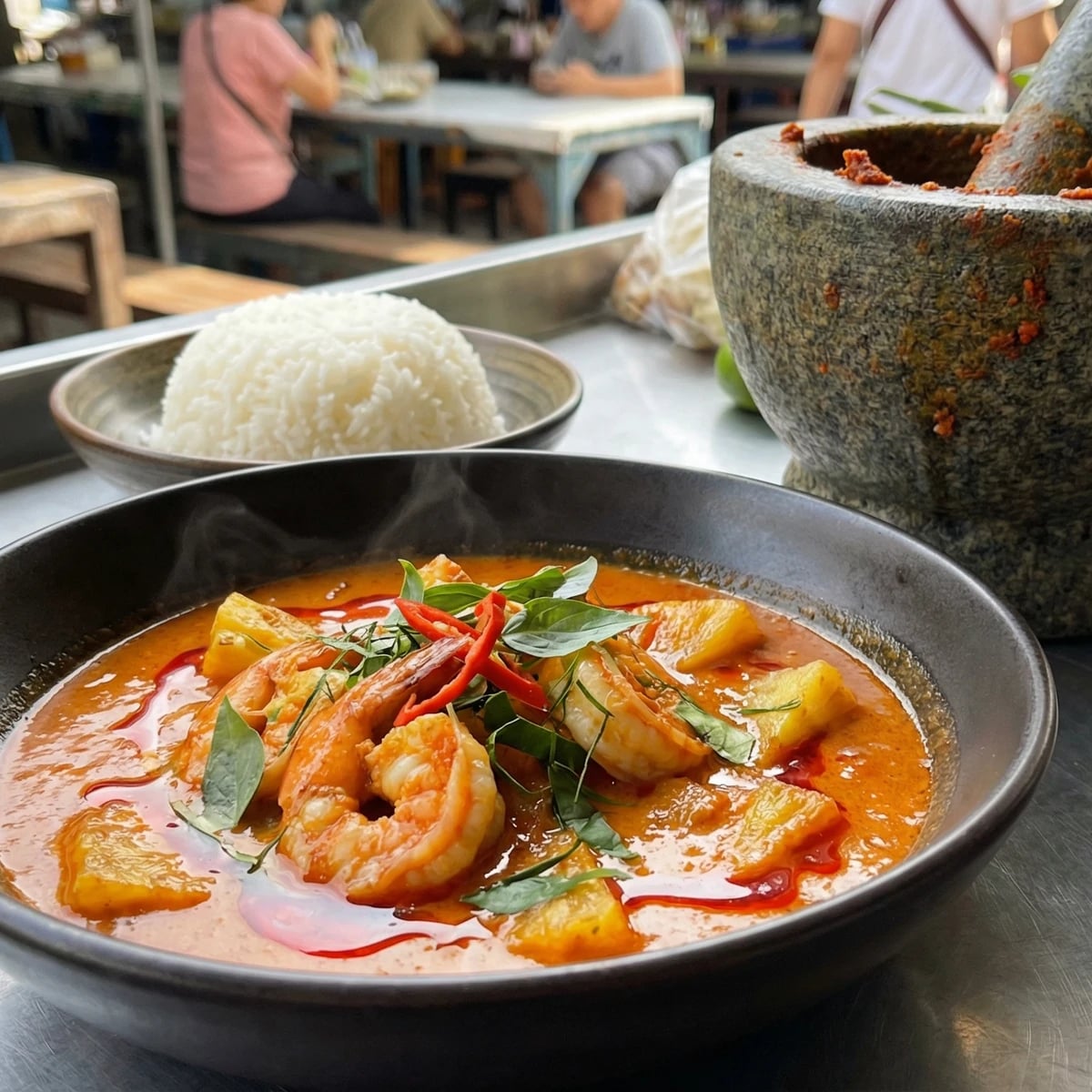
Pineapple Shrimp Curry (Gaeng Kua Sapparot)
Created by Chef Fai
The kua technique cracks coconut cream until the fat separates, then fries the kreung tam in pure coconut oil. Pineapple replaces lime as the sour pillar. This is the four-pillar system proving that the principle is tropical fruit acid, not just citrus.
Gaeng kua is the curry that teaches you the most important lesson about the four pillars: the principle is tropical fruit acid for sour, not lime specifically. Lime is the most common source. But pineapple, tamarind, green mango, they all serve the same structural role. Ajarn always said: understand the why, and the how takes care of itself. The "why" of sourness in Thai food is acid from tropical fruit. Pineapple is the acid in this curry, and it does something lime can't. It brings sweetness and fragrance along with its tartness, creating a sour note that's rounder, warmer, less sharp.
The technique here is kua, and it's different from every other curry method. You take thick coconut cream, the hua kati (หัวกะทิ), the rich head of the coconut, and you cook it over medium heat until the fat separates from the solids. The cream breaks. The oil rises. That's what "cracking" means. Then you fry your kreung tam directly in that coconut oil. The paste hits the hot fat and blooms: the dried chilies release their capsaicin, the shrimp paste caramelizes, the aromatics open up. This is not simmering paste in liquid. This is frying paste in fat. The difference in flavor is enormous.
The kreung tam for gaeng kua is built on dried red spur chilies (prik chi fa haeng), not bird's eye. These are the long, mild dried chilies that give Central Thai red curries their color without overwhelming heat. The paste includes the full foundation: garlic, shallots, lemongrass, galangal, cilantro root, kaffir lime zest, white peppercorns, kapi (shrimp paste). Every one of the nine essential ingredients Ajarn identifies is in there.
I teach this curry at Fai Thai workshops because it forces people to confront two things: first, that the mortar work is real and it takes time. Second, that sourness in Thai food is a principle, not a single ingredient. When you taste the finished curry, pineapple sweet and tart against the rich cracked coconut cream, shrimp briny and firm, the paste singing underneath, you understand the system. Fish sauce for salt. Palm sugar for sweet. Pineapple for sour. Dried chili for heat. That's the law, even when the sour isn't lime.
Ingredients
dried red spur chilies (prik chi fa haeng)
Quantity
7
seeded, soaked in warm water 15 minutes
shrimp paste (kapi)
Quantity
1 tablespoon
shallots
Quantity
4
sliced
| Ingredient | Quantity |
|---|---|
| dried red spur chilies (prik chi fa haeng)seeded, soaked in warm water 15 minutes | 7 |
| shrimp paste (kapi) | 1 tablespoon |
| shallotssliced | 4 |