Culinary Advisor
A cooking platform built around craft, culture, and the stories behind what we eat.
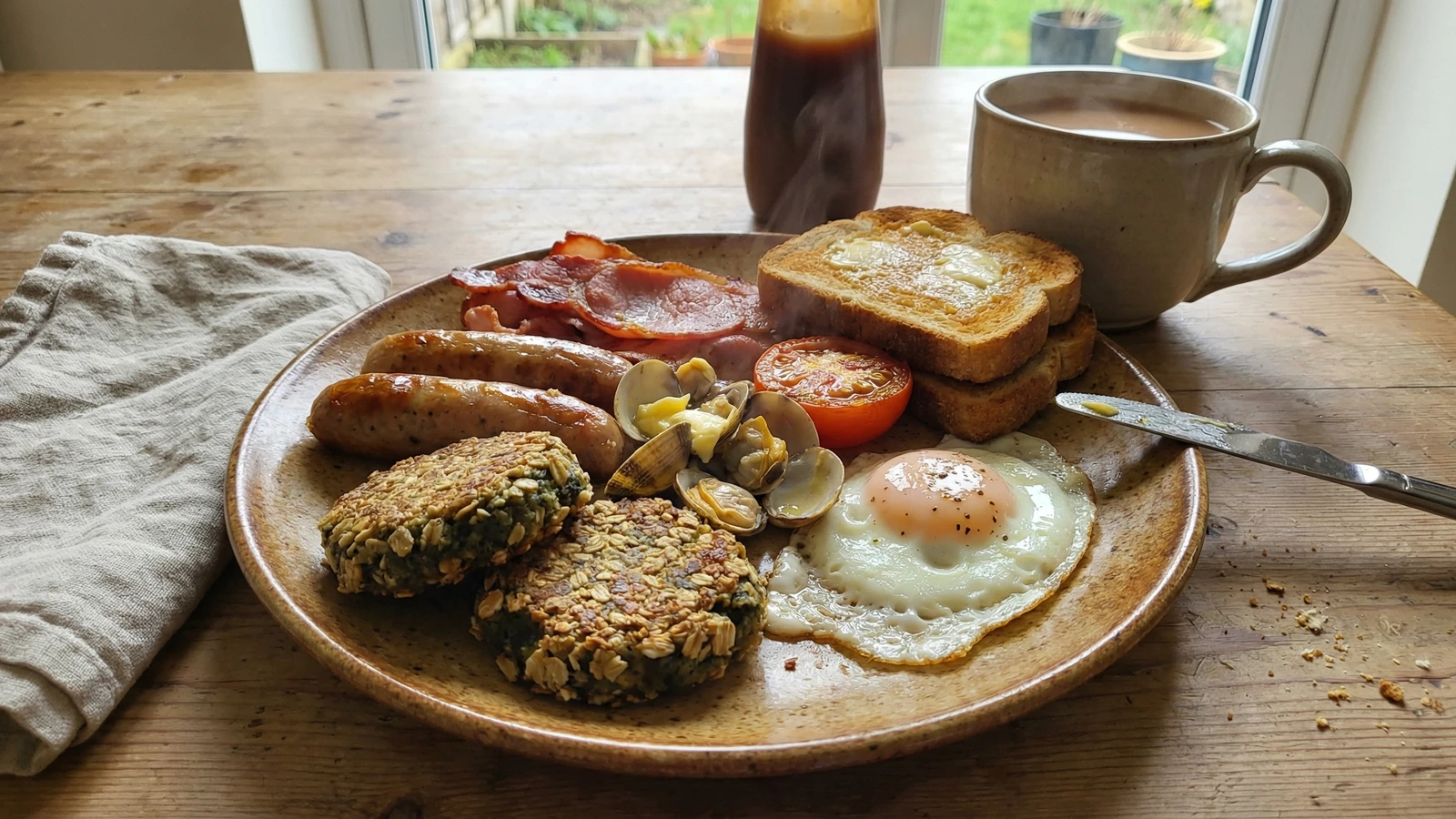
The Full Welsh with Laverbread and Cockles
Created by Chef Thomas
The Welsh morning plate, laverbread fried dark and crisp in bacon fat, cockles warmed in butter, leek sausages, and eggs with trembling yolks. Sea and land, one pan, no apology.
The first time I had laverbread it was spooned out of a small tub by a woman at a market stall somewhere on the Gower, and it tasted of everything I thought seaweed shouldn't: mineral, savoury, almost meaty, with a dark, iron tang that lingered. I spread it on toast like a fool and missed the point entirely. Laverbread wants bacon fat. It wants oatmeal to give it backbone, and a hot pan to give it a crust. Once you know that, it makes sense.
The Full Welsh is a breakfast that tastes of its geography. Cockles from the mudflats, gathered at low tide in buckets. Laverbread made from seaweed pulled off the rocks. Leek sausages because this is Wales and leeks go into everything, rightly so. It's not a variation on the Full English. It's its own plate, shaped by a coastline and a tradition that values what the land and the sea give up without complaint.
I cook this on cold mornings when the house needs warming from the inside out. One pan does most of the work. The sausages go in first, then the bacon, then the laverbread cakes in the fat left behind. The cockles get a minute in butter. The eggs go last, fried in the memory of everything that came before them. There are few better feelings than putting this plate in front of someone on a Saturday morning when the rain is hammering the kitchen window and the kettle has just boiled for the second time.
A recipe is a conversation, not a contract. If you can't find cockles, it's still a good breakfast without them. If laverbread is beyond reach, this isn't the morning for a Full Welsh, and there's no shame in that. Wait until you can get the real thing. The dish won't work with substitutes any more than a morning by the sea works without the salt in the air.
The technique, the tradition, and the story behind every dish.
Discover Culinary AdvisorIngredients
back bacon
Quantity
4 rashers
pork and leek sausages
Quantity
4
prepared laverbread
Quantity
200g
medium oatmeal
Quantity
2 tablespoons
fresh cockles
Quantity
150g
shelled
free-range eggs
Quantity
2 large
good white bread or farmhouse sourdough
Quantity
2 thick slices
unsalted butter
Quantity
knob
ripe tomato
Quantity
1
halved
fine sea salt
Quantity
to taste
black pepper
Quantity
to taste
| Ingredient | Quantity |
|---|---|
| back bacon | 4 rashers |
| pork and leek sausages | 4 |
| prepared laverbread | 200g |
| medium oatmeal | 2 tablespoons |
| fresh cocklesshelled | 150g |
| free-range eggs | 2 large |
| good white bread or farmhouse sourdough | 2 thick slices |
| unsalted butter | knob |
| ripe tomatohalved | 1 |
| fine sea salt | to taste |
| black pepper | to taste |
Equipment Needed
- •Large heavy frying pan or cast iron skillet, 12 inches if you have it
- •Fish slice or wide spatula
- •Warm plates
Instructions
- 1
Start the sausages
Put the sausages in a large, heavy frying pan over a medium heat with a slick of oil. Let them cook slowly, turning every few minutes, until the skins are tight and golden all over and the insides are cooked through. This takes fifteen minutes or so. Don't rush them. A sausage cooked too fast will split and lose its juices. You want them to tan, not to burst. Move them to a warm plate and cover loosely while you get on with the rest.
If you can find proper Welsh pork and leek sausages from a butcher, use them. The leek is the whole point, sweet and peppery against the pork. Supermarket ones will do, but a good butcher's banger is a different thing entirely. - 2
Fry the bacon and tomato
In the same pan, with the sausage fat still in it, lay the bacon rashers flat. Cook until the fat turns translucent and the edges go crisp and golden, then flip and give the other side a minute. The bacon should be cooked but not rigid. While the bacon fries, press the tomato halves cut-side down into the pan beside it, letting them soften and colour in the fat. Move everything to the warm plate.
- 3
Fry the laverbread
There should be a good slick of bacon fat left in the pan. This is what you want. Mix the laverbread with the oatmeal in a small bowl until it holds together, then shape it into two rough cakes, about the size of your palm. Lay them in the bacon fat over a medium heat and fry for three to four minutes each side until they form a dark, crisp crust. The smell will be mineral and savoury, like the coast. Handle them gently. They're fragile until the crust sets.
Laverbread on its own is soft and slippery. The oatmeal gives it structure and the bacon fat gives it flavour. If you can't get fresh laverbread, tinned is perfectly respectable. Look for it in Welsh food shops or online. - 4
Warm the cockles
Push the laverbread cakes to the cooler side of the pan. Add a small knob of butter to the hot side and let it foam. Tip in the cockles and toss them in the butter for a minute, no more. They're already cooked. You're warming them through and letting the butter round out their briny sweetness. A grind of black pepper. That's all they need. Spoon them onto the plate beside the laverbread.
- 5
Fry the eggs
Wipe the pan if it looks crowded with bits, but keep the fat. Add another small knob of butter and let it melt. Crack the eggs into the pan. The white should sizzle the moment it hits. Cook them gently, spooning the hot fat over the yolks if you like them basted, until the whites are set and the yolks are still soft and trembling. Season with a pinch of salt.
A fried egg in bacon fat and butter is not the same as a fried egg in oil. The fat carries the flavour of everything that came before it. This is the whole logic of cooking a breakfast in one pan. - 6
Toast and assemble
Toast the bread properly. Not pale. Not burnt. Golden and crisp enough to hold up to a runny yolk. Butter it while it's hot. Arrange everything on warmed plates: sausages, bacon, the laverbread cakes, cockles spooned alongside, the tomato halves, the egg on top of the toast or beside it, however you like. There's no correct arrangement. It just needs to look generous and smell like a morning worth getting up for.
Chef Tips
- •The order matters. Sausages first because they take longest and leave the best fat behind. Bacon second, which adds to the fat. Laverbread third, fried in that accumulated bacon fat, which is where all its flavour comes from. Cockles fourth, quickly, in fresh butter. Eggs last, in whatever glorious mixture remains. One pan, building flavour as you go.
- •Laverbread is sold prepared, a dark greenish-black paste, in tins or tubs from Welsh suppliers. Mix it with enough oatmeal so it holds its shape when you form it into cakes. Too much oatmeal and it tastes dry and porridgey. Too little and it falls apart in the pan. You'll know the right amount by feel after the first time.
- •Cockles from Penclawdd on the Gower are the traditional choice, sold ready-cooked and shelled. They only need warming through. If you cook them too long they turn to rubber. A minute in foaming butter, a grind of pepper, and leave them alone.
- •Warm your plates. Put them in a low oven while you cook. A Full Welsh on a cold plate loses its soul in the first two minutes. The yolk cools, the fat sets on the bacon, and the whole thing becomes an exercise in eating quickly rather than eating well.
Advance Preparation
- •The laverbread and oatmeal mixture can be shaped into cakes and refrigerated on a plate, covered, the night before. They hold their shape better when cold.
- •Sausages can be cooked the previous day and reheated in the pan with the bacon, though they are best done fresh.
Frequently Asked Questions
Nutrition Information
1 serving (about 480g)
Where cooking meets culture.
Culinary mentorship, cultural storytelling, and the editorial depth that makes cooking meaningful.
Explore Culinary Advisor