Culinary Advisor
A cooking platform built around craft, culture, and the stories behind what we eat.
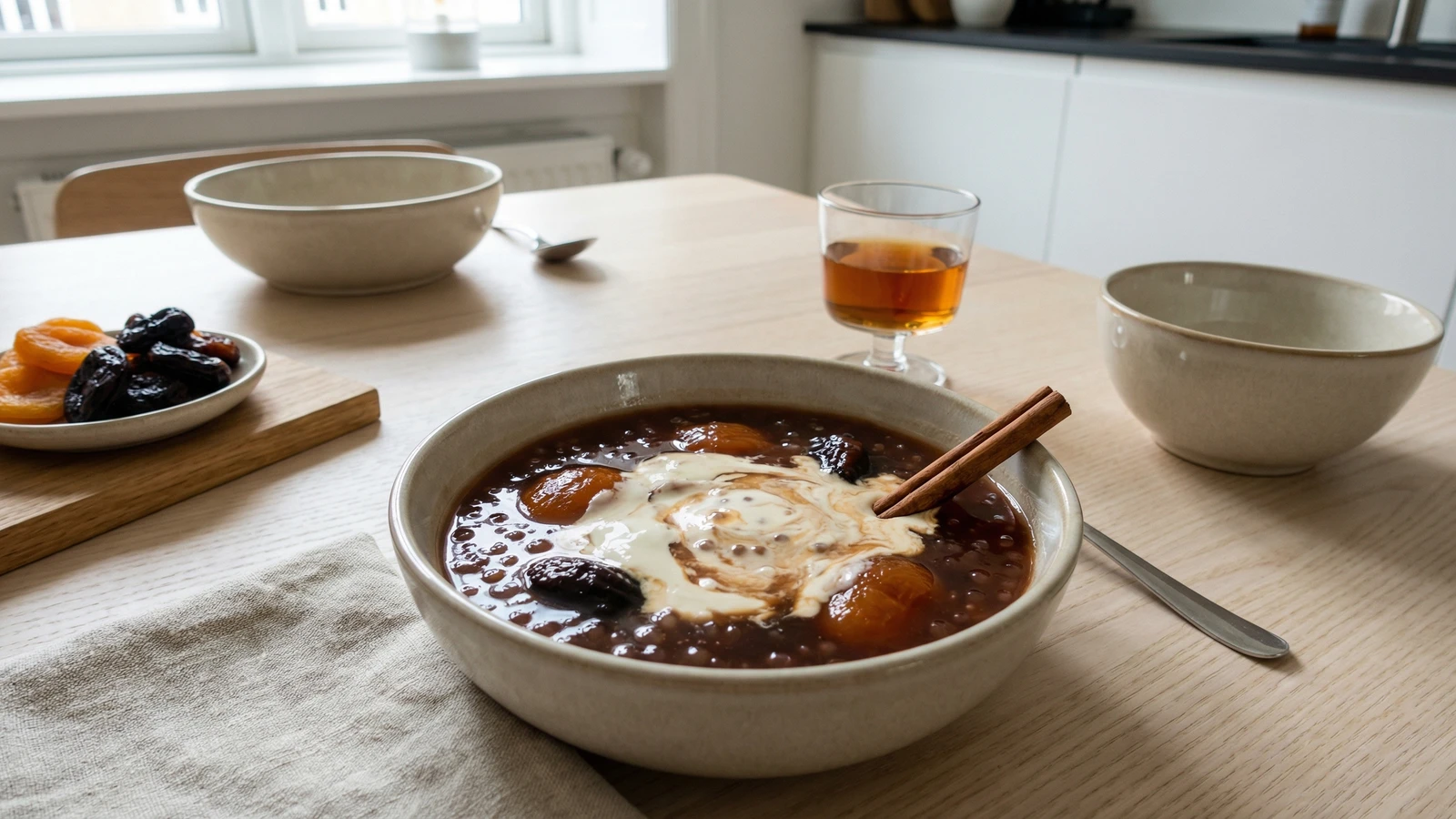
Frugtsuppe med Sagogryn
Created by Chef Freja
The old Danish sodsuppe of dried prunes, raisins, and apricots simmered with sago pearls, cinnamon, and a splash of sherry. Mormor's winter comfort in a deep bowl, with cold cream poured across the top.
There's a stretch in January and February when Danish markets go quiet. The summer berries are a distant memory, the apples from the last harvest are softening in their crates, and the nearest thing to fresh fruit is whatever the pantry has kept for you. This is when frugtsuppe comes out. It's the soup of the dried fruit drawer, of prunes and raisins and apricots that have been waiting for their moment, and their moment is now.
Frugtsuppe med sagogryn belongs to the old Danish sodsuppe tradition, the sweet soups that were once a weeknight staple in every home with a grandmother in the kitchen. My own mormor made hers in a tall enamel pot that lived on the back of the stove all afternoon, the smell of cinnamon and stewed prunes pulling everyone into the kitchen before dinner was even ready. It's a dish that carries memory. The sago pearls are the detail that makes it Danish: small translucent beads that thicken the soup into something glossy and almost pudding-like, a texture no other sweet soup has.
Pay attention to two things, and the rest takes care of itself. The sago needs to be stirred in gently and cooked until the pearls turn clear, with only a tiny white dot left in the middle. That's how you know. And the sherry goes in at the very end, off the heat, so its warmth doesn't cook away. Serve it warm if the evening calls for comfort, or cold the next day straight from the fridge, which is how half of Denmark actually loves it. Either way, pour cream over the top. Don't stir it in. That ribbon of pale white against the dark fruit is part of the dish.
Sodsuppe, the category of sweet Danish soups that includes frugtsuppe, belongs to a much older European tradition of serving thickened sweet liquids as a course in their own right, and in Danish homes it held that role well into the twentieth century. Sago itself is an imported ingredient, a starch extracted from the pith of palm trees in Southeast Asia, and it reached Danish kitchens through the Dutch and Danish East India trading routes of the 1700s. The pairing of exotic sago with the homegrown pantry of dried northern fruit is a small, quiet record of Denmark's colonial-era trade in a single bowl, and for generations of Danish children, frugtsuppe was the dish that taught them the word 'mormor' meant a warm kitchen in winter.
The technique, the tradition, and the story behind every dish.
Discover Culinary AdvisorIngredients
pitted dried prunes
Quantity
200g
dried apricots
Quantity
100g
halved
dark raisins
Quantity
75g
dried apple rings (optional)
Quantity
50g
roughly chopped
cold water
Quantity
1.5 litres
cinnamon stick
Quantity
1
lemon peel
Quantity
2 wide strips
pared with a vegetable peeler
fresh lemon juice
Quantity
1 tablespoon
caster sugar
Quantity
75g, plus more to taste
small pearl sago (sagogryn)
Quantity
60g
medium-dry sherry or port
Quantity
3 tablespoons
single cream or lightly whipped cream (optional)
Quantity
to serve
| Ingredient | Quantity |
|---|---|
| pitted dried prunes | 200g |
| dried apricotshalved | 100g |
| dark raisins | 75g |
| dried apple rings (optional)roughly chopped | 50g |
| cold water | 1.5 litres |
| cinnamon stick | 1 |
| lemon peelpared with a vegetable peeler | 2 wide strips |
| fresh lemon juice | 1 tablespoon |
| caster sugar | 75g, plus more to taste |
| small pearl sago (sagogryn) | 60g |
| medium-dry sherry or port | 3 tablespoons |
| single cream or lightly whipped cream (optional) | to serve |
Equipment Needed
- •Heavy-bottomed pot, 4 litre
- •Vegetable peeler for the lemon peel
- •Wooden spoon for stirring the sago
Instructions
- 1
Soak the dried fruit
Put the prunes, apricots, raisins, and apple rings into a large bowl and cover with the cold water. Leave them to soak for at least thirty minutes while you set everything else out. Dried fruit has gone to sleep on the shelf, and it needs water to wake up. Skip this and the fruits stay chewy and the soup thin.
If you have time, soak them for a full hour. The plumper the fruit, the richer the soup. This is the joy of waiting, and it costs you nothing. - 2
Bring the fruit to a simmer
Tip the fruit and all of its soaking water into a large, heavy pot. Add the cinnamon stick and the strips of lemon peel. Bring everything to a gentle simmer over medium heat, then lower the flame so the surface just murmurs. Cover loosely and cook for twenty-five minutes. The prunes will soften completely, the apricots will turn deep amber, and the water will take on the color of dark autumn tea.
Don't boil hard. A hard boil breaks the fruit apart into shreds. You want the pieces to hold their shape so you can see them in the bowl. - 3
Add the sugar and sago
Stir in the sugar until it dissolves. Then rain the sago pearls into the pot in a slow, steady stream, stirring as you go so they don't clump on the bottom. Sago is a starch, and starch on a hot pot base will glue itself in place if you turn your back. Keep stirring for the first minute. After that, it settles into the liquid and behaves.
- 4
Cook the sago until clear
Simmer gently for another twelve to fifteen minutes, stirring every few minutes to stop the pearls sticking. You'll know the sago is ready when each pearl has turned almost completely translucent, with only a tiny white dot left in the center, or no dot at all. The soup will thicken as the pearls cook, from watery to glossy, almost like a loose pudding. That thickening is the sago doing its work, and it's what gives frugtsuppe its character.
- 5
Finish with lemon and sherry
Take the pot off the heat. Fish out the cinnamon stick and the lemon peel strips, which have given everything they have. Stir in the lemon juice and the sherry. Taste. The soup should be sweet but not cloying, with a bright edge from the lemon and a warm depth from the sherry and spice. Add a little more sugar if it needs it, or another squeeze of lemon if it feels too heavy. You'll know when it's right.
The sherry goes in at the end, off the heat, so the alcohol doesn't cook away. That small lift of warmth is what separates a grown-up sodsuppe from a nursery pudding. - 6
Serve warm or cold
Ladle the soup into deep bowls and serve it warm for winter comfort, or let it cool completely and serve it cold, which is how many Danes actually prefer it. Either way, pour a generous swirl of cold single cream across the surface, or float a soft spoonful of lightly whipped cream in the middle. The cream runs through the dark fruit in pale ribbons, and that contrast is half the pleasure. Tak for mad.
Chef Tips
- •Buy small pearl sago, not the large tapioca pearls sold for bubble tea. The small pearls cook through in the same time the soup thickens, and they give the traditional texture. Larger pearls stay chewy in the middle and throw the balance off.
- •The fruit mix is not fixed. If you have dried cherries, dried pears, or even a handful of dried cranberries in the cupboard, work them in. The old sodsuppe logic was to use what the pantry held. What it always needs is prunes. Prunes are the backbone.
- •Leftover frugtsuppe is genuinely better on the second day, cold from the fridge, with cream on top. If you're cooking for a small household, make the full batch anyway and count on three days of pleasure.
- •A small glass of sweet wine or a cup of strong coffee alongside is the right drink. This is not a dish that asks for anything complicated.
Advance Preparation
- •Frugtsuppe keeps beautifully in the fridge for up to four days. The flavors deepen overnight and the sago holds its texture. If the soup thickens too much on standing, loosen it with a splash of water or a little apple juice when you reheat.
- •You can soak the dried fruit the night before to save time. Cover the bowl and leave it on the counter. In the morning the fruit will be plump and ready, and the soup will come together in under thirty minutes.
Frequently Asked Questions
Nutrition Information
1 serving (about 350g)
Where cooking meets culture.
Culinary mentorship, cultural storytelling, and the editorial depth that makes cooking meaningful.
Explore Culinary Advisor