Culinary Advisor
A cooking platform built around craft, culture, and the stories behind what we eat.
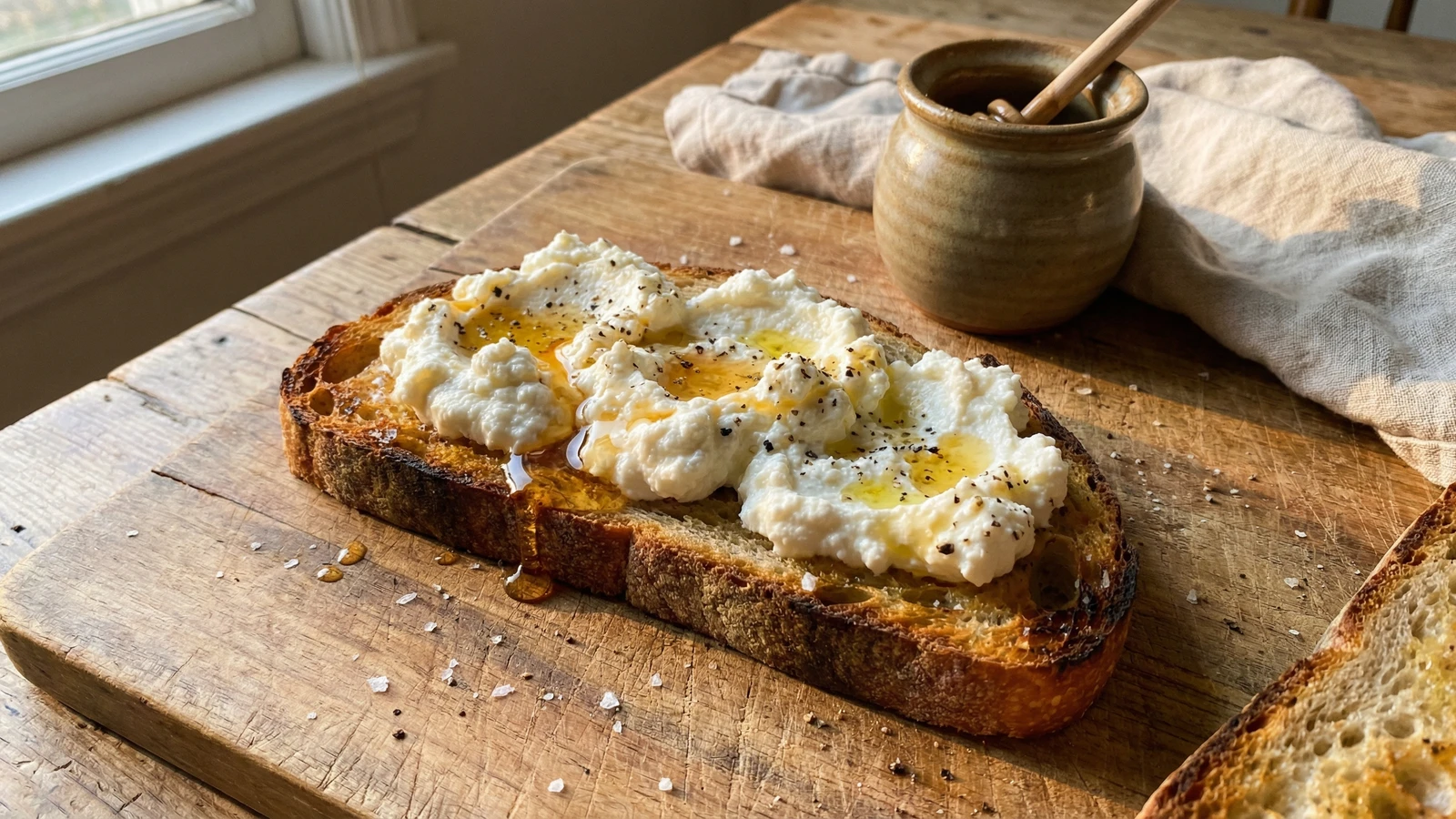
Fresh Ricotta Toast with Honey
Created by Chef Ally
Thick slices of toasted country bread piled with cool, creamy ricotta from the farmers market, ribboned with local honey, and finished with salt, pepper, and a thread of olive oil. Five minutes. Four ingredients. Perfect.
Start with the ricotta. Not the grainy stuff in plastic tubs at the supermarket. Fresh ricotta, made this week, from a cheesemaker who knows the farmer who milked the cows. When you find ricotta like this, it is cloud-soft and faintly sweet, tasting of milk and meadow and morning.
Good bread matters enormously here. A crusty loaf with an open crumb, the kind you have to tear rather than slice, baked by someone who cares. Toast it until it shatters when you bite but still gives in the center.
The honey should be local, which means it tastes like where you live. Wildflower honey from your region carries the flavor of the blossoms the bees visited. This is terroir in a jar. It connects you to the land even when breakfast is five minutes and a piece of toast.
Every meal is a meaningful choice. This one says: I choose to notice. I choose to slow down. I choose ingredients over technique, and I trust that perfect things need almost nothing done to them.
The technique, the tradition, and the story behind every dish.
Discover Culinary AdvisorIngredients
fresh whole-milk ricotta
Quantity
1 cup
preferably from a local cheesemaker
crusty country bread
Quantity
2 thick slices
local honey
Quantity
2 tablespoons
flaky sea salt
Quantity
to taste
black pepper
Quantity
to taste
freshly cracked
extra-virgin olive oil
Quantity
for drizzling
| Ingredient | Quantity |
|---|---|
| fresh whole-milk ricottapreferably from a local cheesemaker | 1 cup |
| crusty country bread | 2 thick slices |
| local honey | 2 tablespoons |
| flaky sea salt | to taste |
| black pepperfreshly cracked | to taste |
| extra-virgin olive oil | for drizzling |
Equipment Needed
- •Toaster or cast iron skillet
- •Spoon for spreading
Instructions
- 1
Temper the ricotta
Take the ricotta out of the refrigerator about fifteen minutes before you plan to eat. Cold ricotta tastes flat. At room temperature, it opens up and becomes creamy on the tongue, almost sweet. If your ricotta has released any liquid, pour it off gently.
Fresh ricotta from a farmers market or Italian specialty shop will have a subtle sweetness and light texture that grocery store versions cannot match. Ask when it was made. - 2
Toast the bread
Toast the bread until golden and crisp on the outside but still giving in the middle. A toaster works, but a hot cast iron pan or grill gives you those charred edges that make the texture interesting. You want warmth and crunch, a foundation sturdy enough to hold the ricotta without turning soggy.
- 3
Spread the ricotta generously
Spoon the ricotta onto the warm bread immediately. Use the back of your spoon to spread it thick and uneven, leaving peaks and valleys. Do not smooth it into submission. The ricotta should look alive, like fresh snow that has not been walked on.
The warmth of the bread slightly softens the ricotta. This is what you want. The two become one. - 4
Finish with honey and seasoning
Drizzle the honey in lazy ribbons across the ricotta. Let it pool in the valleys. Add a pinch of flaky sea salt, several grinds of black pepper, and a thin stream of good olive oil. The salt wakes everything up. The pepper adds heat that plays against the sweetness. The oil ties it together.
- 5
Serve immediately
Eat this standing at the counter or sitting in a patch of morning light. It does not wait. The bread softens, the honey slides, the moment passes. This is breakfast or a late afternoon snack, and it is enough.
Chef Tips
- •Seek out ricotta at your farmers market or an Italian specialty shop. Ask the cheesemaker when it was made. If they cannot tell you, keep looking.
- •The honey you choose will define the dish. A dark buckwheat honey makes this more savory. A light acacia keeps it delicate. Both are right.
- •In spring, scatter torn fresh mint leaves over the top. In summer, add sliced figs or stone fruit. In fall, a few toasted walnuts. Let the season guide you.
- •If your bread is a day old, all the better. Stale bread toasts more evenly and has a better crunch than fresh.
Advance Preparation
- •Fresh ricotta is best within three days of purchase. Buy it the day you plan to use it if possible.
- •This cannot be made ahead. The bread must be warm, the assembly immediate, the eating now.
Frequently Asked Questions
Nutrition Information
1 serving (about 200g)
Where cooking meets culture.
Culinary mentorship, cultural storytelling, and the editorial depth that makes cooking meaningful.
Explore Culinary Advisor