Culinary Advisor
A cooking platform built around craft, culture, and the stories behind what we eat.
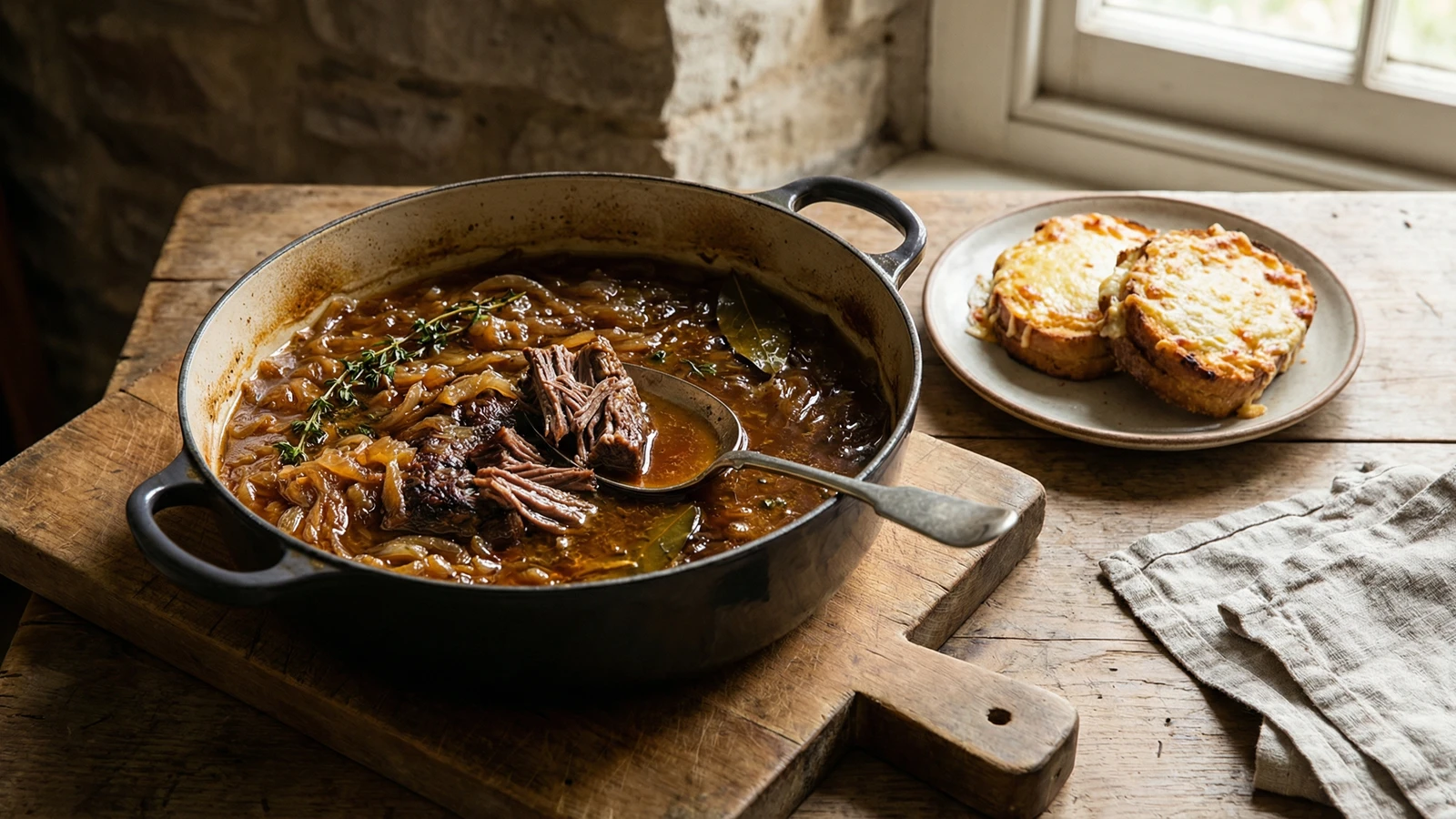
French Onion Pot Roast
Created by Chef Ally
A grass-fed chuck roast braised low and slow with pounds of caramelized onions, finished with crusty bread and melted Gruyère. French onion soup becomes supper.
Start with the beef. A grass-fed chuck roast from a farmer you trust will taste of something. The animal's life matters here. Good husbandry creates meat with depth, with flavor that stands up to hours of braising without becoming dull. Ask your butcher for bone-in if you can find it. The marrow enriches everything it touches.
Then there are the onions. You need more than you think. Four large ones, sliced thin, will cook down to almost nothing but sweetness. This is the magic of caramelization, the slow transformation of sharp allium into something deep and almost meaty. Forty-five minutes at the stove, stirring now and then, watching the color shift from pale to gold to amber. You cannot rush this. The onions need your patience.
The technique is simple. Braise at low heat for hours. Let the meat and onions become one thing. What emerges is neither pot roast nor soup but something that honors both. The cheese toast at the end is not garnish. It is essential, giving you something to drag through the braising liquid, capturing those last traces of onion and beef.
The technique, the tradition, and the story behind every dish.
Discover Culinary AdvisorIngredients
bone-in chuck roast
Quantity
4-5 pounds
preferably grass-fed
large yellow onions
Quantity
4 (about 3 pounds)
halved and thinly sliced
unsalted butter
Quantity
4 tablespoons
divided
olive oil
Quantity
2 tablespoons
kosher salt
Quantity
1 tablespoon, plus more to taste
black pepper
Quantity
1 teaspoon
freshly cracked
garlic cloves
Quantity
4
smashed
dry red wine or dry white wine
Quantity
1 cup
beef stock
Quantity
3 cups
preferably homemade
fresh thyme
Quantity
4 sprigs
bay leaves
Quantity
2
Dijon mustard
Quantity
1 tablespoon
red wine vinegar
Quantity
1 teaspoon
crusty bread
Quantity
6-8 thick slices
Gruyère cheese
Quantity
8 ounces
grated
| Ingredient | Quantity |
|---|---|
| bone-in chuck roastpreferably grass-fed | 4-5 pounds |
| large yellow onionshalved and thinly sliced | 4 (about 3 pounds) |
| unsalted butterdivided | 4 tablespoons |
| olive oil | 2 tablespoons |
| kosher salt | 1 tablespoon, plus more to taste |
| black pepperfreshly cracked | 1 teaspoon |
| garlic clovessmashed | 4 |
| dry red wine or dry white wine | 1 cup |
| beef stockpreferably homemade | 3 cups |
| fresh thyme | 4 sprigs |
| bay leaves | 2 |
| Dijon mustard | 1 tablespoon |
| red wine vinegar | 1 teaspoon |
| crusty bread | 6-8 thick slices |
| Gruyère cheesegrated | 8 ounces |
Equipment Needed
- •Heavy Dutch oven with lid (6-quart minimum)
- •Sturdy tongs
- •Baking sheet for toasts
Instructions
- 1
Season the roast
Pull the roast from the refrigerator an hour before cooking. Cold meat does not brown well. Season generously on all sides with the salt and pepper, pressing the seasoning into the surface. The meat should look well covered. Set aside while you prepare the onions.
- 2
Caramelize the onions
Melt 2 tablespoons of butter with the olive oil in a large Dutch oven over medium heat. Add all the sliced onions and a pinch of salt. This seems like too many onions. It is not. They will cook down to a fraction of their volume. Stir to coat, then let them cook, stirring every few minutes, for 35 to 45 minutes. The onions should turn deep amber and smell impossibly sweet. Do not rush this step. The depth of flavor in your final dish depends entirely on how patiently you caramelize these onions.
If the onions start to stick before they have colored properly, add a splash of water and scrape the bottom of the pot. Those browned bits are flavor. - 3
Add garlic and deglaze
Push the caramelized onions to the edges of the pot. Add the smashed garlic to the center and cook for one minute until fragrant. Pour in the wine, scraping up every browned bit from the bottom. Let it bubble for two minutes until reduced by half. The kitchen will smell like a Parisian bistro. Transfer onions to a bowl and set aside.
- 4
Sear the roast
Preheat your oven to 300°F. Return the Dutch oven to high heat. When the pot is very hot, add the remaining 2 tablespoons of butter. Once it foams and subsides, lay the roast in the pot. Do not move it. Let it sear undisturbed for 4 to 5 minutes until a dark brown crust forms. Turn and repeat on the second side. This crust is not decoration. It is flavor.
- 5
Build the braise
Remove the roast to a plate. Return half the caramelized onions to the pot, spreading them across the bottom. Nestle the roast on top. Spoon the remaining onions over and around the meat. Tuck the thyme and bay leaves along the sides. Whisk the mustard into the beef stock and pour it around (not over) the roast. The liquid should come about halfway up the meat.
Homemade stock transforms this dish. If you must use store-bought, choose low-sodium and taste as you go. - 6
Braise until tender
Cover the pot with a tight-fitting lid. Transfer to the oven and braise for 3 to 4 hours, turning the roast once halfway through. The meat is ready when a fork slides in and out with no resistance. The onions will have melted into a silky, deeply flavored sauce. The house will smell like comfort itself.
- 7
Rest and finish the sauce
Transfer the roast to a cutting board and tent loosely with foil. Skim any excess fat from the braising liquid. Stir in the red wine vinegar. Taste. Adjust salt. The vinegar brightens everything, cutting through the richness of the onions. This small addition makes a real difference.
- 8
Prepare the gratinéed toasts
Position an oven rack six inches from the broiler and preheat. Arrange bread slices on a baking sheet and toast under the broiler until golden on both sides, watching carefully. Pile grated Gruyère generously on each slice and return to the broiler until the cheese bubbles and browns in spots, one to two minutes. This is not optional. The cheese-covered toast is what makes this dish complete.
A true Gruyère from Switzerland melts beautifully and has a nuttiness that cheaper substitutes cannot match. This is the place to spend a little more. - 9
Serve family-style
Slice or pull the roast into large pieces and return to the pot with the onions and braising liquid. Serve directly from the Dutch oven with the gratinéed toasts alongside. Each person should get tender beef, a generous spoonful of onions, and a cheese toast to drag through everything. This is honest food for people you love.
Chef Tips
- •Yellow onions caramelize best. They have the right balance of sugar and water. Sweet onions sound like they would work better, but they turn mushy before they brown.
- •A bone-in roast has more flavor and better texture. The connective tissue around the bone breaks down into gelatin, giving body to your braising liquid.
- •This dish improves overnight. Make it a day ahead, refrigerate it in the pot, then reheat gently. The flavors meld and deepen. The fat solidifies on top and lifts off easily.
- •Pair with a southern Rhône red, something with earthiness that echoes the caramelized onions. A Côtes du Rhône or Châteauneuf-du-Pape would be right at home.
Advance Preparation
- •The entire braise can be made two days ahead and refrigerated. The fat will solidify on top for easy removal. Reheat gently, covered, in a 300°F oven for 45 minutes.
- •Onions can be caramelized up to three days ahead and refrigerated. This allows you to break the work into manageable pieces.
- •The gratinéed toasts must be made fresh, just before serving. They lose their magic as they cool.
Frequently Asked Questions
Nutrition Information
1 serving (about 400g)
Where cooking meets culture.
Culinary mentorship, cultural storytelling, and the editorial depth that makes cooking meaningful.
Explore Culinary Advisor