Culinary Advisor
A cooking platform built around craft, culture, and the stories behind what we eat.
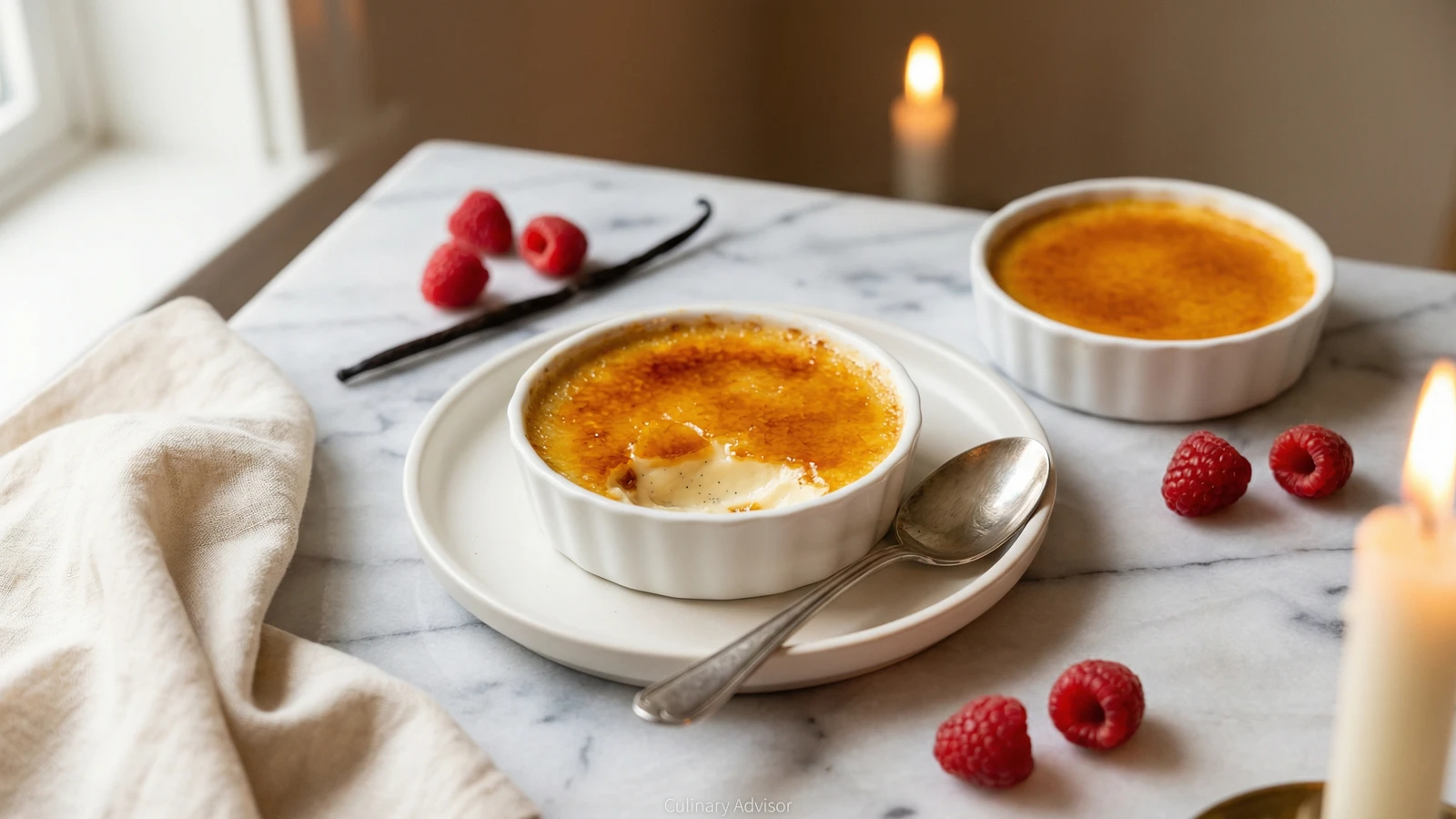
French Crème Brûlée
Created by
Silken vanilla custard crowned with a glass-thin layer of crackling caramelized sugar, the most theatrical dessert in the French repertoire and far simpler than its reputation suggests.
The first time you crack through that amber sugar shell and your spoon sinks into cool, trembling custard beneath, you understand why this dessert has survived three centuries of changing tastes. Crème brûlée is theater. The torch, the crack, the contrast of warm caramel against cold cream. It delivers on every promise it makes.
Don't let the French name intimidate you. This is a custard. Eggs, cream, sugar, vanilla. The technique is forgiving once you understand the principles: temper your yolks so they don't scramble, bake gently in a water bath so the edges don't overcook, and chill completely before you torch. That's the whole secret.
I've watched hundreds of students make their first crème brûlée, and the moment they tap that spoon against the caramelized surface and hear the crack, their faces light up. You'll feel like a magician. You'll want to make it again immediately. And you should. This is a dessert worthy of your effort, whether you're ending a Tuesday dinner or celebrating an anniversary.
The technique, the tradition, and the story behind every dish.
Discover Culinary AdvisorIngredients
heavy cream
Quantity
2 cups (480ml)
vanilla bean
Quantity
1
split lengthwise
pure vanilla extract (optional)
Quantity
2 teaspoons
large egg yolks
Quantity
5
granulated sugar
Quantity
1/2 cup (100g), plus 6 tablespoons for torching
fine sea salt
Quantity
pinch
| Ingredient | Quantity |
|---|---|
| heavy cream | 2 cups (480ml) |
| vanilla beansplit lengthwise | 1 |
| pure vanilla extract (optional) | 2 teaspoons |
| large egg yolks | 5 |
| granulated sugar | 1/2 cup (100g), plus 6 tablespoons for torching |
| fine sea salt | pinch |
Equipment Needed
- •6 shallow ramekins (4-6 ounce capacity)
- •Fine-mesh strainer
- •Roasting pan or deep baking dish for water bath
- •Kitchen torch (or broiler)
- •Medium saucepan
- •Large mixing bowl
Instructions
- 1
Infuse the cream
Pour the heavy cream into a medium saucepan. If using a vanilla bean, scrape the seeds from both halves using the back of your knife, adding seeds and spent pods to the cream. Set over medium heat and bring just to a simmer, watching carefully. The moment you see small bubbles forming around the edges and steam rising steadily, remove from heat. Let steep for fifteen minutes if using vanilla bean, or proceed immediately if using extract.
A vanilla bean produces superior flavor and those beautiful black flecks throughout the custard, but quality pure vanilla extract works beautifully. Add extract after heating the cream, never before. - 2
Prepare the yolks
While cream infuses, whisk the egg yolks, half cup of sugar, and salt in a large bowl until the mixture turns pale yellow and thickens slightly, about two minutes of steady whisking. The color change tells you the sugar is dissolving and beginning to denature the proteins. This makes a smoother custard.
Save those egg whites. They freeze beautifully for up to three months. Use them for meringues, angel food cake, or clarifying stocks. - 3
Temper the yolks
Here's where patience matters. Ladle about half a cup of the warm cream into the yolk mixture while whisking constantly. This tempers the eggs, raising their temperature gradually so they don't scramble when they meet the rest of the hot cream. Add another half cup, whisking steadily. Now pour the tempered yolk mixture back into the saucepan with the remaining cream, stirring to combine. If using vanilla extract instead of a bean, add it now.
- 4
Strain and pour
Pour the custard through a fine-mesh strainer into a clean bowl or large measuring cup with a spout. Discard the vanilla pod and any bits of cooked egg that the strainer catches. Divide the custard evenly among six shallow ramekins (four to six ounce capacity works best). The custard should fill them about three-quarters full.
Shallow, wide ramekins produce better crème brûlée than tall, narrow ones. You want a high ratio of caramelized sugar surface to custard beneath. - 5
Prepare the water bath
Preheat your oven to 325°F. Arrange ramekins in a roasting pan or deep baking dish, leaving space between them. Place the pan on the oven rack pulled partway out, then carefully pour hot tap water into the pan until it reaches halfway up the sides of the ramekins. This water bath, called a bain-marie, insulates the custards and ensures they cook gently and evenly.
- 6
Bake until just set
Bake for forty to fifty minutes. The custards are done when they're set around the edges but still wobble in the center when you gently shake the pan. Think of the movement of gelatin, a gentle tremor rather than liquid sloshing. The centers will firm as they cool. Remove pan from oven carefully. The water is dangerous.
- 7
Chill thoroughly
Let ramekins cool in the water bath for thirty minutes, then transfer to a wire rack until room temperature. Cover each with plastic wrap and refrigerate for at least four hours, preferably overnight. The custard must be completely cold before you torch it, otherwise the heat will curdle the surface rather than caramelize the sugar.
At this stage, custards keep refrigerated for up to three days. Make them ahead and torch just before serving for effortless entertaining. - 8
Torch the sugar
Remove custards from refrigerator. Blot any moisture from the surface with a paper towel. Sprinkle one tablespoon of sugar evenly over each custard, tilting to distribute. Using a kitchen torch, hold the flame two to three inches from the surface and move in slow, continuous circles. The sugar will melt, bubble, then turn amber. Work around the edges first where it caramelizes fastest, then fill in the center. The entire surface should be glassy and golden brown within sixty seconds.
No torch? Use your broiler. Set custards on a sheet pan, position the rack three to four inches from the element, and broil one to two minutes, rotating for even color. Watch constantly. It goes from perfect to burnt in seconds. - 9
Rest and serve
Let the caramelized sugar cool and harden for one to two minutes. It will transform from molten to glass-like. Serve immediately while the top is still crisp and the custard beneath remains cold. Place each ramekin on a small plate, provide a spoon, and let your guests experience the satisfaction of that first crack.
Chef Tips
- •The quality of your cream matters enormously. Look for heavy cream without additives or thickeners. It should contain nothing but cream. The fat content creates that luxurious texture no substitute can match.
- •Superfine sugar caramelizes more evenly than regular granulated, though regular works perfectly well. In a pinch, pulse granulated sugar in a food processor for thirty seconds to create your own superfine.
- •If your sugar torches unevenly with dark spots and pale patches, you've applied too much heat in one area. Keep that flame moving constantly in lazy circles, like you're polishing silver.
- •The custard base works beautifully with other flavors. Steep the cream with espresso beans, lavender, citrus zest, or cardamom instead of vanilla. Strain well and proceed as directed.
- •A small kitchen torch costs under thirty dollars and pays for itself in satisfaction. It's also useful for browning meringues, melting cheese on French onion soup, and roasting peppers.
Advance Preparation
- •Custards can be baked, cooled, and refrigerated up to three days before serving. Keep covered with plastic wrap until ready to torch.
- •Never torch the sugar more than ten minutes before serving. Humidity softens the caramelized top, and refrigerating after torching creates condensation that dissolves your glass-like surface.
- •The vanilla-infused cream can be prepared a day ahead and refrigerated. Rewarm gently before tempering into the yolks.
Frequently Asked Questions
Nutrition Information
1 serving (about 155g)
Where cooking meets culture.
Culinary mentorship, cultural storytelling, and the editorial depth that makes cooking meaningful.
Explore Culinary Advisor