Culinary Advisor
A cooking platform built around craft, culture, and the stories behind what we eat.
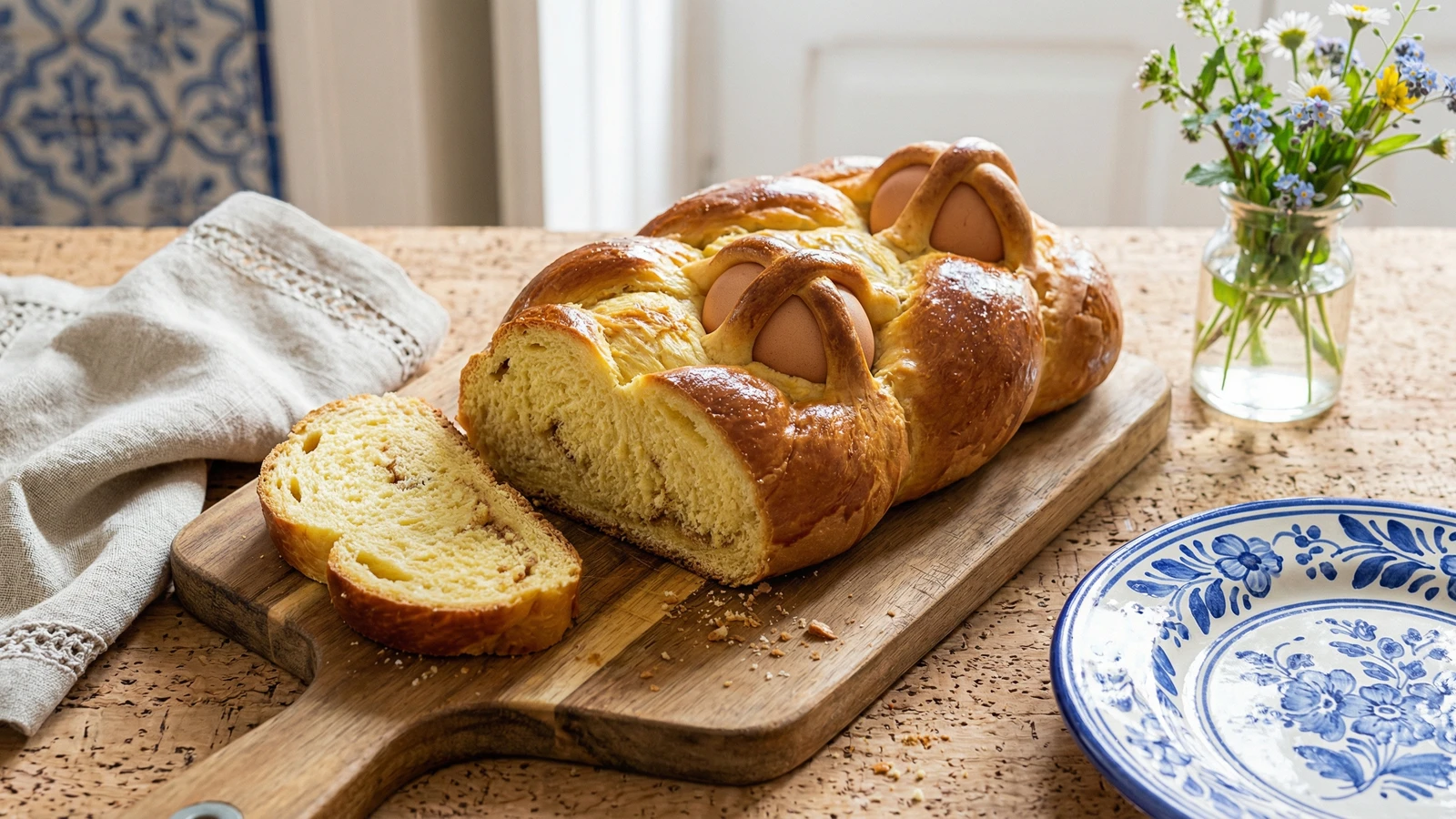
Folar da Páscoa Doce
Created by
The sweet Easter bread that every Portuguese family bakes differently and every family bakes best. Eggs hidden inside, cinnamon and lemon in the crumb, the smell that means Páscoa has arrived.
Every Easter, Avó Leonor would start the folar before dawn. I'd wake to the smell of yeast and lemon zest, the sound of her kneading dough against the wooden table. By the time I came downstairs, she'd be shaping the loaves, pressing raw eggs into the soft dough, crossing them with braids like little presents waiting to be opened.
Folar is how we mark Páscoa. It's the bread godsons bring to their godparents. It's what sits on every table from Palm Sunday through Easter Monday. The sweet version, the one most families make now, is rich with butter and eggs, scented with canela and limão, sometimes with a splash of aguardente that perfumes the whole kitchen.
The eggs baked into the top aren't just decoration. They're the whole point. In the old days, eggs were forbidden during Lent, saved and blessed, then given as gifts when Easter finally came. The folar became the vessel for those precious eggs. Some families hide them completely inside the dough. Some let them peek through. Every family insists their way is traditional. Every family is right.
This is bread that takes time. The dough is rich, heavy with butter, and it rises slowly. But the rhythm of making it, the waiting, the shaping, the smell filling the house, that's as much a part of Easter as the bread itself. A cozinha é memória. This is how we remember.
Folar dates to medieval Portugal, where it emerged as a Lenten and Easter tradition across the northern regions, particularly Trás-os-Montes and Beira Alta. The word likely derives from the Latin 'folare,' meaning to mix or knead. Both sweet and savory versions exist: the sweet folar dominates in the south and among emigrant communities, while northern regions still make the savory folar stuffed with presunto and chouriço. The tradition of embedding eggs symbolizes the end of Lenten abstinence, when eggs saved during the forty days were finally eaten.
The technique, the tradition, and the story behind every dish.
Discover Culinary AdvisorIngredients
all-purpose flour
Quantity
500g
plus more for kneading
granulated sugar
Quantity
100g
fine sea salt
Quantity
1 teaspoon
instant yeast
Quantity
14g (2 packets)
whole milk
Quantity
125ml
lukewarm
eggs
Quantity
4 large
room temperature
unsalted butter
Quantity
100g
softened
lemon zest
Quantity
from 1 lemon
ground cinnamon (canela)
Quantity
1 teaspoon
aguardente or brandy (optional)
Quantity
2 tablespoons
eggs in shell for decoration
Quantity
4
washed
egg yolk
Quantity
1
beaten with 1 tablespoon milk for egg wash
| Ingredient | Quantity |
|---|---|
| all-purpose flourplus more for kneading | 500g |
| granulated sugar | 100g |
| fine sea salt | 1 teaspoon |
| instant yeast | 14g (2 packets) |
| whole milklukewarm | 125ml |
| eggsroom temperature | 4 large |
| unsalted buttersoftened | 100g |
| lemon zest | from 1 lemon |
| ground cinnamon (canela) | 1 teaspoon |
| aguardente or brandy (optional) | 2 tablespoons |
| eggs in shell for decorationwashed | 4 |
| egg yolkbeaten with 1 tablespoon milk for egg wash | 1 |
Equipment Needed
- •Large mixing bowl
- •Wooden spoon
- •Clean work surface for kneading
- •2 baking sheets lined with parchment
- •Wire cooling rack
- •Pastry brush for egg wash
Instructions
- 1
Make the dough
In a large bowl, whisk together the flour, sugar, salt, cinnamon, and yeast. Make a well in the center. Add the lukewarm milk, eggs, lemon zest, and aguardente if using. Stir with a wooden spoon until a shaggy dough forms. This will look messy. That's correct.
- 2
Add the butter
Add the softened butter in pieces. Now begins the work. Knead the dough in the bowl first, squeezing and folding to incorporate the butter. It will be sticky and impossible at first. Keep going. Turn it onto a lightly floured surface and knead for 10 to 12 minutes until smooth, elastic, and no longer sticky. The dough should spring back when you poke it.
Enriched doughs take longer to develop. Don't add too much flour. The stickiness works itself out with kneading. Trust the process. - 3
First rise
Shape the dough into a ball and place it in a lightly oiled bowl. Cover with a clean kitchen towel or plastic wrap. Let rise in a warm spot until doubled, about 1 hour and 30 minutes. The butter and eggs slow things down. Não tenhas pressa. The dough knows what it's doing.
- 4
Shape the folares
Punch down the dough and divide it in half. For each half: take about a quarter of the dough and set it aside for the braids. Shape the larger piece into a round loaf and place on a parchment-lined baking sheet. Press two raw eggs gently into the top, spacing them apart. Divide the reserved dough into two ropes and cross them over each egg, pressing the ends into the loaf to secure. The eggs should peek through like gifts waiting to be found.
- 5
Second rise
Cover the shaped folares loosely and let rise again until puffy, about 45 minutes to 1 hour. They should look soft and pillowy. Meanwhile, preheat your oven to 180°C (350°F).
- 6
Bake
Brush the folares generously with the egg wash, being careful around the shell eggs. Bake for 30 to 35 minutes until deeply golden brown and the bread sounds hollow when tapped on the bottom. The eggs will bake along with the bread, hardening inside their shells. Let cool on a wire rack before slicing.
If the tops brown too quickly, tent loosely with foil for the last 10 minutes. The inside needs time to cook through.
Chef Tips
- •Room temperature ingredients matter here. Cold eggs and butter won't incorporate properly into the dough. Take everything out an hour before you start.
- •The raw eggs baked into the top will cook completely, becoming hard-boiled inside their shells. They're safe to eat. Peel them at the table and eat them with the bread.
- •Some families brush the shell eggs with egg wash too, which gives them a beautiful golden shine. Others leave them natural. Avó Leonor always washed them.
- •If you want the simpler round folar without visible eggs, you can shape the entire dough into two braided loaves. Still traditional. Still correct.
- •Leftover folar makes extraordinary French toast the next day. Thick slices, soaked in egg and milk, fried in butter. This is what we do with the last of it.
Advance Preparation
- •The dough can be made and refrigerated overnight after the first rise. Punch it down, cover tightly, and refrigerate. The next day, let it come to room temperature for 1 hour before shaping.
- •Baked folar keeps well wrapped at room temperature for 3 to 4 days. It also freezes beautifully for up to 2 months. Thaw at room temperature and warm briefly in the oven before serving.
Frequently Asked Questions
Nutrition Information
1 serving (about 100g)
Where cooking meets culture.
Culinary mentorship, cultural storytelling, and the editorial depth that makes cooking meaningful.
Explore Culinary Advisor